





In the realm of welding, Metal Inert Gas (MIG) flux wire welding has emerged as a popular and efficient method, favored for its versatility and effectiveness across various applications. As a dedicated MIG Flux Wire supplier, I've witnessed firsthand the pivotal role that electrode polarity plays in the MIG flux wire welding process. Understanding this concept is not just beneficial; it's essential for achieving optimal welding results.
Understanding MIG Flux Wire Welding
Before delving into the role of electrode polarity, it's crucial to have a basic understanding of MIG flux wire welding. MIG flux wire welding is a semi - automatic or automatic arc welding process that uses a continuous solid wire electrode fed through a welding gun. The flux in the wire serves multiple purposes, including shielding the weld pool from atmospheric contamination, providing deoxidizers and alloying elements to the weld, and influencing the arc characteristics.
Electrode Polarity Basics
In welding, electrode polarity refers to the direction of the electrical current flow between the electrode and the workpiece. There are two main types of polarity: Direct Current Electrode Positive (DCEP), also known as Reverse Polarity, and Direct Current Electrode Negative (DCEN), also known as Straight Polarity.
In DCEP, the electrode is connected to the positive terminal of the power source, and the workpiece is connected to the negative terminal. This results in the flow of electrons from the workpiece to the electrode. In contrast, in DCEN, the electrode is connected to the negative terminal, and the workpiece is connected to the positive terminal, causing electrons to flow from the electrode to the workpiece.
The Role of Electrode Polarity in MIG Flux Wire Welding
1. Heat Distribution
One of the most significant impacts of electrode polarity in MIG flux wire welding is on heat distribution. In DCEP, approximately two - thirds of the heat is generated at the electrode, and one - third at the workpiece. This high heat concentration at the electrode allows for better melting of the flux - cored wire, resulting in a more stable arc and better control over the weld pool. The increased heat at the electrode also promotes a smooth and consistent wire feed, reducing the likelihood of wire sticking or spatter.
On the other hand, DCEN produces more heat at the workpiece. While this can be advantageous in some situations, such as when welding thin materials, it can also lead to excessive penetration and distortion if not carefully controlled. For MIG flux wire welding, DCEP is generally preferred because it provides better control over the heat input and the weld bead shape.
2. Penetration
Electrode polarity also has a direct influence on the depth of penetration in the weld. DCEP typically results in deeper penetration compared to DCEN. The high heat at the electrode in DCEP allows the molten metal to penetrate more deeply into the workpiece, creating a stronger and more reliable weld joint. This is particularly important when welding thick materials or when a high - strength weld is required.
In contrast, DCEN provides shallower penetration. This can be beneficial when welding thin materials, as it helps prevent burn - through and distortion. However, for most MIG flux wire welding applications where strength and integrity of the weld are paramount, DCEP is the better choice.
3. Weld Bead Shape
The shape of the weld bead is another aspect affected by electrode polarity. With DCEP, the weld bead tends to be wider and flatter. This is because the high heat at the electrode causes the molten metal to spread out more evenly over the workpiece. A wider and flatter weld bead provides better coverage and a more aesthetically pleasing appearance.
DCEN, on the other hand, produces a narrower and more convex weld bead. While this may be suitable for some specific applications, such as fillet welds where a more concentrated weld is required, it may not be ideal for applications where a wider bead is needed for better load - distribution.
4. Spatter and Fume Generation
Spatter and fume generation are common issues in welding, and electrode polarity can play a role in mitigating these problems. DCEP generally results in less spatter compared to DCEN. The stable arc and better control over the molten metal in DCEP reduce the chances of molten droplets being ejected from the weld pool. This not only improves the quality of the weld but also reduces the amount of post - weld cleaning required.
In terms of fume generation, DCEP also offers some advantages. The more efficient melting of the flux - cored wire in DCEP leads to a more complete combustion of the flux, resulting in less fume production. This is not only beneficial for the welder's health but also for the overall working environment.
Applications and Considerations
1. Welding Different Materials
The choice of electrode polarity also depends on the type of material being welded. For steel, DCEP is the most commonly used polarity in MIG flux wire welding. It provides the necessary heat and penetration for a strong and durable weld. However, when welding aluminum, the situation is different. Aluminum has a high thermal conductivity, and DCEN is often used to increase the heat input at the workpiece and achieve proper fusion.

2. Welding Thickness
As mentioned earlier, the thickness of the material being welded is an important factor in determining the appropriate electrode polarity. For thin materials, DCEN may be used to avoid excessive penetration and distortion. However, for thicker materials, DCEP is usually the better option to ensure sufficient penetration and a strong weld joint.
Recommended Welding Machines and MIG Flux Wire
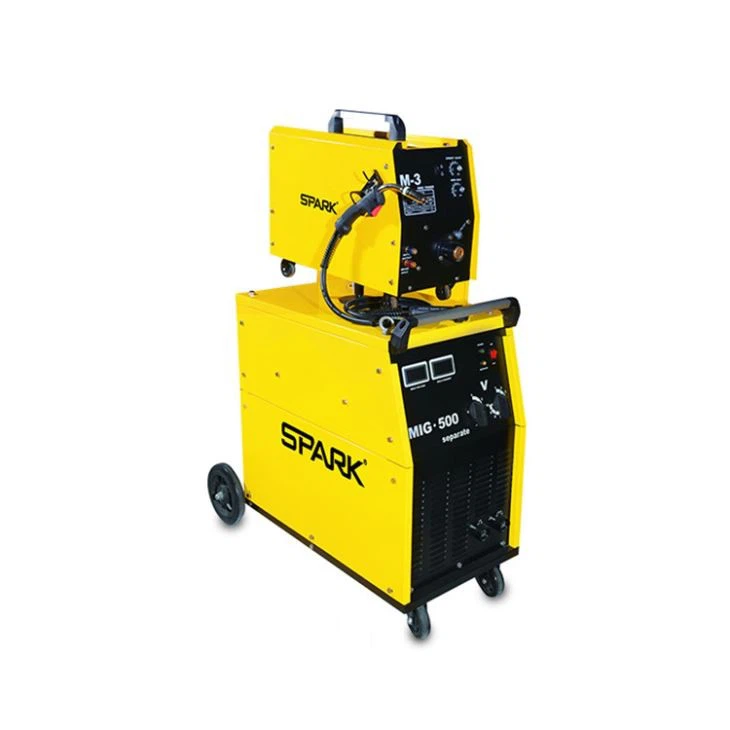
As a MIG Flux Wire supplier, I would like to recommend some of our high - quality products. For those in need of a reliable welding machine, we offer the Transformer Gasless MIG Welding Machine with Compact Torch and the Transformer Gasless MIG Welding Machine with Seperate Wire Feeder. These machines are designed to provide stable and consistent welding performance, ensuring optimal results in MIG flux wire welding.
Our MIG Flux Wire is formulated to work effectively with different polarities, offering excellent arc stability, low spatter, and high - quality welds. Whether you are a professional welder or a hobbyist, our products are designed to meet your welding needs.
Conclusion
In conclusion, electrode polarity plays a crucial role in MIG flux wire welding. It affects heat distribution, penetration, weld bead shape, spatter, and fume generation. Understanding the impact of electrode polarity and choosing the appropriate polarity for your specific welding application is essential for achieving high - quality welds.
As a MIG Flux Wire supplier, we are committed to providing our customers with the best products and technical support. If you have any questions about MIG flux wire welding or need assistance in selecting the right products for your project, please feel free to contact us for procurement and further discussions.
References
- O'Brien, W. F. (2000). Welding Handbook: Volume 2 - Welding Processes. American Welding Society.
- Lancaster, J. F. (1999). The Physics of Welding. Butterworth - Heinemann.
- American Welding Society. (2017). AWS Welding Handbook, Volume 1: Welding Science and Technology.