





MIG (Metal Inert Gas) flux wire is a crucial consumable in the welding industry, offering a convenient and efficient way to join metal parts. As a supplier of MIG flux wire, I often encounter questions from customers about the differences between MIG flux wire for thin and thick materials. In this blog post, I will delve into these differences, exploring how they impact the welding process, the quality of the weld, and the overall performance of the welding operation.
Composition and Characteristics
The composition of MIG flux wire can vary depending on the intended application. For thin materials, the flux wire is typically designed to have a lower melting point and a faster solidification rate. This allows for a more precise and controlled weld, minimizing the risk of burn - through. The flux in these wires often contains elements that help to deoxidize the weld pool and improve the wetting of the metal, resulting in a smooth and clean weld.
On the other hand, MIG flux wire for thick materials needs to have a higher melting point and a slower solidification rate. Thick materials require more heat to penetrate and fuse properly, and a wire with a higher melting point can withstand the intense heat without melting too quickly. The flux in these wires may also contain more alloying elements to enhance the strength and toughness of the weld, as thick - walled structures often need to withstand greater mechanical stress.
Welding Parameters
When it comes to welding parameters, there are significant differences between using MIG flux wire for thin and thick materials.
Voltage and Current
For thin materials, lower voltage and current settings are required. High voltage and current can cause excessive heat input, leading to burn - through, distortion, and a poor - quality weld. The optimal voltage for thin - material welding is usually in the range of 18 - 22 volts, and the current is kept relatively low, typically between 60 - 100 amps.
In contrast, thick materials demand higher voltage and current to ensure proper penetration. The voltage may range from 24 - 30 volts, and the current can be as high as 200 - 300 amps. These higher settings provide the necessary heat to melt the thick metal and create a strong bond.
Wire Feed Speed
The wire feed speed is also adjusted according to the material thickness. For thin materials, a slower wire feed speed is used to prevent over - deposition of the filler metal. A speed of around 150 - 200 inches per minute (IPM) is common.
For thick materials, a faster wire feed speed is required to keep up with the high heat input and ensure a sufficient amount of filler metal is added to the weld pool. Wire feed speeds can range from 300 - 400 IPM or even higher, depending on the specific application.
Travel Speed
Travel speed is another important parameter. When welding thin materials, a faster travel speed is necessary to avoid overheating. A travel speed of 12 - 18 inches per minute is typical.
When working with thick materials, a slower travel speed is needed to allow the heat to penetrate the metal and create a deep and strong weld. Travel speeds may be as low as 6 - 10 inches per minute.
Weld Quality
The quality of the weld is affected by the choice of MIG flux wire for thin and thick materials.
For Thin Materials
Using the appropriate MIG flux wire for thin materials results in a weld with minimal distortion. Since the heat input is carefully controlled, the metal does not expand and contract excessively, reducing the risk of warping. The weld bead is also smooth and uniform, with good fusion to the base metal.
However, if the wrong wire or incorrect welding parameters are used, there can be issues such as burn - through, lack of fusion, and porosity. Burn - through occurs when too much heat is applied, creating holes in the thin metal. Lack of fusion means that the filler metal does not properly bond to the base metal, weakening the weld. Porosity is the presence of small holes in the weld, which can reduce its strength.
For Thick Materials
The right MIG flux wire for thick materials produces a weld with high strength and good penetration. The weld is able to withstand heavy loads and stresses, making it suitable for structural applications. The alloying elements in the wire contribute to the improved mechanical properties of the weld.
But, challenges can arise when welding thick materials. If the heat input is not sufficient, there may be incomplete penetration, where the weld does not reach the full thickness of the metal. This can lead to a weak joint. Additionally, the slower solidification rate of the weld pool in thick - material welding can increase the risk of cracking, especially if the cooling rate is too fast.
Applications
The choice of MIG flux wire for thin or thick materials is also determined by the specific application.


Thin Materials
Thin - material welding is commonly used in industries such as automotive, electronics, and sheet metal fabrication. In the automotive industry, thin - gauge steel is used for body panels, and MIG flux wire for thin materials is used to join these panels together with precision. In electronics, thin metal components need to be welded without causing damage to the delicate parts, and the low - heat - input characteristics of the appropriate MIG flux wire are essential.
Thick Materials
Thick - material welding is prevalent in heavy industries such as construction, shipbuilding, and manufacturing of large machinery. In construction, thick steel beams and columns need to be welded to form strong structures. Shipbuilding requires welding of thick plates to build the hull of the ship. The high - strength and deep - penetration capabilities of MIG flux wire for thick materials are crucial in these applications.
Equipment Compatibility
When using MIG flux wire for different material thicknesses, it is important to ensure compatibility with the welding equipment.
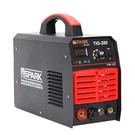
For thin - material welding, a Three PCB MIG Welding Machine can be a good choice. These machines are often designed to provide precise control over the welding parameters, allowing for accurate and delicate welds. They can handle the lower voltage and current requirements of thin - material welding.
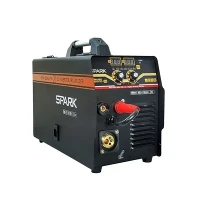
For thick - material welding, a MIG MAG Welding Machine is more suitable. These machines are capable of delivering the high power needed to melt thick metals and can handle the higher wire feed speeds and travel speeds associated with thick - material welding.
In some cases, for family - use or small - scale welding projects, a Family Use Popular Transformer MIG Welding Machine can be used for both thin and thick materials, but it may have limitations in terms of the maximum thickness it can handle and the precision of the welding.
Conclusion
In summary, the differences between MIG flux wire for thin and thick materials are significant in terms of composition, welding parameters, weld quality, applications, and equipment compatibility. As a MIG flux wire supplier, I understand the importance of providing the right product for each customer's specific needs. Whether you are working on a thin - gauge sheet metal project or a heavy - duty construction job, choosing the appropriate MIG flux wire is crucial for achieving high - quality welds.
If you are interested in purchasing MIG flux wire for your welding projects, I encourage you to contact me for more information and to discuss your specific requirements. We can work together to select the best wire for your application, ensuring optimal performance and cost - effectiveness.
References
- AWS Welding Handbook, Volume 2: Welding Processes
- Miller Electric Welding Guide
- Lincoln Electric Technical Manual