

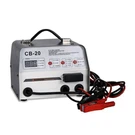




Using a 6V/12V/24V battery charger for electric vehicle batteries is a question that often comes up among electric vehicle owners and enthusiasts. As a supplier of 6V/12V/24V battery chargers, we understand the importance of this topic and are here to provide a comprehensive analysis.
Compatibility between Charger and Electric Vehicle Batteries
First and foremost, it's crucial to understand the basic principles of battery charging. Electric vehicle batteries come in various types, such as lithium - ion, lead - acid, and nickel - metal hydride, each with its own specific charging requirements. These requirements include the appropriate voltage, current, and charging algorithm.
A 6V/12V/24V battery charger is designed to charge batteries with nominal voltages of 6V, 12V, or 24V. Most electric vehicles, especially modern ones, use lithium - ion batteries with much higher voltages. For example, many electric cars have battery packs with voltages ranging from 200V to 800V. In this case, a 6V/12V/24V charger is clearly not suitable because the voltage it provides is far too low to charge the high - voltage battery packs of electric vehicles.
However, some smaller electric vehicles, such as electric scooters, electric bicycles, or some low - power electric golf carts, may use 12V or 24V lead - acid or lithium - ion batteries. For these vehicles, a 6V/12V/24V battery charger might be a potential option, but only if it meets the specific charging requirements of the battery.
Factors to Consider
Voltage
As mentioned earlier, voltage compatibility is the most basic requirement. If the charger voltage is too low, the battery will not charge properly. On the other hand, if the voltage is too high, it can cause overcharging, which may lead to battery damage, reduced battery life, or even safety hazards such as overheating and explosion.
Current
The charging current is also a critical factor. Different batteries have different maximum charging currents they can safely handle. A charger that provides too high a current can cause excessive heat generation in the battery, while a charger with too low a current will result in a very slow charging process. For example, a lead - acid battery may have a relatively high tolerance for charging current compared to a lithium - ion battery.
Charging Algorithm
Modern batteries often require specific charging algorithms to ensure optimal charging and battery health. Lithium - ion batteries, for example, typically require a constant - current/constant - voltage (CC/CV) charging algorithm. A charger without the appropriate charging algorithm may not charge the battery correctly, leading to issues such as under - charging or over - charging.
Our 6V/12V/24V Battery Chargers
We offer a range of high - quality 6V/12V/24V battery chargers that are designed to meet the diverse needs of our customers.
Our Movable Heavy Charger with Wheel is a great option for applications where mobility is required. It is equipped with large wheels, making it easy to move around, and is capable of providing stable and reliable charging for 6V, 12V, or 24V batteries.
The Multifunctional Charger with Charging State is another popular product. It features a built - in charging state indicator, which allows users to easily monitor the charging process. This charger also has multiple charging modes to accommodate different battery types, ensuring a safe and efficient charging experience.
For those who need a more portable solution, our Portable Charger with Handle is an ideal choice. With a convenient handle design, it can be easily carried around, making it suitable for on - the - go charging of 6V, 12V, or 24V batteries.
When Can Our Chargers Be Used for Electric Vehicles?
If the electric vehicle in question uses a 6V, 12V, or 24V battery, and our charger meets the specific voltage, current, and charging algorithm requirements of that battery, then our charger can indeed be used. For example, some older or low - power electric bicycles with 12V or 24V lead - acid batteries can be charged with our chargers.
However, it is always recommended to check the battery manufacturer's specifications and guidelines before using any charger. If you are unsure whether our charger is suitable for your electric vehicle battery, our technical support team is always ready to assist you.
How to Determine Compatibility
To determine whether a 6V/12V/24V charger is suitable for an electric vehicle battery, follow these steps:


- Check the battery voltage: Look for the battery's nominal voltage on the battery label. Make sure the charger's output voltage matches the battery voltage.
- Check the battery type: Different battery types (e.g., lead - acid, lithium - ion) have different charging requirements. Ensure that the charger is designed to charge the specific type of battery in your electric vehicle.
- Check the maximum charging current: Find out the maximum charging current that the battery can safely handle. The charger's output current should be within this limit.
Conclusion
In summary, a 6V/12V/24V battery charger can be used for electric vehicle batteries only under specific circumstances, mainly when the electric vehicle uses a 6V, 12V, or 24V battery and the charger meets all the necessary charging requirements.
As a professional 6V/12V/24V battery charger supplier, we are committed to providing high - quality products and excellent customer service. If you are in the market for a reliable battery charger for your electric vehicle or other applications, please feel free to contact us for more information and to discuss your specific needs. We look forward to the opportunity to work with you and help you find the perfect charging solution.
References
- Battery Charging Basics: A Guide to Understanding Battery Charging Principles. Battery University.
- Electric Vehicle Battery Technology: An Overview. Journal of Power Sources.