

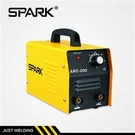



When it comes to arc welding, one of the most frequently asked questions among professionals and hobbyists alike is: What is the maximum thickness of metal that an arc welding machine can weld? As a leading supplier of arc welding machines, I'm here to shed light on this critical topic.
Understanding Arc Welding Basics
Arc welding is a process that uses an electric arc to melt and join metals. The heat generated by the arc, which is created between an electrode and the base metal, is intense enough to fuse the two materials together. Different types of arc welding methods exist, such as Shielded Metal Arc Welding (SMAW), Gas Tungsten Arc Welding (GTAW), and Gas Metal Arc Welding (GMAW). Each method has its unique characteristics and is suitable for various applications.
Factors Affecting the Maximum Welding Thickness
The maximum thickness of metal that an arc welding machine can weld is not solely determined by the machine itself. Several factors come into play, and understanding these variables is crucial for achieving optimal welding results.
1. Amperage
Amperage is perhaps the most significant factor influencing the welding thickness. In general, the higher the amperage output of the welding machine, the thicker the metal it can weld. This is because higher amperage generates more heat, which is necessary to melt thicker materials. For instance, our Popular Small Transformer Hobby Welding Machine is designed for light - duty tasks and typically has a lower amperage output, making it suitable for welding thinner metals. On the other hand, heavy - duty industrial arc welding machines can provide much higher amperages and are capable of welding thicker metal sections.
2. Electrode Type and Size
The type and size of the electrode also play a vital role. Different electrodes have different melting points and deposition rates. Larger electrodes can carry more current and deposit more filler metal, which is beneficial when welding thicker metals. For example, a 3/32 - inch electrode may be suitable for thinner metals, while a 1/8 - inch or larger electrode might be required for thicker materials. Additionally, the electrode coating affects the weld quality and penetration, which in turn impacts the maximum welding thickness.
3. Welding Position
The position in which the welding is performed can affect the maximum thickness that can be welded. Welding in the flat position is generally the easiest and allows for the highest amperage and welding speed, enabling the welding of thicker metals. In contrast, vertical and overhead welding positions are more challenging due to the force of gravity acting on the molten metal. As a result, the maximum thickness that can be welded in these positions is typically lower compared to flat welding.
4. Metal Type
Different metals have different melting points and thermal conductivities. Metals with high thermal conductivities, such as aluminum, dissipate heat more quickly, making it more difficult to weld thicker sections. On the other hand, metals like steel have relatively lower thermal conductivities, allowing for easier welding of thicker pieces.
Maximum Welding Thickness for Different Arc Welding Machines in Our Product Line
1. Popular Small Transformer Hobby Welding Machine
This machine is ideal for hobbyists and light - duty applications. It usually has an amperage range of around 20 - 120 amps. With this amperage output, it can typically weld mild steel up to a thickness of about 1/8 inch (3.2 mm). It's perfect for small repair jobs, DIY projects, and working with thin metal sheets.
2. BX1 - 200A AC Welding Machine
The BX1 - 200A AC Welding Machine offers a more powerful performance. It has an amperage range that can go up to 200 amps. This machine can weld mild steel up to a thickness of approximately 1/4 inch (6.4 mm). It's suitable for small to medium - sized fabrication jobs, such as welding frames and brackets.
3. Portable AC Arc Welding Machine
As the name suggests, this machine is portable and offers flexibility in various work environments. It typically has an amperage output that allows it to weld mild steel up to around 3/16 inch (4.8 mm). It's a great choice for on - site repairs and jobs where mobility is essential.


4. Plastic AC Transformer Welding Machine
This machine is designed for specific applications and has a relatively lower amperage output. It can weld thin metals, usually up to about 1/16 inch (1.6 mm) of mild steel. It's often used in applications where precision and working with thin materials are required.
5. BX1 - 200B AC Welding Machine
Similar to the BX1 - 200A, the BX1 - 200B also offers an amperage range that can reach up to 200 amps. It can effectively weld mild steel up to a thickness of around 1/4 inch (6.4 mm), making it a reliable choice for medium - scale welding projects.
Tips for Welding Thicker Metals
If you need to weld thicker metals, here are some useful tips:
- Pre - heating: Pre - heating the metal before welding can help reduce the thermal stress and make it easier to achieve proper fusion. This is especially important for thicker sections of high - strength steels.
- Multi - pass welding: Instead of trying to weld the entire thickness in one pass, use multi - pass welding. This involves making several passes of the weld bead, which allows for better control of the heat input and ensures a more uniform weld.
- Proper joint preparation: Prepare the joint carefully by beveling the edges of the metal. This increases the surface area for the weld, improving the strength and quality of the joint.
Conclusion
In conclusion, the maximum thickness of metal that an arc welding machine can weld depends on multiple factors, including amperage, electrode type, welding position, and metal type. As a supplier of arc welding machines, we offer a diverse range of products to meet different welding needs. Whether you're a hobbyist working on small projects or a professional in the industrial sector, we have the right machine for you.
If you're interested in learning more about our arc welding machines or have specific requirements for your welding projects, we encourage you to contact us for a detailed discussion. Our team of experts is ready to assist you in selecting the most suitable machine and providing you with all the necessary technical support.
References
- AWS Welding Handbook, American Welding Society
- Welding Metallurgy, John C. Lippold and David K. Miller