
Latest Products


Contact Us
- Xinkaihe Industrial Zone, Chengdong Street, Wenling District, Taizhou City, Zhejiang Province, China
- sales@genteck.cn
- +86-576-86088668
Your Professional TIG Welding Machine Manufacturer!
Taizhou Genteck Electric Co., Ltd was established in 2007 and is located in beautiful coastal city wenling, zhejiang, China. It is a professional manufacture & exporter of all kinds of welding machines, plasma cutters and battery chargers.
Advanced Equipment
Punch, Bending machine, Optical detector, PCB inserting machines, etc.
Global Shipping
Products are exported to South Asia, Western Europe, Mid East, Oceania, Southeast Asia, Central America, South America, Eastern Europe.

International Certification
We have ROHS, ISO9001, CE certificates and we have strict quality control system regulations.
24H Online Service
Our customer service representatives are available 24/7 to assist you with any inquiries, or after-sales services.

Tungsten inert gas welding (TIG Welding Machine) is another welding process that uses electricity to melt and join pieces of metal. TIG welding was invented in the 1940s to meet the challenge of welding magnesium and aluminum in the Californian aerospace industry. Since then, its popularity has grown phenomenally. This is largely due to its versatility, cleanliness and minimal finishing requirement.
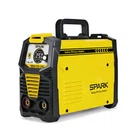
 DC New Technology TIG Welding Machine
Material / Metal Processed:Stainless Steel and Iron. Rated Input Voltage:230 V. Max. Load Power Capacity:5.3-9.3 kVA. Output Polarity:DC TIG. Rated Duty Cycle @40°C (TIG):60
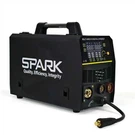
Add to Inquiry DC Single Phase TIG Welding Machine
Type:Argon welding machine. Material / Metal Processed:Stainless Steel and Iron. Rated Input Voltage:230 V. Max. Load Power Capacity:7.1 kVA. Output Polarity:DC TIG
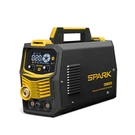
Add to Inquiry Plastic Panel Design Popular TIG Welding Machine
Material / Metal Processed:Stainless Steel. Rated Input Voltage:230. Max. Load Power Capacity:5.3-9.5. Output Polarity:DC TIG. Rated Duty Cycle @40°C (TIG):60
Add to Inquiry DC Pulse TIG Welding Machine
Material / Metal Processed:Stainless Steel. Rated Input Voltage:230. Max. Load Power Capacity:7.1. Output Polarity:DC TIG. Rated Duty Cycle @40°C (TIG):60
Add to Inquiry Industrial 380V Professional TIG for Welding Aluminium
Material / Metal Processed:Stainless Steel. Rated Input Voltage:380. Max. Load Power Capacity:18.2. Output Polarity:DC TIG. Rated Duty Cycle @40°C (TIG):60
Add to Inquiry AC/DC TIG for Welding Aluminium
Material / Metal Processed:Stainless Steel, aluminum, and other alloys. Rated Input Voltage:380. Max. Load Power Capacity:13. Output Polarity:DC TIG. Rated Duty Cycle @40°C (TIG):60
Add to Inquiry
Advantages of TIG Welding Machine
High-Quality Welds
The method’s inherent characteristics enable welders to achieve better control over the welding process, thereby yielding remarkably robust and long-lasting joints. This then means that the weld is unlikely to fracture and crack.
Precise Control
TIG welding provides precise control over the heat input, welding speed, and filler metal deposition. This level of control is especially beneficial for welding thin materials and intricate joints. The more control the welder has the more easier the weld will be to complete.
No Flux Required
Unlike some other welding methods, TIG welding does not require any flux. By not using any flux the welder doesn’t need to have to take up extra time trying to clean the weld so that it looks presentable, because of this they are able to increase their overall output.
Versatility
TIG welding can be used on a wide range of metals, including stainless steel, aluminum, copper, and even exotic metals like titanium and magnesium. This wide range of metals that can be TIG welded, it means that most jobs are able to be tackled with the use of a TIG welder.
Clean Welds
The use of an inert gas shield prevents the weld from reacting with atmospheric elements, resulting in clean and oxidation-free welds. The cleaner the weld is the stronger and more presentable the weld is, because of this the piece of work can go for a higher price than those which would have issues such as porosity.
No Smoke or Fumes
TIG welding does not create smoke or fumes unless the base metal being welded contains contaminants or elements such as oil, grease, paint, lead or zinc. The base metal should be cleaned before welding.
TIG Welding Machine: Everything You Need to Know!
TIG stands for tungsten inert gas and is technically called gas tungsten arc welding (GTAW). The process uses a non-consumable tungsten electrode that delivers the current to the welding arc. An inert gas, typically argon, protects and cools the tungsten and weld puddle. TIG welding is similar to oxy-acetylene welding in that you use a filler material for build-up or reinforcement.
Materials of TIG Welding Machine
TIG welding functions on a variety of materials, including:
Aluminum
Oftentimes, TIG welding is the optimal choice for aluminum parts. TIG equipment allows for precise control and produces high-quality welds, making it suitable for applications in aerospace, automotive, and other industries.
Stainless Steel
When TIG welding stainless steel, employ a DC machine to give the electrode negative polarity. The TIG torch must be connected to the negative terminal of the welder and the ground clamp to the positive terminal. Doing so gives you better control over heat input, minimizes distortion, and ensures the integrity of the stainless steel's corrosion-resistant properties.
Steel
TIG welding is suitable for many types of steel, including carbon steel and low-alloy steel. It allows for precise control over heat input and produces high-quality welds with minimal spatter. TIG welding is commonly used in structural fabrication, piping, and automotive production. For more information, see our guide on Steel Metals.
Chromoly
Chromoly (chromium-molybdenum alloy) is a popular material in motorsports and bicycle manufacturing. TIG welding produces strong, crack-free welds that other processes can’t match on chromoly materials. TIG welding's precise control over heat input helps prevent heat-affected zone (HAZ) issues and ensures the material's mechanical properties are maintained.
Nickel Alloys
Nickel alloys, which are renowned for their corrosion resistance and high-temperature strength, are usually welded using TIG machines. Nickel alloys typically need shielding gasses like argon, helium, or a mix of the two for the best results. An alternative is to use an argon-hydrogen gas mixture designed specifically for welding pure nickel. It is appropriate for use in the power generation, chemical processing, and aerospace industries.
How To Use TIG Welding Machine?
To apply TIG welding effectively, follow these steps:
1. Gather the necessary equipment: TIG welding machine, tungsten electrode, filler rod, gas cylinder, protective clothing, and welding helmet.
2. Prepare the workpiece by cleaning it thoroughly with a wire brush or solvent to ensure a clean surface.
3. Set up the TIG welding machine and adjust the settings to match the material and thickness.
4. Grip the TIG torch with your hand, positioning it at an angle of around 70 or 80 degrees. Lift the torch slightly, keeping the tungsten tip 1/16 to 1/8 inch from the workpiece. Be careful not to let the tungsten come into contact with the workpiece as this can lead to contamination of the material, requiring you to regrind the tungsten.
5. Maintain a steady hand and move the torch in a controlled manner, directing the arc along your desired weld path.
6. Control the heat input by adjusting the amperage and filler rod as needed.
7. Keep the torch close to the workpiece for better control and visibility.
8. Once the weld is complete, gradually reduce the amperage and allow the weld to cool.
9. Inspect the weld for defects and make adjustments or repairs as necessary.
Application of TIG Welding Machine

Aerospace Industry:
TIG welding is commonly used in the aerospace industry for welding components such as aircraft structures, engine components, and fuel tanks.
Automotive Industry:
TIG welding machines are used in the automotive industry for welding components such as exhaust systems, chassis, and body panels.
Fabrication Industry:
TIG welding machines are widely used in the fabrication industry for welding a variety of metal components, including pipes, tubes, and sheet metal.
Construction Industry:
TIG welding machines are used in the construction industry for welding structural steel components, pipelines, and architectural elements.
Power generation Industry:
TIG welding machines are used in the power generation industry for welding components such as turbines, boilers, and heat exchangers.
Medical device Industry:
TIG welding machines are used in the medical device industry for welding components such as surgical instruments, implants, and medical equipment.

TIG Welding Machine vs. MIG Welding Machine
TIG Welding: Uses a non-consumable tungsten electrode to create an arc and requires a separate filler material to join the metals. The weld area must then be shielded from the atmosphere with the use on an inert gas such as argon.
MIG Welding: on the other hand, involves a consumable wire electrode that melts and fuses the base metals, the electrode then acts as a filler for the two metals. similarly to TIG welding, the weld are must be protected with the use of an inert gas such as argon.
TIG Welding: TIG welding is normally preferred for precise and intricate welding applications, especially on thin materials like stainless steel, aluminum, and non-ferrous metals. It is Commonly used in industries where aesthetic appeal, precision, and high-quality welds are crucial, such as aerospace, and electronics.
MIG Welding: Suited for faster and more efficient welding of thicker materials, making it popular in industries like automotive, construction, and manufacturing.
TIG Welding: Offers superior control over the welding process, this then results in a cleaner and more precise weld with minimal spatter and distortion, this then reduces the chances of messing up a weld. Ideal for critical applications where weld integrity is paramount, for example in the aviation sector it is quite likely to be using TIG welding.
MIG Welding: Provides good weld quality with decent speed, this then means that the business would be able to achieve more output in a certain amount of time. However, due to the higher deposition rates, the welds might not be as precise as those achieved with TIG welding, this would then mean that the welds would not be able to be used for certain jobs.
TIG Welding: Requires a higher level of skill and expertise due to the need for precise control over the arc, filler material, and heat input. Mastery can take time, but it allows for intricate work. this would then mean that the worker could charge a higher rate than a MIG welder as they are going to have more expertise in the area and would also have higher quality welds.
MIG Welding: Relatively easier to learn and operate, making it suitable for beginners and those seeking to weld quickly on thicker materials. This would then mean that the employees are likely to be on a lower wage than those who are TIG welders.
TIG Welding: Involves more complex equipment, including a power supply, tungsten electrode, filler material, and gas supply. This can make the setup more time-consuming and the process less portable.
MIG Welding: Simpler setup with a welding gun, wire feeder, power source, and gas supply. This makes it more convenient for on-site and rapid welding tasks.
Our Certificate


FAQ
Q: What is TIG welding used for?
Q: What is a TIG welder best for?
Q: Which is better TIG or stick welding?
Q: What gas do you use for TIG welding?
Q: How does a TIG welding machine work?
Q: What materials can be welded with a TIG welding machine?
Q: What are the advantages of using a TIG welding machine?
Q: What are the disadvantages of using a TIG welding machine?
Q: Can a TIG welding machine be used for thick materials?
Q: What type of gas is used with a TIG welding machine?
Q: How do I choose the right TIG welding machine for my needs?
Q: Can a TIG welding machine be used for both AC and DC welding?
Q: Can a TIG welding machine be used for welding in tight spaces?
Q: Can a TIG welding machine be used for both manual and automated welding?
Q: How do I set up a TIG welding machine?
Q: Can a TIG welding machine be used for welding thin materials?
Q: What safety precautions should I take when using a TIG welding machine?
Q: Can a TIG welding machine be used for welding pipes?
Q: Can a TIG welding machine be used for welding stainless steel?
We're professional tig welding machine manufacturers and suppliers in China, specialized in providing high quality customized service. Please feel free to wholesale discount tig welding machine in stock here from our factory. For more cheap products, contact us now.
Plastic Panel Design Popular TIG Welding Machine, DC New Technology TIG Welding Machine, inert gas welder