
Latest Products


Contact Us
- Xinkaihe Industrial Zone, Chengdong Street, Wenling District, Taizhou City, Zhejiang Province, China
- sales@genteck.cn
- +86-576-86088668
Your Premier MIG Welding Machine Manufacturer!
Taizhou Genteck Electric Co., Ltd was established in 2007 and is located in beautiful coastal city wenling, zhejiang, China. It is a professional manufacture & exporter of all kinds of welding machines, plasma cutters and battery chargers.
Advanced Equipment
Punch, Bending machine, Optical detector, PCB inserting machines, etc.
Global Shipping
Products are exported to South Asia, Western Europe, Mid East, Oceania, Southeast Asia, Central America, South America, Eastern Europe.

International Certification
We have ROHS, ISO9001, CE certificates and we have strict quality control system regulations.
24H Online Service
Our customer service representatives are available 24/7 to assist you with any inquiries, or after-sales services.

MIG welding is an arc welding process in which a continuous solid wire electrode is fed through a welding gun and into the weld pool, joining the two base materials together. A shielding gas is also sent through the welding gun and protects the weld pool from contamination. In fact, MIG stands for metal inert gas. The technical name for it is gas metal arc welding (or GMAW), and the slang name for it is wire welding.
 MIG 250 Multifunctional Machine
Parameter Specification. Model:Mig/TIG-250. Input Voltage:220V ±15% (Single Phase). Frequency:50/60 Hz. Rated Output Current:250 Amps (Max). Welding Processes:MIG MMA (Stick), Lift TIG. Electrode
Add to Inquiry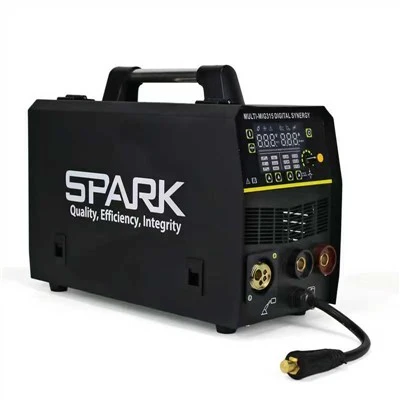 Multi-Mig315 Digital Synergy Welding Machine
Quick Details Function & Features The Multi-Mig315 Digital Synergy stands as a cutting-edge welding solution, engineered to deliver precision and efficiency in various welding applications. As a
Add to Inquiry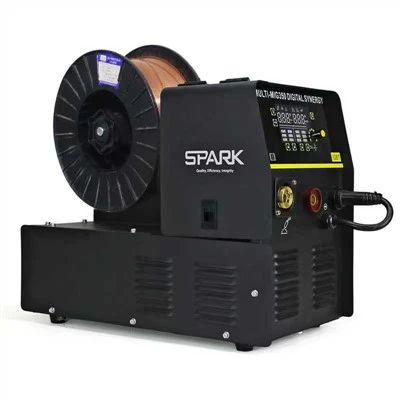 15kg Single Phase MIG Euro Connector Welding Machine
Quick Details Function & Features The 15kg single phase MIG Euro connector welding machine emerges as a compact powerhouse tailored for professional efficiency and user-friendly operation, ideal
Add to Inquiry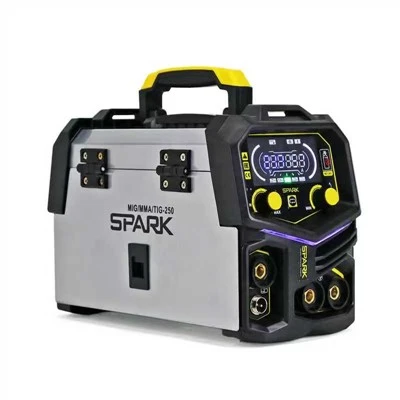 Multifunctional MIG/MMA/TIG 3 in 1 Welding Machine
Quick Details Function & Features The multifunctional MIG/MMA/TIG 3 in 1 welding machine stands out as a versatile solution for diverse welding demands, integrating MIG, MMA, and TIG processes
Add to Inquiry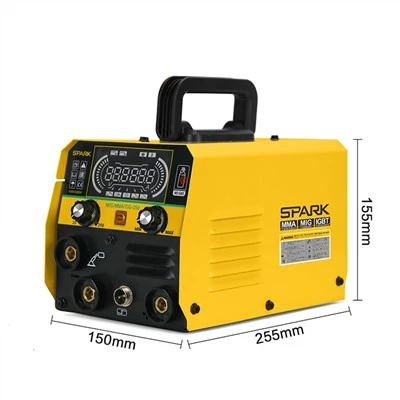 Gasless MIG For Flux Wire
Quick Details Function & Features Gasless MIG for Flux Wire utilizes a specialized flux cored wire that provides its own s hielding, doing away with the requirement of an external gas supply.
Add to Inquiry Powerful MIG Welding Machine
Wire Melting Type:Spray Transfer. Max. Load Power Capacity:24.3. Rated Duty Cycle @40°C (MIG):60. Rated Input Voltage:230 V. Rated Output Current (MIG):500 A. Weight (KG):50 KG.
Add to Inquiry MIG Welding Machine With Wheel
Material / Metal Processed:Stainless Steel. Rated Input Voltage:380. Max. Load Power Capacity:8.9. Rated Duty Cycle @26°C (MIG):60.
Add to Inquiry MIG-250 Inverter Welding Machine
Material / Metal Processed:Stainless Steel. Rated Input Voltage:230. Max. Load Power Capacity:7.0. Rated Duty Cycle @40°C (MIG):60. Dimensions:28*32*25 cm.
Add to Inquiry Dual Pulse Welding Machine
Material / Metal Processed:Stainless Steel. Rated Input Voltage:220. Max. Load Power Capacity:7.8. Rated Duty Cycle @40°C (MIG):60.
Add to Inquiry Gasless MIG Welding Machine
Type:Mig Welders. Arc Current:20-250A. Pulse Frequency:50/60 HZ. Pilot Arc Current:20-250A. Rated Duty Cycle:60%
Add to Inquiry 5 Kgs Wire Welding Machine
Type:Mig Welders. Arc Current:20-315A. Pulse Frequency:50/60 HZ. Pilot Arc Current:20-315A. Rated Duty Cycle:60%
Add to Inquiry 1 kg Wire Welding Machine
Type:Mig Welders. Arc Current:20-250A. Pulse Frequency:50/60 HZ. Pilot Arc Current:20-250A. Rated Duty Cycle:60%
Add to Inquiry
Advantages of MIG Welding Machine
Higher Productivity
Many welders will enjoy higher productivity due to time saved by not having to constantly change rods or chip away slag, as well as not having to brush the weld repeatedly. They’re able to work faster and cleaner.
Simple to Learn
One of the top advantages of MIG welding is its simplicity. Welders can learn how to MIG weld in a few hours, and some instructors claim they can provide basic training in twenty minutes—with the majority of the time being spent on cleaning the weld.
Simple and Great Welds
MIG provides better weld pool visibility. Add this to the simplicity of the process and better control offered by the auto-feed wire, and MIG makes it simple to produce a great-looking weld.
Clean and Efficient
Since MIG uses a shielding gas to protect the arc, there is very little loss of alloying elements as the metal transfers across the arc. There is no slag to remove, which is typical for stick welding, and only minor weld spatter is produced.
Versatile
MIG welding is extremely versatile and can weld a wide variety of metals and alloys, while operating at a variety of ways, such as semi and fully automatic. While MIG welding is useful for many home welding projects, it is also used by a large number of industries.
Faster Welding Speed
The continuously fed wire keeps both hands free for MIG welding, which improves the welding speed, quality of the weld, and overall control.
MIG Welding Machine: Everything You Need to Know
MIG welding works by feeding a metal wire through a gun which conducts electricity from the welding machine. It generates an arc with the target material in order to melt both the metal wire and part of the joint and form a metal bond. As the wire is fed through and a molten weld pool is created, the weld is protected by a shielding gas. The shielding gas protects the weld from contaminants in the atmosphere.
The Common Materials Used in MIG Welding Machine
The most common materials used in MIG welding are listed below:
Copper
Copper is a soft, malleable metal used in plumbing and electrical applications. MIG welding is the preferred process for welding copper. However, the heat required to weld copper is about twice that of steel where the heat temperature makes it easier and possible.
Aluminum
Aluminum is a soft, silvery, non-ferrous metal. Welding aluminum requires 100% pure argon gas. Aluminum welding can be difficult as the melt pool can quickly burn through the part and drip out the other side.
Nickel Alloys
Nickel alloys are composed of nickel and usually chromium, iron, molybdenum, and/or copper. Usually, 100% argon gas is used to weld nickel alloys. However, when more energy is required, up to 40% helium can be used.
Steels
Steels are alloys made mainly of iron and carbon, usually also including sulfur and phosphorus. When welding steel, it is advised not to use 100% argon gas for shielding but rather 75% argon and 25% carbon dioxide. This is because 100% argon gas will reduce the ductility of the weld.
Applications Of MIG Welding Machine
Automotive Industry
MIG welding is extensively used in the automotive industry for manufacturing and repairing vehicle components such as body panels, frames, exhaust systems, and suspension parts.
Manufacturing Industry
MIG welding is widely used in manufacturing industries for fabricating products such as machinery, equipment, appliances, furniture, and metal structures.
Construction Industry
MIG welding machines are used in the construction industry for various applications such as joining structural steel members, fabricating metal frameworks, and welding reinforcement bars in concrete structures.
Aerospace Industry
MIG welding is employed in the aerospace industry for welding aircraft components such as fuselages, wings, landing gear, and engine parts.
Shipbuilding Industry
MIG welding machines are used in shipyards for constructing ship hulls, decks, and structural components. The high deposition rates and deep penetration capabilities of MIG welding make it suitable for heavy-duty welding applications in the maritime sector.
Oil And Gas Industry
MIG welding machines are used in the oil and gas industry for welding pipelines, storage tanks, and other infrastructure components. The versatility of MIG welding allows for welding different types of metals used in this industry, such as carbon steel, stainless steel, and alloy steel.
Metal Fabrication Industry
MIG welding machines are widely used in metal fabrication shops for various applications such as welding gates, fences, railings, staircases, and ornamental metalwork.
Repair And Maintenance
MIG welding machines are commonly used for repair and maintenance work in industries such as automotive, construction, and manufacturing. They are ideal for fixing broken or damaged metal components and restoring their functionality.
Fundamentals of MIG Welding Machine

Preparation for MIG Welding Machine
Choose the right welding machine: Select a welding machine that matches the size and power requirements of your project. Consider the ease of transportation as well.
Use the correct welding wire and gas: Determine the appropriate type of welding wire and gas based on the metals you are joining. Carbon dioxide or argon mixes are commonly used for clean and spatter-free welds on steel components. Make sure you have enough gas for the entire project to avoid delays or safety hazards.
Set up the welder correctly: Before starting, check all connections and cables to make sure they are securely connected. Look out for sparks or arc flashes that could indicate wiring or equipment issues. Address any signs of wear on electrical cords to prevent short circuits.
Take precautions during operation: When using the MIG welder, always prioritize safety. Monitor sparks and arc gaps closely to avoid fire hazards. Wear protective gear such as flame-resistant clothing, face masks, gloves, and boots to protect against burns. Keep flammable materials away from your work area to minimize the risks associated with uncontrolled sparks.
Safety considerations when MIG Welding Machine
Wear appropriate protective gear: Protect yourself from sparks and gasses by wearing suitable masks and respirators that meet safety standards. Ensure a proper fit to shield your eyes and lungs effectively. Additionally, wear flame-resistant clothing, MIG safety gloves, boots, and other protective gear made from non-combustible materials, avoiding fabrics like cotton or synthetics.
Keep the work area clear of flammable substances: Maintain a safe work environment by removing flammable liquids or gasses, such as solvents, gasoline, propane tanks, or aerosol cans. These materials can ignite if exposed to sparks or heat generated during MIG welding.
Avoid confined spaces with limited ventilation: Working in confined areas with inadequate air circulation should be avoided. Toxic fumes can accumulate rapidly, posing health risks. Additionally, the presence of combustible materials near sparks can lead to explosions, emphasizing the importance of working in well-ventilated spaces.
Understand equipment safety requirements: Before starting any welding job, thoroughly familiarize yourself with the safety requirements specific to your equipment. Adhere to these guidelines while operating your machinery to ensure proper usage and mitigate potential hazards.

Common faults and troubleshooting of MIG Welding Machine
1. No output
Fault cause: Mainly the primary coil or secondary coil has a circuit break.
Troubleshooting method: Use direct observation or multimeter measurement to detect the circuit break point. After finding the circuit break point, use welding method or screw to fix the connection, and add insulation pads.
2. The welding current is too small
Fault cause: The welding cable is too long; the welding cable is rolled into a disc shape, causing the inductance to be too large, and the welding cable has poor contact with the terminal.
Troubleshooting method: Reduce the cable length or increase the cross-sectional area of the cable core, straighten the cable as much as possible so that it does not bend, and make the cable line have good contact with the terminal.
3. The welding machine casing is charged
Fault cause: The primary or secondary coil touches the shell, the power cord touches the shell, the welding cable touches the shell, and the shell is poorly grounded or not grounded.
Troubleshooting method: Eliminate the shell contact phenomenon, connect the ground wire, and ground the shell well.
4. During welding, the movable iron core has a strong vibration sound
Fault cause: The brake screw or spring of the movable iron core is loose, and the moving mechanism of the iron core is damaged.
Troubleshooting method: Tighten the brake screw or adjust the tension of the spring, and repair the moving mechanism of the iron core.
5. Overheating of the electric welder
Fault cause: The electric welder is overloaded, the transformer coil is short-circuited, and the insulation of the iron core screw is damaged.
Troubleshooting method: Reduce the current used; eliminate the short circuit, rewind the coil; restore insulation, etc.
6. The welding current fluctuates during use
Fault cause: ① The power supply voltage of the power grid fluctuates too much;
② The gap between the lead screw and the nut of the current fine adjustment mechanism is too large due to wear, which increases the vibration amplitude of the movable iron core, resulting in frequent changes in the relative position of the movable and static iron cores;
③ The gaps on both sides of the movable iron core and the static iron core are not equal, so that the electromagnetic force on the movable iron core during welding is unequal, resulting in excessive vibration, which also causes the relative position of the movable and static iron cores to change frequently.
Troubleshooting methods: ① Whether the grid voltage fluctuates can be measured with a voltmeter. If it is indeed caused by grid voltage fluctuations, avoid using the welding machine during peak hours;
② If the bolts at the circuit connection are loose, you can find out by opening the welding machine casing and tighten the bolts;
③ To adjust the gap between the lead screw and the nut, you can check it by shaking the adjustment handle forward and backward. Because there is a gap, you can feel the size of the gap with your hand. If the gap is indeed too large to be used, it should be replaced with a new part.
Our Certificate


FAQ
Q: What is MIG welding used for?
Q: What's the difference between TIG and MIG welding?
Q: What does MIG stand for in welding?
Q: What is the difference between a MIG welding machine and a normal welding machine?
Q: Why MIG welding is better?
Q: Which gas is used for MIG welding?
Q: What happens if you MIG weld without gas?
Q: How does a MIG welding machine work?
Q: What are the advantages of using a MIG welding machine?
Q: What types of metals can be welded using a MIG welding machine?
Q: Can a MIG welding machine be used for both thick and thin materials?
Q: What size wire spool should I use for my MIG welding machine?
Q: How do I determine the correct settings for my MIG welding machine?
Q: Can MIG welding machines be used for outdoor welding?
Q: What safety precautions should I take when using a MIG welding machine?
Q: How often should I clean and maintain my MIG welding machine?
Q: Can a MIG welding machine be used for welding thick materials?
Q: How do I troubleshoot common issues with my MIG welding machine?
Q: Can a MIG welding machine be used for vertical or overhead welding?
Q: What are some common applications for MIG welding machines?
Q: Can MIG welding machines be used for welding aluminum?
We're professional mig welding machine manufacturers and suppliers in China, specialized in providing high quality customized service. Please feel free to wholesale discount mig welding machine in stock here from our factory. For more cheap products, contact us now.
mig welding machine for welding tanks, mig welding machine for welding joints, Three PCB 15kg Wire MIG Welding Machine