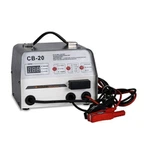
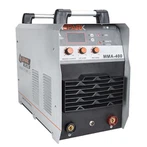
In the manufacturing of power batteries for new energy vehicles, aluminum tab welding is a key process that affects battery safety and performance. Traditional welding methods are prone to problems such as pores and cold welding, while high-frequency inverter welding machines are becoming the mainstream solution in the industry with their advantages such as high response speed and precise energy control.
1. Industry pain points of aluminum tab welding
① Challenges brought by material properties
● High thermal conductivity: The thermal conductivity of aluminum is three times that of steel, and the rapid loss of heat leads to insufficient penetration
● Influence of oxide layer: The surface Al₂O₃ film (melting point 2050℃) hinders the formation of the molten pool
● Tendency to thermal cracks: Grain boundary liquefaction at high temperatures is prone to cracks
② Limitations of traditional welding methods
| Welding process | Main problems | Defective rate |
| Ordinary MIG welding | Lots of spatter, poor weld formation | 15%-20% |
| AC TIG welding | Slow speed, difficult to clean the oxide layer | 10%-15% |
| Ultrasonic welding | Only suitable for very thin aluminum sheets (<0.3mm) | High equipment cost |
2. Technological breakthroughs of high-frequency inverter welding machines
① Core advantages
● Ultra-fast response speed (>100kHz): Accurately control the current waveform of each pulse to suppress spatter
● Multi-stage energy output: preheating (breaking the oxide layer) → main welding (deep penetration) → slow cooling (anti-crack)
● Digital signal processing (DSP): real-time monitoring of arc status and automatic compensation of voltage fluctuations
② Key parameter configuration
| Parameters | Recommended value | Function description |
| Frequency | 50-100kHz | Reduce heat input, reduce deformation |
| Pulse width | 0.5-2ms | Control melting depth |
| Base current | 30% of peak current | Maintain arc stability |
| Protective gas | Ar+30%He | Enhance molten pool fluidity |


3. Common problems and countermeasures
① Weld porosity
● Cause: Hydrogen dissolves into the molten pool (aluminum has a strong ability to absorb hydrogen at high temperatures)
● Countermeasures: Use high-purity argon (≥99.999%); preheat to 120℃ before welding (reduce hydrogen solubility)
② Cold welding (unfused)
● Cause: The oxide layer is not completely removed
● Countermeasures: Add arc stirring function (DSP controls arc swing); use ramp current (slow rise and slow fall to avoid sudden heating and cooling)
High-frequency inverter welding machine significantly improves the reliability and efficiency of aluminum tab welding through digital control, fast response, and multi-waveform output. For more complete welding data, please contact our team!