




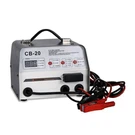

Standby power consumption, often referred to as vampire power or phantom load, is the electricity consumed by electronic devices when they are plugged in but not performing their primary function. In the context of 6V/12V/24V battery chargers, understanding standby power consumption is crucial for both environmental and economic reasons. As a supplier of these battery chargers, I have witnessed firsthand the growing demand for energy - efficient products.
Understanding Standby Power Consumption
Standby power consumption occurs because modern electronic devices, including battery chargers, are designed to remain in a low - power state ready to be activated quickly. Even when a charger is not actively charging a battery, it may still draw a small amount of power to maintain internal circuits, keep status indicators illuminated, or stay connected to a network (if applicable).
For 6V/12V/24V battery chargers, the standby power consumption can vary significantly depending on several factors. One of the primary factors is the charger's design and technology. Chargers with more advanced power management systems tend to have lower standby power consumption. For example, some chargers use switch - mode power supplies (SMPS), which are generally more efficient than linear power supplies. SMPS can adjust the power output according to the load, reducing power waste during standby.
Another factor is the presence of additional features. Chargers with built - in displays, Bluetooth connectivity, or smart charging algorithms may consume more standby power. These features require continuous power to maintain functionality, even when the charger is not in use.
Measuring Standby Power Consumption
Measuring the standby power consumption of a 6V/12V/24V battery charger is relatively straightforward. You can use a power meter, also known as a watt - meter or energy monitor. Simply plug the charger into the power meter and then into a power outlet. Make sure the charger is not connected to a battery and let it sit for a few minutes to reach a stable standby state. The power meter will display the amount of power the charger is consuming in watts.
It's important to note that the standby power consumption can also vary depending on the input voltage. Most chargers are designed to work within a certain voltage range, and the standby power may change slightly as the input voltage fluctuates. For example, if the charger is designed for a 110 - 240V input, the standby power at 110V may be different from that at 240V.


Typical Standby Power Consumption Values
The standby power consumption of 6V/12V/24V battery chargers can range from a few milliwatts to several watts. Basic chargers with no additional features may have a standby power consumption of as low as 0.1 - 0.5 watts. These chargers are usually simple in design and do not have features like displays or smart charging functions.
On the other hand, more advanced chargers with multiple charging modes, built - in displays, and connectivity features can have a standby power consumption of 1 - 5 watts or more. For example, a Digital Universal Battery Charger that can charge different types of batteries and has a digital display may consume around 2 - 3 watts in standby mode.
Portable chargers, such as the Portable Charger with Handle, often have lower standby power consumption due to their compact design and limited features. These chargers may consume around 0.2 - 1 watt in standby.
Mini chargers, like the Mini Charger For Motobike Battery, are designed to be energy - efficient. Their standby power consumption can be as low as 0.1 - 0.3 watts, making them an excellent choice for users who are concerned about energy waste.
Impact of Standby Power Consumption
Although the standby power consumption of an individual charger may seem insignificant, when multiplied by the large number of chargers in use worldwide, it can have a significant impact on energy consumption and electricity bills. According to some estimates, standby power can account for up to 10% of a household's total electricity consumption.
From an environmental perspective, the cumulative standby power consumption of millions of battery chargers contributes to greenhouse gas emissions. As the demand for battery - powered devices continues to grow, reducing standby power consumption has become an important goal for manufacturers and consumers alike.
Our Approach as a Supplier
As a supplier of 6V/12V/24V battery chargers, we are committed to developing energy - efficient products. We invest in research and development to improve the power management systems of our chargers. Our engineers are constantly working on optimizing the design of our chargers to reduce standby power consumption without compromising performance.
We also provide clear information about the standby power consumption of our products to our customers. On our product packaging and websites, we include detailed specifications, including the standby power consumption values. This allows our customers to make informed decisions when choosing a charger.
How to Reduce Standby Power Consumption
If you are a user of 6V/12V/24V battery chargers, there are several steps you can take to reduce standby power consumption. First, unplug the charger when it is not in use. This is the simplest and most effective way to eliminate standby power waste. If you find it inconvenient to unplug the charger every time, you can use a power strip with an on/off switch. Simply turn off the power strip when the charger is not needed.
Another option is to choose a charger with low standby power consumption. When shopping for a charger, look for products that are labeled as energy - efficient or have received energy - saving certifications. These chargers are designed to consume less power in standby mode.
Contact Us for Purchase and Discussion
If you are interested in our 6V/12V/24V battery chargers, we welcome you to contact us for purchase and further discussion. Our team of experts can provide you with detailed information about our products, including standby power consumption, features, and pricing. We are committed to providing high - quality, energy - efficient chargers that meet your needs. Whether you are a distributor, retailer, or end - user, we look forward to working with you.
References
- "Standby Power: How Much Does It Cost You?" by the U.S. Department of Energy.
- "Energy - Efficient Battery Chargers: Design and Performance" by the International Energy Agency.
- "Measuring Standby Power Consumption of Electronic Devices" by the National Renewable Energy Laboratory.