

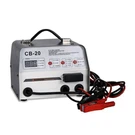



As a leading supplier of chargers and starters, I've witnessed firsthand the critical role these components play in various industries. One of the most frequently asked questions we encounter is about the output current of chargers and starters. In this blog post, I'll delve into what output current is, its significance, and how it varies across different types of chargers and starters.
Understanding Output Current
Output current, measured in amperes (A), refers to the amount of electric charge flowing through a circuit per unit of time. In the context of chargers and starters, it's the current that the device delivers to the battery or the electrical system it's connected to. This current is crucial because it determines how quickly a battery can be charged or how effectively a starter can crank an engine.
For chargers, the output current directly impacts the charging time. A higher output current means the battery will charge faster, but it also requires the battery to be able to handle that level of current safely. If the output current is too high for the battery, it can lead to overheating, reduced battery life, or even pose a safety hazard. On the other hand, a lower output current will result in a longer charging time but may be more suitable for batteries that are sensitive to high currents.
In the case of starters, the output current is essential for providing the necessary power to turn the engine over. When you turn the key in your car's ignition, the starter draws a large amount of current from the battery to spin the engine's flywheel. The output current of the starter needs to be sufficient to overcome the engine's compression and friction, especially in cold weather or when the engine is larger and more powerful.
Factors Affecting Output Current
Several factors can influence the output current of chargers and starters. Let's take a closer look at some of the most important ones:


Battery Capacity
The capacity of the battery being charged or started is a significant factor. Larger batteries with higher ampere - hour (Ah) ratings generally require higher output currents to charge efficiently or to be started. For example, a large industrial battery used in a forklift may have a capacity of several hundred Ah and will need a charger with a relatively high output current to charge it in a reasonable amount of time.
Charger or Starter Design
The design of the charger or starter itself plays a crucial role. Different models are engineered to deliver specific output currents based on their intended applications. For instance, a Spark Design Battery Charger may be designed with a particular output current range to meet the needs of a specific type of battery, such as those used in motorcycles or small boats.
Temperature
Temperature can have a significant impact on the output current. In cold temperatures, the internal resistance of the battery increases, which can reduce the effective output current of the charger or starter. This is why it can be more difficult to start a car in winter, as the starter has to work harder to overcome the increased resistance. Conversely, in high temperatures, the battery may be more prone to overheating if the output current is too high.
Electrical System Requirements
The electrical system of the device being powered also affects the required output current. Industrial equipment, for example, may have more demanding electrical requirements than consumer electronics. An Industrial Charger and Starter is designed to meet the high - current needs of industrial machinery, such as generators or large motors.
Output Current in Different Types of Chargers and Starters
Battery Chargers
- Trickle Chargers: These chargers typically have a very low output current, usually in the range of 1 - 2 amps. They are designed to maintain the charge of a battery over a long period, such as during storage. Trickle chargers are ideal for small batteries or those that are not used frequently, like the batteries in classic cars or lawn mowers.
- Fast Chargers: Fast chargers can deliver much higher output currents, sometimes up to 50 amps or more. They are used when you need to charge a battery quickly, such as in electric vehicles or high - performance batteries. However, fast charging requires careful management to prevent damage to the battery.
- Smart Chargers: Smart chargers are designed to adjust the output current based on the battery's state of charge, temperature, and other factors. They can provide a more efficient and safer charging process by optimizing the output current throughout the charging cycle.
Starters
- Automotive Starters: Automotive starters typically draw a large amount of current, often in the range of 100 - 300 amps, depending on the size and type of the engine. They need to provide enough power to turn the engine over quickly and reliably, especially in cold weather.
- Marine Starters: Marine starters are similar to automotive starters but are designed to withstand the harsh marine environment. They also need to provide sufficient output current to start the boat's engine, which can vary in size and power depending on the type of boat.
- Industrial Starters: Industrial starters are used in a wide range of applications, from small motors to large generators. They can have output currents that range from a few amps to several thousand amps, depending on the size and requirements of the industrial equipment.
Importance of Choosing the Right Output Current
Selecting the right output current for your charger or starter is crucial for ensuring the proper functioning and longevity of your battery and electrical system. If the output current is too low, the battery may not charge fully or the starter may not be able to start the engine. On the other hand, if the output current is too high, it can cause damage to the battery, overheat the electrical components, and even pose a safety risk.
When choosing a charger or starter, it's important to consider the specific requirements of your battery and the device it powers. You should also look for products that are designed to provide a stable and reliable output current. Our Portable Charger with Handle is a great example of a product that offers a suitable output current for a variety of applications, while also being convenient and easy to use.
Conclusion
The output current of chargers and starters is a critical parameter that directly affects the performance and safety of your battery and electrical system. By understanding what output current is, the factors that influence it, and how it varies across different types of chargers and starters, you can make informed decisions when selecting the right products for your needs.
As a supplier of chargers and starters, we are committed to providing high - quality products with the appropriate output currents for a wide range of applications. Whether you need a charger for your car battery or a starter for your industrial equipment, we have the expertise and products to meet your requirements.
If you're interested in learning more about our chargers and starters or would like to discuss your specific needs, we encourage you to reach out to us for a procurement discussion. Our team of experts is ready to assist you in finding the perfect solutions for your charging and starting requirements.
References
- Battery University: A comprehensive resource for battery - related information, including charging and starting principles.
- Electrical Engineering textbooks: Provide in - depth knowledge of electrical circuits and the principles of current flow.