


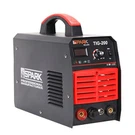
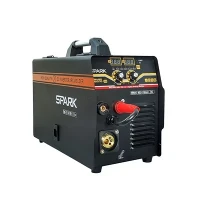
If you’ve spent any time in metal fabrication, automotive repair, structural steel work, or custom art welding, you’ve probably heard of MMA, TIG, and cutting machines—but understanding how an MMA Tig Cut Machine stands apart from general welding tools, standalone cutters, or even single-process welders is what makes it a game-changer for small to mid-sized workshops. For 12 years, my team has supplied these machines to fabricators, hobbyists, and contractors, so I’ve gotten to hear first-hand why so many people default to less versatile tools without realizing they’re missing out on time and cost savings. Today, I want to break down the key differences, and show how a purpose-built MMA Tig Cut Machine solves pain points that other tools can’t.
Let’s start with the basics: what each of these core processes does, because that’s where the confusion starts. MMA (Manual Metal Arc) welding is the workhorse of many shops— it’s durable, works on rusty, dirty, or thick metals, and requires less setup than other methods. TIG (Tungsten Inert Gas) welding, by contrast, delivers clean, precise, high-quality welds on thin metals like aluminum, stainless steel, or copper, with no spatter to clean up. Then there’s cutting: oxy-fuel cutters have been around for decades, but plasma cutters (the standard for most modern shops) cut through any conductive metal quickly, without preheating. Standalone tools for each of these have their place, but when you combine them in a single machine, the trade-offs are very different from what you’ll see with other equipment.
First, let’s compare an MMA Tig Cut Machine to standalone welding machines. Most general-purpose welding machines are either single-process (only MMA or only TIG) or dual-process (MMA + TIG). The big catch with dual-process welders is that they leave out cutting—so if you need to cut a piece of steel before welding it, you have to grab a separate plasma cutter, drag it across your shop floor, and juggle two tools. That’s a waste of time: I’ve seen a single fabricator spend 20 minutes swapping tools on a small stainless steel bracket project, time that adds up to hours a week on larger jobs. An MMA Tig Cut Machine eliminates that because it integrates all three functions into one unit, so you can go from cutting to welding in seconds without leaving your workbench.
Wait, you might be thinking, “What about a multi-function welding machine that claims to do everything?” That’s a fair question, because there are a lot of machines out there marketed as “all-in-one” that actually cut corners. For example, some multi-function models combine MIG, TIG, and MMA welding, but leave out cutting entirely, so you still need a separate cutter. Others add a basic cutting function, but it’s low-power, slow, and can only cut thin mild steel—no good for thick structural work. Our MMA Tig Cut Machine, by contrast, is purpose-built for all three core processes: the cutting mode is a plasma cutter rated for up to 1/2 inch of steel, while the TIG mode has a high-frequency start for clean welds on aluminum, and the MMA mode handles rusty pipe with no issues. That’s not a “gimmick multi-function” machine—that’s a tool designed for real, daily use.


Let’s dive deeper into TIG-specific differences, because that’s where a lot of people get tripped up. Standalone TIG welders are made for precision, but they rarely include cutting, and they’re often more delicate than an MMA Tig Cut Machine. If you’ve ever used a standalone TIG welder, you know they’re great for thin sheet metal or custom art, but they’re not built to handle heavy-duty tasks like welding thick steel beams or repair work on construction equipment. An MMA Tig Cut Machine combines the TIG’s precision with the MMA’s durability, so you can weld a thin TIG-quality seam on a custom grill, then switch to MMA to weld a thick support bracket for the same project—all on the same machine, no need to set up two different welders. What about machines that offer TIG with lift start, instead of high-frequency? We also sell a cutting machine with lift TIG for shops that work in sensitive environments, where high-frequency can interfere with electronics. That’s a specialized add-on, but it’s another way our MMA Tig Cut Machine caters to specific shop needs, something many multi-function machines don’t offer.
Next, let’s compare to dedicated plasma cutters. A standalone plasma cutter is fast and good for straight cuts, but it’s useless for welding—so you still need a welder, and you have to maintain two separate pieces of equipment. What’s more, many budget plasma cutters have inconsistent cut quality: if you’re cutting a piece for a tight weld joint, a low-end standalone plasma can leave a rough edge that requires extra grinding, adding more time. An MMA Tig Cut Machine’s plasma cutting mode is optimized for weld prep: it leaves a smooth, square edge that fits perfectly for TIG or MMA welds, so you don’t have to grind before welding. I’ve had customers tell me this alone cut their project time by 30%: they cut a part, set it up for welding, and it fits exactly the first time, no rework.
Now, let’s address the “multi-function welding machine” category, because that’s a common point of comparison. There are two types of multi-function machines out there: the ones that only do welding functions, and the rare ones that add cutting. For example, a smart multi-function welding machine might do MIG, TIG, and MMA, but no cutting—so again, you’re missing a core function. A smart multifunctional MIG/TIG/MMA is another option, but again, no cutting. The biggest difference between these machines and our MMA Tig Cut Machine is that they trade versatility for compactness: they’re smaller, lighter, but the cutting function is an afterthought, not a core design feature. Our machine is built for heavy use, with a 40A plasma cutter and 200A weld output, so it can handle daily use in a busy shop, not just occasional hobby work. That’s why so many professional contractors choose our MMA Tig Cut Machine over generic multi-function models.
Let’s talk about real-world use cases, because theory only goes so far. Take a structural steel contractor: they need to cut steel beams to length, weld them together for frames, and sometimes fix broken steel components on-site. A contractor using separate tools would have a plasma cutter, an MMA welder, and a TIG welder—three machines, three sets of cables, three power supplies, taking up a lot of space in their truck. With an MMA Tig Cut Machine, they can carry one tool, do all three jobs, and save space and weight in their work truck. Another example: a custom car builder. They need to cut thin steel or aluminum for body panels, weld precision seams for exhaust systems, and weld thick steel for roll cages. An MMA Tig Cut Machine lets them switch between cutting and welding seamlessly, so they don’t have to stop mid-project to swap tools.
A common mistake I see buyers make is choosing a machine based just on “how many functions it has” instead of “how well those functions work.” A generic multi-function machine that does 5 welding functions but a bad cutting function is worse than a purpose-built MMA Tig Cut Machine that does three core functions very well. I’ve had customers come to us after buying a cheap multi-function machine that couldn’t cut 1/4 inch steel, so they ended up buying a separate plasma cutter anyway—wasting money on a tool they never used. Our machines are tested rigorously: our cutting mode meets industrial standards, our TIG mode has a 0.5mm arc for precision, and our MMA mode handles up to 1/2 inch steel. That reliability is what sets us apart from other suppliers.
Another key difference is maintenance. Standalone tools require separate maintenance: a plasma cutter needs new consumables, a TIG welder needs to clean the tungsten, an MMA welder needs to check the electrode holder. With an MMA Tig Cut Machine, you only have to maintain one set of consumables (for plasma cutting) and one set of welding accessories, so you save time on upkeep. I can’t tell you how many small shop owners have told me this is a huge benefit—they don’t have to keep track of three different parts inventories, which saves them money on spare parts too.
Now, let’s touch on adaptability. Many MMA Tig Cut Machines are inverter-based, which means they run on 110V or 220V power, so they work in garages, job sites, and even remote areas where power is limited. Standalone industrial cutters often need 3-phase power, which is expensive to install at a job site. That makes our machines ideal for mobile contractors or small shops that don’t have heavy power infrastructure. We also offer a professional multifunctional welding machine option for shops that need even more power, but it still retains the integrated cutting function—so even our highest-capacity models don’t force you to choose between versatility and power.
So, to wrap up the key differences: an MMA Tig Cut Machine integrates three core functions (MMA welding, TIG welding, plasma cutting) into one heavy-duty, easy-to-use unit, eliminating the need for multiple separate tools. Unlike generic multi-function welding machines, it’s designed with each function as a core feature, not an afterthought, so it delivers better performance for each task. It solves the biggest pain points of separate tools: wasted time swapping equipment, excess space, high maintenance, and inconsistent cut or weld quality.
If you’re tired of juggling multiple welding and cutting machines in your shop, and you want a tool that can keep up with daily, heavy-duty work without breaking the bank, we’re here to help. Our team has spent years refining our MMA Tig Cut Machine to meet the needs of professional fabricators, contractors, and hobbyists alike. To discuss your specific needs and find the right machine for your projects, reach out to us today.
References:
- American Welding Society. (2022). Welding Process Comparison: MMA, TIG, and Plasma Cutting. AWS Publications.
- Metal Fabrication Association. (2021). Multi-Function Equipment vs. Single-Process Tools in Industrial Workshops. MFA Industry Report.
- Plasma Cutters International. (2023). Cut Quality Standards for Weld Prep and Structural Steel Work. PCI Engineering Journal.
- Small Business Manufacturing Association. (2022). Cost Analysis of Integrated Welding/Cutting Tools for Small Fabrication Shops. SBMA Research Study.
- Industrial Power Tools Review. (2023). Inverter-Based Welding/Cutting Machines: Performance and Reliability Testing. ITR Technical Report.