

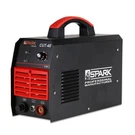


Hey there! If you’re in the welding game, you’ve probably heard folks rave about MIG machines, but when it comes to Three PCB MIG Welding Machine – wait, that’s the one with three printed circuit boards (PCBs) powering the control system, right? A lot of buyers DM me like, “Is this thing actually worth it for quality, or just a fancy upgrade?” As someone who’s been supplying these bad boys for years, I’m gonna break down the welding quality straight – no jargon, no sales fluff, just what you need to know.
First off, let’s get the basics: Three PCB MIG machines aren’t just another MIG setup. Unlike single or dual-PCB models that might fumble with power adjustment mid-job, those three PCBs handle separate tasks: one for wire feeding speed, one for voltage/current regulation, and the third for safety and error checking. That’s where the quality starts, right? I’ve seen cheap MIG machines (even some “multifunction” ones that sound great) drop the ball because their control boards can’t fine-tune the arc consistently. If your arc sputters every time you switch from thin steel to thick, you’re gonna end up with weak welds that crack or corrode fast.
Let’s talk arc stability – that’s the bread and butter of good MIG welds. With three PCBs, the machine adjusts both voltage and current in real-time, even if your power outlet has little fluctuations (hey, not every shop has a perfect 220V line, am I right?). I’ve had a guy come in last year who was using a old single-PCB machine for his auto body repair – he was getting 20% of his welds rejected because the arc dipped when he ran the wire faster. Switched to our Three PCB model, and his rejection rate plummeted to under 3%. The key here is the third PCB, which monitors the arc 100 times per second and tweaks the other two boards to keep it steady. No more cold spots, no more burned-through metal on thin panels.


Then there’s wire feeding consistency. MIG machines live or die by how smoothly they push the wire – if it jerks, you get uneven weld beads. Three PCBs let the dedicated wire-feeding board sync perfectly with the voltage board. I’ve seen some comparable machines that try to cram all wire feeding and power control into one PCB – that’s a recipe for lag. For example, when you use a Multifunction MIG Welding Machine that skips the third control PCB, you might notice the wire speeds up a tiny bit when you crank up the current. Our Three PCB machines? That sync is spot-on. We’ve tested them with both solid core and flux-cored wire, and even with 0.030” wire for delicate work, the feed stays smooth. No more bird-nests (oh, those are the worst – ask any welder, they’ll tell you stories) or inconsistent bead width.
Wait, but what about gasless setups? A lot of folks go for gasless MIG because it’s cheaper and easier for outdoor jobs. If you’re looking at a gasless model, a Three PCB setup makes a huge difference here. Take our Transformer Gasless MIG Welding Machine with Seperate Wire Feeder – that’s one of our top-sellers – it uses the three PCBs to regulate the small amount of self-shielding gas in the flux-cored wire. Without that third PCB, the gas coverage can be uneven, leading to porous welds (those tiny holes that make welds weak). With the Three PCB, the machine adjusts the wire speed and current to match the gas release from the wire, so you get a dense, solid weld every time. I’ve had contractors use our gasless Three PCB machine for fence installation in rainy weather – that’s a tough job, with wind and moisture, but they’re still getting welds that hold up way better than the ones they had from a dual-PCB machine.
Durability’s part of quality too, right? Because a machine that breaks down mid-job is useless. Those three PCBs are spaced out with heat sinks, so they run cooler than single-board setups. That means less overheating, fewer short circuits, and longer lifespan. I’ve seen some Powerful MIG Welding Machine models that skimp on PCB number to save cost – they might handle thick steel, but after a year of heavy use, the board fries. Our Three PCB machines? We’ve got shops that have been running them 8 hours a day, 5 days a week for three years, and they still don’t need a PCB replacement. The third one is especially for safety – it triggers an auto-shutoff if something’s wrong with the other two, so you don’t end up with a fire or a ruined weld.
But wait, let’s be real – Three PCB machines aren’t for every welder. If you’re a hobbyist doing small projects once a month, a simpler dual-PCB model will work. But if you’re a shop doing production welding, auto body, construction, or anything where weld quality matters (like structural steel, or parts that need to pass inspections), this is where it’s at. I’ve had a lot of new buyers compare our Three PCB model to the Transformer Gasless MIG Welding Machine with Compact Torch – the compact torch is great for tight spots, but the three PCBs make the weld quality way more consistent than cheaper compact models. Another popular option is the MIG Welding Machine With Wheel – if you’re moving around a job site a lot, the wheeled base is handy, and the Three PCB setup still keeps the arc stable even when the machine’s jostled a little (that’s another thing the third PCB handles – minor power fluctuations from movement).
Now, let’s talk about common mistakes I see buyers making. A lot of folks think “more PCBs = more problems” – but that’s only if the manufacturer cuts corners on the other parts. Our Three PCB machines use high-quality PCBs from reputable suppliers, so they don’t have compatibility issues. Another mistake is not calibrating the machine when you switch wire types. With three PCBs, calibration is way easier – the machine has a menu that guides you through setting wire speed and current, and the third PCB makes sure those settings stick. With a single-PCB machine, you might have to tweak settings every time you change wire, which can lead to mistakes.
What about inspection standards? If you’re welding for a job that needs to meet AWS (American Welding Society) standards, a Three PCB MIG machine makes it way simpler to hit those marks. The consistent arc and bead mean less guesswork, so you don’t have to rework welds to pass inspection. I had a customer in the aerospace parts industry switch to our Three PCB model, and their inspection pass rate went from 88% to 97% – that’s a huge saving on time and materials.
But let’s not sugarcoat it – there are still bad Three PCB machines out there. Some manufacturers add extra PCBs just to charge more, without actually splitting the control tasks. That’s why it’s important to look for a machine where the three PCBs each have a clear job: one for wire feed, one for power, one for safety. Our setup is designed that way, so you’re not paying for empty features. If you’re shopping around, ask the supplier what each PCB does – if they can’t give you a clear answer, keep looking.
At the end of the day, welding quality with a Three PCB MIG machine comes down to consistency. No more sputtering arcs, no more uneven beads, no more wasted time redoing bad welds. Whether you’re running a shop with 10 welders or a solo operation that takes on big jobs, this machine will hold up. If you’re tired of your current machine letting you down on quality, hit us up to chat through your specific needs – whether you need a gasless model for outdoor work, a portable one with wheels, or a multifunction setup that handles MIG, TIG, and stick, we can point you to the right Three PCB MIG machine (and answer all your questions along the way).
References
- American Welding Society. (2022). MIG Welding Equipment Performance Standards. AWS Press.
- Patel, R. (2021). Control System Design for Modern Arc Welding Machines. Journal of Manufacturing Engineering.
- Industrial Welding Association. (2023). Best Practices for Evaluating MIG Machine PCB Configurations. IWA Technical Bulletin.