

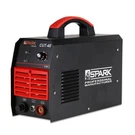


Hey there! As a supplier of TIG welding machines, I've seen firsthand how crucial it is to choose the right filler metal. TIG welding, or Tungsten Inert Gas welding, is a precise and versatile welding process that's great for a variety of materials. But picking the wrong filler metal can lead to all sorts of problems, like weak welds or even damage to your workpiece. So, let's dive into how you can select the perfect filler metal for your TIG welding machine.
Understanding the Basics of Filler Metals
First off, what exactly is a filler metal? Well, it's the material that you add to the joint during the welding process to create a strong bond between the two pieces of metal. Filler metals come in different forms, like rods or wires, and are made from various materials, each with its own unique properties.
The most common types of filler metals for TIG welding include aluminum, stainless steel, mild steel, and copper. Each type is designed to work best with specific base metals. For example, if you're welding aluminum, you'll want to use an aluminum filler metal. Using the wrong type can result in poor adhesion, porosity, and other welding defects.
Factors to Consider When Selecting Filler Metal
Base Metal Compatibility
The first and most important factor is the compatibility between the filler metal and the base metal. You need to make sure that the filler metal has similar chemical and mechanical properties to the base metal. This ensures that the weld will have the same strength, ductility, and corrosion resistance as the base metal.
For instance, when welding stainless steel, you should use a stainless steel filler metal. The grade of the filler metal should match the grade of the base metal as closely as possible. If you're not sure which grade to use, you can consult the manufacturer's specifications or a welding expert.
Welding Position
The position in which you'll be welding also plays a role in filler metal selection. Different filler metals have different fluidity and viscosity, which can affect how they perform in various welding positions. For example, some filler metals are better suited for flat or horizontal welding, while others work well in vertical or overhead positions.
If you're welding in a vertical or overhead position, you'll want a filler metal that has good slag control and a slower solidification rate. This allows the weld pool to stay in place and prevents the filler metal from dripping or sagging.
Joint Design
The design of the joint you're welding is another important consideration. Different joint designs require different filler metal sizes and shapes. For example, a butt joint may require a different filler metal than a lap joint.
The thickness of the base metal also affects the choice of filler metal. Thicker metals generally require larger diameter filler rods or wires to ensure proper penetration and fusion.
Welding Application
The intended application of the welded part is also a factor. If the part will be subjected to high stress, you'll need a filler metal that can provide high strength and toughness. On the other hand, if the part will be exposed to corrosive environments, you'll want a filler metal with good corrosion resistance.
Specific Filler Metal Recommendations for Different Base Metals
Aluminum
Aluminum is a popular material for TIG welding due to its lightweight and corrosion-resistant properties. When welding aluminum, you'll want to use an aluminum filler metal. The most common alloys for aluminum filler metals are 4043 and 5356.
Alloy 4043 is a general-purpose filler metal that's easy to use and provides good fluidity. It's suitable for welding most aluminum alloys, including 6061 and 6063. Alloy 5356, on the other hand, is stronger and more corrosion-resistant than 4043. It's often used for welding high-strength aluminum alloys and in applications where corrosion resistance is critical.


If you're interested in welding aluminum, check out our Industrial 380V Professional TIG for Welding Aluminium or AC/DC TIG for Welding Aluminium. These machines are specifically designed for welding aluminum and can help you achieve high-quality welds.
Stainless Steel
Stainless steel is another commonly welded material. When welding stainless steel, you should use a stainless steel filler metal. The most common grades for stainless steel filler metals are 308, 309, and 316.
Grade 308 is a general-purpose filler metal that's suitable for welding most 300-series stainless steels. It provides good corrosion resistance and mechanical properties. Grade 309 is used for welding dissimilar metals, such as stainless steel to mild steel. It has a higher chromium and nickel content, which makes it more resistant to corrosion and cracking. Grade 316 is used for welding stainless steel in corrosive environments, such as marine applications.
Mild Steel
Mild steel is one of the easiest materials to weld. For mild steel, you can use a mild steel filler metal, such as ER70S-6. This filler metal is widely available and provides good strength and ductility. It's suitable for a variety of applications, including general fabrication, automotive repair, and structural welding.
Copper
Copper is a highly conductive and corrosion-resistant material. When welding copper, you'll want to use a copper filler metal. The most common types of copper filler metals are pure copper and copper alloys, such as bronze and brass.
Pure copper filler metal is used for welding pure copper. It provides good electrical conductivity and corrosion resistance. Copper alloys, on the other hand, are used for welding copper to other metals or for applications where higher strength is required.
Other Considerations
Filler Metal Diameter
The diameter of the filler metal is also an important factor. The diameter you choose depends on the thickness of the base metal and the welding current. Generally, thicker base metals require larger diameter filler rods or wires.
If you use a filler metal that's too small for the base metal, you may not achieve proper penetration and fusion. On the other hand, if you use a filler metal that's too large, it can be difficult to control the weld pool and may result in excessive heat input.
Welding Current
The welding current also affects filler metal selection. Different filler metals require different welding currents to achieve proper melting and fusion. You need to make sure that your TIG welding machine can provide the appropriate current for the filler metal you're using.
Most TIG welding machines allow you to adjust the welding current. You can refer to the manufacturer's recommendations or a welding chart to determine the correct current for your filler metal and base metal combination.
Conclusion
Selecting the right filler metal for your TIG welding machine is crucial for achieving high-quality welds. By considering factors such as base metal compatibility, welding position, joint design, and welding application, you can choose the filler metal that's best suited for your specific needs.
If you're still unsure which filler metal to use or have any other questions about TIG welding, don't hesitate to reach out. We're here to help you make the right choice. And if you're in the market for a new TIG welding machine, check out our Plastic Panel Design Popular TIG Welding Machine. It's a great option for both beginners and experienced welders.
If you're interested in purchasing TIG welding machines or filler metals, feel free to contact us for more information and to start a procurement discussion. We look forward to working with you!
References
- AWS Welding Handbook, Volume 2: Welding Processes
- The Welding Institute (TWI) - Welding Procedure Development and Qualification
- Miller Electric Mfg. Co. - Welding Tips and Techniques