

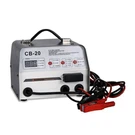




Arc welding is a widely used welding process that joins metals by generating an electric arc between an electrode and the workpiece. As a leading supplier of ARC Welding Machines, I've witnessed firsthand the importance of understanding the welding bead appearance, which can provide valuable insights into the quality of the welding process. In this blog, I'll delve into the various aspects of welding bead appearance when using an ARC Welding Machine.
1. Ideal Welding Bead Appearance
An ideal welding bead produced by an ARC Welding Machine has several distinct characteristics. Firstly, it should have a smooth and uniform surface. There should be no visible cracks, porosity, or excessive spatter. The bead should blend seamlessly with the base metal, creating a strong and aesthetically pleasing joint.
The width of the welding bead is also crucial. It should be consistent throughout the length of the weld, and its size depends on the welding parameters, such as current, voltage, and welding speed. A proper bead width ensures adequate fusion and strength of the joint. For example, when using our BX1 - 200C AC Welding Machine, with the right settings, it can produce a well - defined and evenly wide welding bead.
The height of the welding bead, also known as the reinforcement, should be within an acceptable range. Too much reinforcement can lead to stress concentration, while too little may result in insufficient strength. Generally, a moderate and consistent reinforcement is desirable.
2. Factors Affecting Welding Bead Appearance
2.1 Welding Current
The welding current is one of the most significant factors influencing the welding bead appearance. A high welding current can cause the electrode to melt rapidly, resulting in a wider and deeper bead. However, if the current is too high, it may lead to excessive spatter, burn - through, and a rough bead surface. On the other hand, a low welding current may not provide enough heat to melt the base metal and the electrode properly, leading to a narrow and weak bead with poor fusion.
Our Portable AC ARC Welding Machine allows for easy adjustment of the welding current, enabling welders to achieve the optimal current for different welding tasks and materials.
2.2 Welding Voltage
Welding voltage affects the arc length and the shape of the welding bead. A higher voltage increases the arc length, which can make the bead wider and flatter. But an overly long arc can cause instability, more spatter, and a lack of fusion. A lower voltage shortens the arc length, resulting in a narrower and taller bead. Maintaining the correct voltage is essential for achieving a consistent and high - quality welding bead.
2.3 Welding Speed
The speed at which the welder moves the electrode along the joint also impacts the welding bead appearance. A slow welding speed allows more heat to be transferred to the base metal, resulting in a wider and thicker bead. However, it may also cause overheating and distortion of the workpiece. A fast welding speed, on the contrary, can lead to a narrow and weak bead with insufficient fusion. Welders need to find the right balance based on the material, thickness, and welding requirements.
2.4 Electrode Type and Angle
Different electrode types are designed for specific applications and materials. For example, some electrodes are better suited for welding mild steel, while others are for stainless steel or cast iron. The electrode angle during welding also plays a role in the bead appearance. An incorrect electrode angle can cause uneven bead formation, lack of fusion on one side, or excessive spatter.
3. Common Defects in Welding Bead Appearance and Solutions
3.1 Porosity
Porosity appears as small holes or voids in the welding bead. It is usually caused by contaminants on the base metal surface, improper shielding gas (in the case of gas - shielded arc welding), or a high welding speed. To prevent porosity, the base metal should be cleaned thoroughly before welding, the correct shielding gas should be used, and the welding speed should be adjusted appropriately.
3.2 Cracks
Cracks can occur in the welding bead due to factors such as high residual stress, rapid cooling, or improper welding techniques. Pre - heating the base metal can help reduce the risk of cracking, especially for thick materials or materials with high carbon content. Using the correct welding sequence and avoiding sudden stops or starts can also minimize the occurrence of cracks.
3.3 Excessive Spatter
Excessive spatter is often a result of high welding current, incorrect electrode angle, or poor electrode quality. Lowering the welding current, adjusting the electrode angle to the recommended position, and using high - quality electrodes can significantly reduce spatter. Our BX1 - 200A AC Welding Machine is designed to minimize spatter when used with the appropriate settings and electrodes.
4. Importance of Assessing Welding Bead Appearance
Assessing the welding bead appearance is not just about aesthetics; it is a crucial step in ensuring the quality and integrity of the welded joint. A well - formed welding bead indicates proper fusion, adequate strength, and resistance to corrosion and fatigue. By carefully examining the bead appearance, welders can identify potential problems early and take corrective actions, which can save time, money, and resources in the long run.


5. Conclusion and Call to Action
Understanding the welding bead appearance when using an ARC Welding Machine is essential for achieving high - quality welds. Our range of ARC Welding Machines, including the BX1 - 200C AC Welding Machine, Portable AC ARC Welding Machine, and BX1 - 200A AC Welding Machine, are designed to provide stable performance and help you achieve the best possible welding bead appearance.
If you are in the market for reliable ARC Welding Machines or have any questions about welding bead appearance and techniques, we invite you to contact us for procurement and further discussions. We are committed to providing you with the best solutions for your welding needs.
References
- AWS Welding Handbook, American Welding Society
- Welding Metallurgy and Weldability of Stainless Steels, John C. Lippold and David J. Kotecki
- The Science and Practice of Welding, John Norrish