




Hey there! As a supplier of MIG MAG welding machines, I often get asked about the recommended voltage for these bad boys. So, I thought I'd sit down and write a blog post to clear things up.
First off, let's talk about what MIG MAG welding is. MIG (Metal Inert Gas) and MAG (Metal Active Gas) welding are both types of gas metal arc welding (GMAW). In MIG welding, an inert gas like argon is used to shield the weld pool from atmospheric contamination. In MAG welding, an active gas like carbon dioxide is used instead. These processes are super popular because they're relatively easy to learn and can be used on a wide range of metals, including steel, aluminum, and stainless steel.
Now, onto the voltage. The recommended voltage for a MIG MAG welding machine depends on a few different factors, like the thickness of the metal you're welding, the type of wire you're using, and the welding speed.
Metal Thickness
One of the most important factors is the thickness of the metal. Generally speaking, the thicker the metal, the higher the voltage you'll need. For thin metals (less than 1/8 inch), you can usually get away with a lower voltage, around 18 - 22 volts. This lower voltage helps prevent the metal from burning through.
As the metal gets thicker, say between 1/8 inch and 1/4 inch, you'll want to increase the voltage to around 22 - 26 volts. This gives you enough heat to penetrate the metal and create a strong weld.
For really thick metals (over 1/4 inch), you might need to go up to 26 - 30 volts or even higher. But be careful! You don't want to go too high, or you could end up with a messy weld or damage your welding machine.
Wire Type
The type of wire you're using also plays a big role in determining the voltage. There are different types of welding wires available, each with its own characteristics.
Solid wires are the most common type. They're great for general-purpose welding and work well with a variety of metals. When using solid wire, you'll typically need a slightly higher voltage compared to flux-cored wire. For example, if you're using a 0.030 - 0.035 inch solid wire on mild steel, you might start with a voltage of around 20 - 24 volts.
Flux-cored wires are another option. They have a flux core that helps protect the weld pool without the need for an external shielding gas. These wires are often used for outdoor welding or in situations where it's difficult to use a gas shield. When using flux-cored wire, you can usually get away with a lower voltage. For a 0.035 - 0.045 inch flux-cored wire on mild steel, a voltage of 18 - 22 volts might be sufficient.


Welding Speed
Your welding speed also affects the recommended voltage. If you're welding slowly, you'll need a lower voltage to avoid overheating the metal. On the other hand, if you're welding quickly, you'll need a higher voltage to ensure proper penetration.
As a general rule of thumb, if you're welding at a normal speed (around 12 - 18 inches per minute), you can use the voltage ranges I mentioned earlier based on the metal thickness and wire type. But if you're welding faster or slower, you'll need to adjust the voltage accordingly.
Our MIG MAG Welding Machines
At our company, we offer a wide range of MIG MAG welding machines to suit different needs and budgets. Whether you're a professional welder or a DIY enthusiast, we've got you covered.
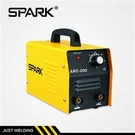
Check out our Powerful MIG Welding Machine. This bad boy is packed with features and can handle a variety of welding tasks. It's got adjustable voltage settings, so you can easily find the perfect voltage for your project.
If you're looking for a gasless option, our Gasless MIG For Flux Wire is a great choice. It's easy to use and perfect for those times when you don't want to deal with a gas cylinder.
And for those of you who are just starting out or need a welding machine for home use, our Family Use Popular Transformer MIG Welding Machine is a popular option. It's affordable, reliable, and easy to operate.
How to Determine the Right Voltage
So, how do you actually determine the right voltage for your MIG MAG welding machine? Here are a few steps you can follow:
- Check the Manufacturer's Recommendations: The first thing you should do is check the manufacturer's recommendations for your specific welding machine and wire. They'll usually provide a chart or guide that shows the recommended voltage ranges based on the metal thickness and wire type.
- Do a Test Weld: Once you've got an idea of the recommended voltage range, it's a good idea to do a test weld on a scrap piece of metal. Start with the lowest voltage in the range and gradually increase it until you get a good-looking weld. Look for a smooth, even bead with good penetration and no signs of spatter or burn-through.
- Adjust as Needed: If the weld looks too cold (not enough penetration), increase the voltage. If it looks too hot (burn-through or excessive spatter), decrease the voltage. Keep making adjustments until you find the sweet spot.
Conclusion
In conclusion, the recommended voltage for a MIG MAG welding machine depends on several factors, including the metal thickness, wire type, and welding speed. By understanding these factors and following the steps I've outlined, you can find the right voltage for your project and create strong, high-quality welds.
If you have any questions or need help choosing the right MIG MAG welding machine for your needs, don't hesitate to get in touch. We're here to help you make the most of your welding experience. Whether you're a professional welder or just starting out, we've got the knowledge and expertise to guide you through the process. So, let's get welding!
References
- AWS Welding Handbook, Volume 1: Welding Science and Technology, American Welding Society
- Welding: Principles and Applications, Larry Jeffus