


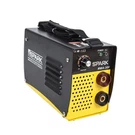
As a supplier of ARC Welding Machines, I've witnessed firsthand the critical role that welding speed plays in determining the quality of the final weld. In this blog post, I'll delve into the effects of welding speed on the quality of an ARC Welding Machine, sharing insights from my years of experience in the industry.
Understanding Welding Speed in ARC Welding
Welding speed refers to the rate at which the welding arc travels along the joint being welded. It is typically measured in inches per minute (ipm) or millimeters per second (mm/s). In ARC welding, the welding speed is a crucial parameter that, along with other factors such as current, voltage, and electrode type, influences the characteristics of the weld bead and the overall quality of the weld.
Effects of Welding Speed on Weld Penetration
One of the primary effects of welding speed on the quality of an ARC Welding Machine is its impact on weld penetration. Weld penetration refers to the depth to which the base metal is melted and fused with the filler metal. A proper level of penetration is essential for creating a strong, reliable weld.
- Slow Welding Speed: When the welding speed is too slow, the heat input to the base metal is excessive. This can lead to over - penetration, where the weld penetrates too deeply into the base metal. Over - penetration can cause burn - through, especially in thin materials, and may also result in a wide, irregular weld bead with a high crown. In addition, excessive heat can lead to grain growth in the heat - affected zone (HAZ), reducing the mechanical properties of the weld and the base metal.
- Fast Welding Speed: Conversely, if the welding speed is too fast, the heat input is insufficient. This results in shallow penetration, where the weld does not fully fuse with the base metal. Shallow penetration can lead to weak welds that are prone to cracking and failure under stress. The weld bead in this case may be narrow and have a lack of fusion between the layers and with the base metal.
Impact on Weld Bead Shape and Size
The welding speed also has a significant influence on the shape and size of the weld bead. The weld bead's shape and size are important as they affect the appearance, strength, and integrity of the weld.
- Slow Welding Speed: A slow welding speed allows more time for the molten metal to spread and flow. This typically results in a wider and taller weld bead. The increased width can be beneficial in some applications where a large fillet weld is required, but it may also lead to excessive buildup of the weld metal, increasing the risk of porosity and slag inclusions.
- Fast Welding Speed: A fast welding speed causes the molten metal to solidify more quickly. As a result, the weld bead is narrower and flatter. While a narrow weld bead may be desirable in some precision welding applications, an overly fast speed can lead to a lack of proper fusion and a bead that is difficult to control.
Influence on Weld Quality Defects
Welding speed can contribute to various quality defects in ARC welding.
- Porosity: Porosity is the presence of small holes or voids in the weld metal. When the welding speed is too fast, the molten metal solidifies rapidly, trapping gas bubbles that are generated during the welding process. These gas bubbles cannot escape, resulting in porosity. On the other hand, a very slow welding speed can also increase the risk of porosity, as the long exposure to the arc can cause oxidation and the formation of gas - containing compounds in the weld pool.
- Slag Inclusions: Slag inclusions occur when the slag, which is a by - product of the welding process, becomes trapped in the weld metal. A slow welding speed can lead to excessive slag formation, and if the slag is not properly removed during the welding process, it can be incorporated into the weld. A fast welding speed may not allow enough time for the slag to float to the surface of the weld pool, also resulting in slag inclusions.
Effects on Heat - Affected Zone (HAZ)
The heat - affected zone is the area of the base metal that has been heated by the welding process but not melted. The size and properties of the HAZ are influenced by the welding speed.
- Slow Welding Speed: A slow welding speed exposes the base metal to high temperatures for a longer period. This leads to a wider HAZ, which can cause significant changes in the microstructure and mechanical properties of the base metal. The HAZ may become softer or more brittle, depending on the material, reducing the overall strength and toughness of the welded joint.
- Fast Welding Speed: A fast welding speed reduces the time of exposure to high temperatures, resulting in a narrower HAZ. A narrow HAZ is generally preferred as it minimizes the changes in the base metal's properties, maintaining the integrity and strength of the welded structure.
Finding the Optimal Welding Speed
Finding the optimal welding speed is crucial for achieving high - quality welds. The optimal speed depends on several factors, including the type and thickness of the base metal, the type of electrode, the welding position, and the desired weld bead characteristics.
- Material Thickness: Thicker materials generally require a slower welding speed to ensure adequate penetration. For example, when welding thick steel plates, a slower speed may be needed to melt the base metal to the required depth. In contrast, thin materials require a faster welding speed to prevent burn - through.
- Electrode Type: Different electrodes have different melting rates and heat - transfer characteristics. Some electrodes are designed for fast - welding applications, while others are better suited for slower, more controlled welding. It is important to choose the appropriate electrode and adjust the welding speed accordingly.
- Welding Position: The welding position also affects the optimal welding speed. For example, in overhead welding, a faster speed may be required to prevent the molten metal from dripping. In flat or horizontal welding, a wider range of speeds may be acceptable.
Our ARC Welding Machine Offerings
At our company, we offer a range of high - quality ARC Welding Machines that are designed to provide precise control over welding parameters, including welding speed. Our BX1 - 200A AC Welding Machine is a reliable option for various welding applications. It allows for easy adjustment of the welding current and speed, enabling users to achieve optimal weld quality.
Our Portable AC ARC Welding Machine is ideal for on - the - go welding tasks. Despite its portability, it offers excellent performance and control over welding speed, ensuring consistent and high - quality welds.
For those looking for a more specialized solution, our Plastic AC Transformer Welding Machine provides unique features for specific welding requirements. It is designed to handle different types of plastics and metals, with adjustable welding speed settings to meet various application needs.


Conclusion
In conclusion, welding speed has a profound effect on the quality of an ARC Welding Machine. It influences weld penetration, bead shape and size, the occurrence of defects, and the characteristics of the heat - affected zone. By understanding these effects and finding the optimal welding speed for each application, welders can achieve high - quality, reliable welds.
If you are in the market for an ARC Welding Machine or have any questions about welding speed and its impact on weld quality, we invite you to contact us for further discussion and to explore our product offerings. Our team of experts is ready to assist you in finding the right solution for your welding needs.
References
- AWS Welding Handbook, American Welding Society.
- Welding Metallurgy, John C. Lippold and David J. Kotecki.
- Principles of Arc Welding, various industry publications.