



What is the electrode extension length for MIG Flux Wire welding?
As a seasoned supplier of MIG Flux Wire, I've witnessed firsthand the pivotal role that electrode extension length plays in the MIG Flux Wire welding process. This seemingly small detail can significantly impact the quality, efficiency, and overall outcome of your welding projects. In this blog, I'll delve into the concept of electrode extension length, its importance, and how to optimize it for the best results.


Understanding Electrode Extension Length
The electrode extension length, often referred to as the stick-out, is the distance from the end of the contact tip to the end of the welding wire. In MIG Flux Wire welding, this length is a critical parameter that affects various aspects of the welding process. A proper electrode extension length ensures a stable arc, consistent weld bead formation, and efficient use of the welding wire.
Importance of Electrode Extension Length
Arc Stability
The electrode extension length directly influences the stability of the welding arc. A shorter extension length generally results in a more stable arc, as the electrical resistance between the contact tip and the workpiece is reduced. This allows for better control of the arc and minimizes the risk of arc wandering or spatter. On the other hand, a longer extension length can lead to an unstable arc, as the increased resistance can cause the wire to overheat and melt unevenly.
Weld Penetration
The electrode extension length also affects the weld penetration. A shorter extension length typically produces deeper penetration, as the arc energy is concentrated closer to the workpiece. This is beneficial for welding thicker materials or when a strong, deep weld is required. Conversely, a longer extension length may result in shallower penetration, which can be suitable for thinner materials or when a more cosmetic weld is desired.
Deposition Rate
The deposition rate, or the amount of welding wire melted and deposited onto the workpiece per unit of time, is another factor influenced by the electrode extension length. A shorter extension length generally allows for a higher deposition rate, as the wire is closer to the arc and can be melted more efficiently. This can increase the productivity of the welding process, especially for large-scale projects. However, it's important to note that a very short extension length may also lead to excessive spatter and a less consistent weld bead.
Wire Consumption
The electrode extension length can also impact the wire consumption. A longer extension length requires more wire to be fed through the contact tip, resulting in increased wire consumption. This can be a significant cost factor, especially for high-volume welding operations. By optimizing the electrode extension length, you can minimize wire waste and reduce overall welding costs.
Determining the Optimal Electrode Extension Length
The optimal electrode extension length for MIG Flux Wire welding depends on several factors, including the type of welding wire, the thickness of the workpiece, the welding current, and the welding speed. Here are some general guidelines to help you determine the appropriate extension length:
Type of Welding Wire
Different types of MIG Flux Wire have different recommended electrode extension lengths. For example, solid wires typically require a shorter extension length (around 1/4 to 3/8 inch) compared to flux-cored wires, which can tolerate a longer extension length (up to 1 inch). Always refer to the manufacturer's specifications for the specific welding wire you're using to ensure the best results.
Thickness of the Workpiece
The thickness of the workpiece also plays a role in determining the electrode extension length. For thinner materials, a shorter extension length may be sufficient to achieve the desired weld penetration. As the thickness of the workpiece increases, a longer extension length may be necessary to ensure adequate heat input and penetration.
Welding Current
The welding current is another important factor to consider. Higher welding currents generally require a shorter electrode extension length to maintain arc stability and prevent overheating of the wire. Conversely, lower welding currents may allow for a longer extension length.
Welding Speed
The welding speed can also affect the electrode extension length. Faster welding speeds may require a shorter extension length to ensure proper fusion and penetration. Slower welding speeds, on the other hand, may allow for a longer extension length.
Tips for Maintaining the Correct Electrode Extension Length
To ensure consistent and high-quality welds, it's important to maintain the correct electrode extension length throughout the welding process. Here are some tips to help you achieve this:
Use a Measuring Tool
A simple measuring tool, such as a ruler or a wire gauge, can be used to accurately measure the electrode extension length. Before starting the welding process, measure the distance from the end of the contact tip to the end of the welding wire and adjust it as needed.
Check the Extension Length Regularly
During the welding process, periodically check the electrode extension length to ensure it remains within the recommended range. If the extension length changes due to wire feeding issues or other factors, make the necessary adjustments to maintain the correct length.
Replace the Contact Tip Regularly
Over time, the contact tip can wear out and become damaged, which can affect the electrode extension length and the quality of the weld. To prevent this, replace the contact tip regularly according to the manufacturer's recommendations.
Use a Welding Helmet with a Clear View
A welding helmet with a clear view allows you to see the welding area clearly and monitor the electrode extension length. This can help you make adjustments as needed and ensure consistent weld quality.
Related Welding Machines
As a MIG Flux Wire supplier, I also offer a range of high-quality welding machines that are compatible with our products. Here are some of the welding machines I recommend:
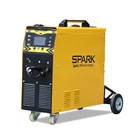
- Gasless MIG Welding Machine: This machine is ideal for welding in outdoor or confined spaces where the use of shielding gas is not practical. It offers excellent arc stability and is suitable for a variety of welding applications.
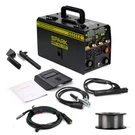
- Gasless MIG For Flux Wire: Specifically designed for use with MIG Flux Wire, this machine provides reliable performance and high-quality welds. It features adjustable welding parameters and is easy to operate.
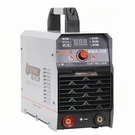
- Three PCB MOS MIG Welding Machine: This advanced welding machine offers superior arc control and is suitable for professional welders. It features a three PCB MOS design for enhanced durability and performance.
Conclusion
In conclusion, the electrode extension length is a critical parameter in MIG Flux Wire welding that can significantly impact the quality, efficiency, and cost of your welding projects. By understanding the importance of electrode extension length, determining the optimal length for your specific application, and following the tips for maintaining the correct length, you can achieve consistent and high-quality welds. If you have any questions or need further assistance with MIG Flux Wire welding or our welding machines, please don't hesitate to contact us. We're here to help you find the best solutions for your welding needs and look forward to discussing potential procurement opportunities with you.
References
- Welding Handbook, American Welding Society
- MIG Welding Guide, Lincoln Electric
- Flux-Cored Arc Welding, Hobart Brothers