

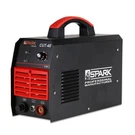


When I sit at the welding supply counter here, talking to both new welders picking their first digital MMA machine and veteran fabricators upgrading their setup, the most common question that comes up isn’t about how much power a machine can put out—it’s about what size electrodes actually work best with that equipment. I’ve seen too many guys grab a machine they saw online, load it up with electrodes way too big, and wonder why their arc sputters or their weld beads turn out lopsided. For digital MMA welding machines, this is a critical detail that makes the difference between a project that goes smoothly and one that leads to costly rework. As someone who’s spent years working with and selling these machines, let me break down the electrode diameter range that works best, and why it matters for your specific digital welding setup.
First, let’s get clear on what a digital MMA welding machine does, because that tech is the foundation for the electrode range we’re going to talk about. Unlike older analog machines that rely on fixed transformer tap settings, digital inverters use microprocessors to adjust voltage and current in real time. That precision is exactly what lets them handle a wider range of electrode sizes without sacrificing performance. I often point customers to our Digital Inverter Machine product line to see this tech in action—these machines don’t just turn on, they read the arc as you weld and tweak settings to keep it consistent, even when you’re switching between small and large electrodes. It’s not just about power; it’s about smart power.
Now, the sweet spot for electrode diameters on a standard 200A digital MMA machine (the most popular model for hobbyists, small repair shops, and light fabrication) usually falls between 1.6mm (1/16 inch) and 4.0mm (5/32 inch). But I don’t just say that as a rule of thumb—let’s break this down by use case, because what works for a thin sheet of metal isn’t the same as what works for a thick steel beam. For beginners or projects with thin material (under 3mm), electrodes in the 1.6mm to 2.5mm (3/32 inch) range are ideal. These smaller diameters draw less current, which means less heat input, so you don’t warp thin metal. I’ve watched new welders struggle with too-big electrodes, burning through 18-gauge steel before they even get the bead started, so this range is where most people cut their teeth with digital MMA.
For mid-range projects—think 3mm to 10mm steel plate, general repair work, or farm equipment repairs—2.5mm to 3.2mm (1/8 inch) electrodes are the workhorses. Digital machines handle these sizes effortlessly, because their inverter tech can deliver a stable arc without the harsh fluctuations that analog machines have. Last month, a local auto mechanic came in with a rusted exhaust manifold he needed to fix; he tried his old analog machine with a 4.0mm electrode and kept burning through the thin manifold. We hooked him up with our MMA-200 Inverter Welding Machine, paired with a 3.2mm electrode, and he finished the job in half the time, no burn-through. That’s the kind of win that makes digital machines worth the investment.
Now, the upper end—4.0mm electrodes. These are for heavy-duty work, like structural steel, thick pipe, or outdoor construction. I’ll be honest: not every digital MMA machine can handle 4.0mm electrodes reliably. You need a machine with enough continuous current output (at least 180A) and good thermal management, because thicker electrodes need more amperage to strike and maintain the arc. Our Advanced Inverter MMA Easy ARC Start model, for example, is designed with a higher duty cycle, so it can run 4.0mm electrodes for longer periods without overheating—something that’s crucial for professional welders who don’t have time to stop every few minutes to let a machine cool down. I’ve seen budget digital machines stall with 4.0mm electrodes, but with the right tech, that size is a reliable option.
What I’ve learned over the years is that there’s a mistake a lot of welders make: they think a bigger electrode means a stronger weld. That’s only partially true. A 4.0mm electrode can deposit more metal per pass, which is great for thick material, but if you’re using it on thin metal, you’re just wasting energy and risking distortion. The digital machine’s job is to match the current to the electrode size, so pairing the right diameter with the right material is key. Let’s also talk about the exceptions—are there cases where you can go outside that 1.6mm to 4.0mm range? Maybe 1.0mm electrodes for tiny, precision work like jewelry or sheet metal crafts, but those are super specialized. And for some heavy industrial digital machines, you can go up to 5.0mm, but those aren’t the standard units most small shops or hobbyists use. For the vast majority of users, that 1.6mm to 4.0mm range is the sweet spot.
Another big factor with digital MMA machines is how they handle arc stability, especially with electrode diameter. Analog machines often have trouble with smaller electrodes—they can’t deliver low enough current without the arc going out. Digital machines fix that with precise current control, which is why you can run 1.6mm electrodes on a 200A machine without any hassle. I remember when we first started testing our Economic MMA without Ammeter model for beginners; we worried that without an ammeter, users would struggle with electrode size. But the digital microprocessor adjusts current automatically based on the electrode size you load, so even new welders could pick a 2.0mm electrode and get a consistent arc every time. That’s the advantage of digital tech over old analog setups.
Let’s get into the nitty-gritty of electrode specs too, because it’s not just diameter—electrode type matters too. For example, E6013 electrodes (the general-purpose, easy-to-use ones) work best in the middle of that range: 2.5mm and 3.2mm. E7018 electrodes, which are low-hydrogen and stronger, also fit right in—they just need a bit more current, so pairing them with a 3.2mm electrode and setting the machine to 110A to 130A works perfectly. Too big an E7018 electrode, and you’ll get too much heat, leading to brittle welds. Too small, and the arc will be too short, making it hard to deposit the metal properly. The digital machine’s ability to fine-tune that current is exactly why this range works so well.
I also want to address a common question: “Can I use a larger electrode than the machine’s recommended maximum?” It’s not a good idea. If you try to run a 5.0mm electrode on a 200A digital machine, you’ll be pushing the machine past its current limit, which can cause it to overheat, shorten its lifespan, or even damage the digital components. I’ve seen guys do that to save time, and end up having to replace their machine six months later. Sticking to that 1.6mm to 4.0mm range for a standard digital MMA machine is the way to go for longevity and performance.
For our customers, we usually advise them to start with a mid-range electrode—2.5mm or 3.2mm—because that range is versatile enough for most jobs, whether you’re fixing a lawnmower or doing small structural work. Once they get comfortable with their machine, they can branch out to smaller electrodes for thin work and larger ones for heavy jobs. That’s why we highlight our full line of Digital MMA Welding Machine products—each one is calibrated to handle that ideal electrode range, so welders don’t have to guess.
Another point to consider is duty cycle. Duty cycle is the percentage of time a machine can run at its rated current without overheating. For a 200A digital machine running at 60% duty cycle, that means you can run 4.0mm electrodes (which need around 160A to 180A) for 6 minutes out of every 10, which is standard for most professional jobs. If you’re running 1.6mm electrodes, they only need around 40A to 60A, so you can run them almost continuously without any issues. The digital machine adjusts the current seamlessly, so you don’t have to worry about manual tap settings that throw off your rhythm.
I’ve had hundreds of conversations with welders who switched from analog to digital machines, and the biggest surprise for most of them is how much better they can handle different electrode sizes. An older analog machine might struggle to strike an arc with a 1.6mm electrode, but a digital machine does it every time. That consistency is why the electrode range works so well—digital tech removes the variables that used to make electrode selection tricky. Even for welders who work in extreme environments, like outdoor construction where wind can blow out an arc, the stable current from a digital machine lets you stick with electrodes in that 1.6mm to 4.0mm range without arc instability.
Let’s wrap this up with a quick summary for anyone who’s still unsure: if you’re using a standard digital MMA welding machine (160A to 200A), the electrode diameter range that will give you the best balance of performance, versatility, and machine longevity is 1.6mm to 4.0mm. For thin material or precision work, stick to 1.6mm to 2.5mm. For general fabrication and repair, 2.5mm to 3.2mm. For heavy-duty structural work, 3.2mm to 4.0mm. Any of these will work perfectly with a properly calibrated digital machine, and pairing the right electrode with the right material will make your welds stronger, your work faster, and your machine last longer.


If you’re in the market for a digital MMA welding machine that’s calibrated to handle this ideal electrode range, or you want to learn more about how our machines work for different welding jobs, our team is here to help. Whether you’re a beginner picking your first machine or a professional upgrading your setup, we can walk you through the best options for your needs, and help you get the most out of your welding equipment. Reach out to us to discuss your project requirements and find the right digital MMA welding machine for your work.
References
- Welding Handbook, American Welding Society (AWS), 9th Edition, Volume 2: Welding Processes
- Inverter Welding Machine Technology, Industrial Press, 2021
- Electrode Selection for MMA Welding: A Practical Guide, Fabricator’s Monthly Journal, 2022
- Thermal Management in Digital Welding Machines, International Journal of Welding Technology, 2023