


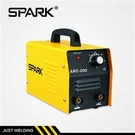


Hey there, fellow welding enthusiasts! As a supplier of ARC welding machines, I often get asked about the duty cycle of these nifty tools. So, I thought I'd sit down and write a blog post to clear up any confusion and give you the lowdown on what the duty cycle of an ARC welding machine really means.
Let's start with the basics. An ARC welding machine, as you probably know, is used to join two pieces of metal together by creating an electric arc between an electrode and the workpiece. This arc generates intense heat, melting the metal and allowing it to fuse. But here's the thing: these machines can't run at full power all the time. That's where the duty cycle comes in.
The duty cycle of an ARC welding machine is basically a measure of how long it can operate continuously within a 10 - minute period. It's expressed as a percentage. For example, if a welding machine has a duty cycle of 20% at 200 amps, it means that it can weld continuously for 2 minutes (20% of 10 minutes) at 200 amps and then it needs to cool down for the remaining 8 minutes.


Why is the duty cycle important? Well, if you try to use a welding machine beyond its duty cycle, it can overheat. Overheating can cause all sorts of problems, like damage to the internal components of the machine, reduced welding quality, and even pose a safety risk. So, understanding the duty cycle helps you use the machine properly and avoid these issues.
Now, let's talk about what factors can affect the duty cycle of an ARC welding machine. One of the biggest factors is the amperage setting. Generally, as you increase the amperage, the duty cycle decreases. That makes sense because higher amperage means more power and more heat, so the machine needs more time to cool down.
The environment also plays a role. If you're using the welding machine in a hot and humid environment, it will have a harder time cooling down, which can reduce the effective duty cycle. On the other hand, a well - ventilated and cool workspace can help the machine maintain a better duty cycle.
The type of welding you're doing matters too. If you're doing continuous, long - bead welding, you'll need a machine with a higher duty cycle. But if you're doing short, intermittent welds, you might be able to get away with a machine that has a lower duty cycle.
As a supplier, I've seen firsthand the importance of choosing the right welding machine based on the duty cycle. For those of you who are hobbyists or do light - duty welding work, our Popular Small Transformer Hobby Welding Machine is a great option. It has a duty cycle that's well - suited for short, occasional welding jobs. It's compact, easy to use, and won't break the bank.
If you're a professional welder or need to do more heavy - duty work, our BX1 - 200B AC Welding Machine might be more up your alley. It's designed to handle higher amperages and has a better duty cycle for continuous welding. This machine is built tough and can stand up to the rigors of a professional welding environment.
Another interesting option in our lineup is the Plastic AC Transformer Welding Machine. It's a bit different from the traditional welding machines, but it has its own unique duty cycle characteristics. This machine is great for specific types of welding where plastic components are involved.
So, how do you know which duty cycle is right for you? First, think about the type of welding projects you'll be working on. If you're just starting out and doing small projects around the house, a lower duty cycle machine might be sufficient. But if you're planning to take on larger, more complex projects or work in a professional setting, you'll want to invest in a machine with a higher duty cycle.
It's also a good idea to look at the long - term needs of your welding work. If you think you'll be doing more welding in the future or increasing the complexity of your projects, it might be worth spending a little extra on a machine with a better duty cycle from the start.
When you're comparing different welding machines, don't just focus on the duty cycle number. Look at other features too, like the voltage range, the type of electrodes it can use, and the overall build quality. A machine with a great duty cycle but poor build quality might not last as long or perform as well as a machine with a slightly lower duty cycle but better construction.
In conclusion, the duty cycle of an ARC welding machine is a crucial factor to consider when choosing the right machine for your needs. It affects how long you can weld continuously, the quality of your welds, and the lifespan of the machine. Whether you're a hobbyist or a professional welder, understanding the duty cycle will help you make an informed decision.
If you're interested in purchasing an ARC welding machine or have any questions about duty cycles or our products, feel free to reach out. We're here to help you find the perfect welding machine for your projects.
References
- Welding Handbook, American Welding Society
- "Understanding Welding Machine Duty Cycles", Industry - standard Welding Magazine