



What is the duty cycle of a Digital MIG Welding Machine?
As a supplier of Digital MIG Welding Machines, I often encounter customers who are curious about various technical aspects of these machines. One of the most frequently asked questions is about the duty cycle. In this blog post, I will delve into what the duty cycle of a Digital MIG Welding Machine is, why it matters, and how it impacts your welding operations.
Understanding the Duty Cycle
The duty cycle of a welding machine is a crucial specification that indicates the amount of time a welding machine can operate within a 10 - minute period without overheating. It is expressed as a percentage. For example, if a Digital MIG Welding Machine has a duty cycle of 60% at 200 amps, it means that the machine can weld continuously for 6 minutes out of every 10 - minute cycle at 200 amps. After the 6 - minute welding period, the machine needs to cool down for the remaining 4 minutes to prevent overheating and potential damage to the internal components.
This specification is essential because welding generates a significant amount of heat. When the welding machine is in operation, electrical current flows through the welding circuit, and the resistance in the circuit causes heat to be produced. If the machine is used for too long without a break, the heat can build up to dangerous levels, leading to malfunctions, reduced lifespan of the machine, and even safety hazards.
Factors Affecting the Duty Cycle
Several factors can influence the duty cycle of a Digital MIG Welding Machine.
Amperage
The amperage setting of the welding machine has a direct impact on the duty cycle. Generally, as the amperage increases, the duty cycle decreases. This is because higher amperage means more electrical current flowing through the machine, which generates more heat. For instance, a machine might have a 90% duty cycle at 100 amps but only a 30% duty cycle at 300 amps. When you are welding thick materials, you may need to use a higher amperage, but you will also have to take more frequent breaks to let the machine cool down.
Ambient Temperature
The temperature of the environment where the welding is taking place also affects the duty cycle. In a hot environment, the machine has a harder time dissipating heat, so the duty cycle will be lower. For example, a machine that has a 60% duty cycle at 20°C might have only a 40% duty cycle at 40°C. It is important to consider the ambient temperature when planning your welding operations and adjust your work schedule accordingly.

Cooling System
The efficiency of the welding machine's cooling system plays a vital role in determining the duty cycle. Digital MIG Welding Machines are equipped with different types of cooling systems, such as air - cooled and water - cooled systems. Air - cooled machines rely on fans to blow air over the internal components to dissipate heat. Water - cooled machines, on the other hand, use water to absorb and carry away the heat. Generally, water - cooled machines have a higher duty cycle because water is a more effective coolant than air.
Importance of the Duty Cycle in Welding Operations
The duty cycle is not just a technical specification; it has a significant impact on your welding operations.
Productivity
If you are working on a large - scale welding project, the duty cycle of your welding machine can affect your productivity. A machine with a higher duty cycle allows you to weld for longer periods without interruption, reducing the time spent waiting for the machine to cool down. For example, if you have two machines, one with a 30% duty cycle and another with a 60% duty cycle, the machine with the 60% duty cycle can complete the same amount of work in less time.
Weld Quality
The duty cycle can also affect the quality of your welds. When a welding machine overheats, it can cause inconsistent welding parameters, such as fluctuations in voltage and current. These inconsistencies can lead to poor - quality welds, including porosity, lack of fusion, and uneven bead appearance. By respecting the duty cycle, you can ensure that the welding machine operates within its optimal range, resulting in high - quality welds.
Our Digital MIG Welding Machines and Their Duty Cycles
At our company, we offer a wide range of Digital MIG Welding Machines with different duty cycles to meet the diverse needs of our customers.
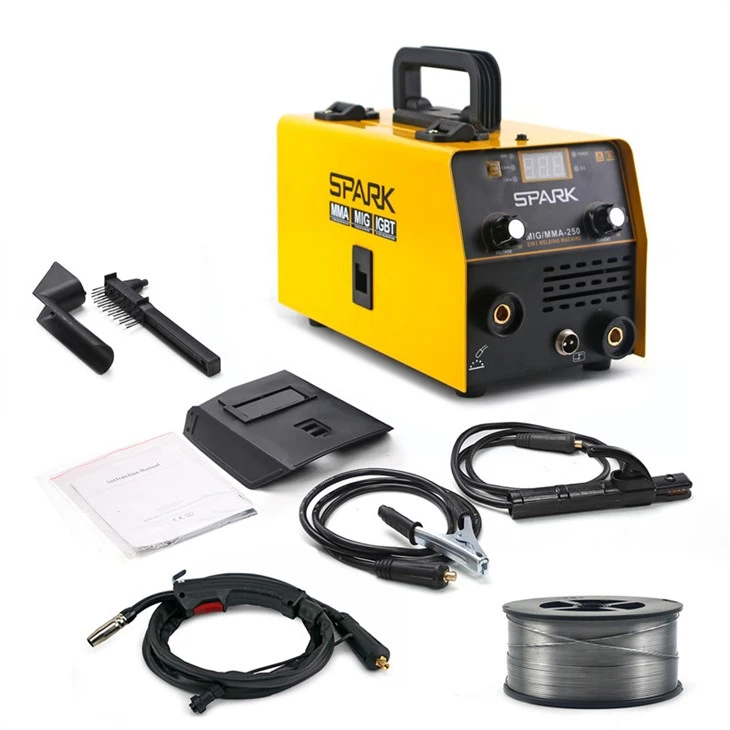
Our Single PCB MIG Welding Machine with Compact Torch is designed for light - to - medium - duty welding applications. It has a duty cycle of 40% at 150 amps, which is suitable for small - scale projects and DIY enthusiasts. The compact torch design makes it easy to handle and maneuver, while the single - PCB structure ensures reliable performance.
For more heavy - duty applications, we recommend our 1 kg Wire Welding Machine. This machine has a duty cycle of 60% at 200 amps, allowing for longer continuous welding periods. It is capable of handling thicker materials and can be used in industrial settings, such as manufacturing and construction.
We also offer MIG Flux Wire that is compatible with our Digital MIG Welding Machines. The MIG flux wire provides excellent arc stability and weld quality, making it a popular choice among our customers.
How to Choose the Right Duty Cycle for Your Needs
When choosing a Digital MIG Welding Machine, it is important to consider your specific welding requirements. Here are some tips to help you select the right duty cycle:
Consider the Type of Projects
If you are mainly working on small - scale projects, such as home repairs or hobbyist welding, a machine with a lower duty cycle may be sufficient. However, if you are involved in large - scale industrial projects or high - volume production, you will need a machine with a higher duty cycle to ensure maximum productivity.
Evaluate the Thickness of the Materials
Thicker materials require higher amperage settings for proper welding. As mentioned earlier, higher amperage generally means a lower duty cycle. If you frequently weld thick materials, you should choose a machine with a higher duty cycle to avoid overheating issues.
Think About Your Workflow
Consider how often you will be welding and for how long. If you need to weld continuously for long periods, a machine with a high duty cycle is essential. On the other hand, if you only weld intermittently, a machine with a lower duty cycle may be more cost - effective.
Conclusion
The duty cycle of a Digital MIG Welding Machine is a critical factor that affects both the performance and the lifespan of the machine. By understanding what the duty cycle is, the factors that influence it, and its importance in welding operations, you can make an informed decision when choosing a welding machine.
At our company, we are committed to providing high - quality Digital MIG Welding Machines with reliable duty cycles. Whether you are a DIY enthusiast or a professional welder, we have the right machine for your needs. If you are interested in learning more about our products or have any questions about the duty cycle, please feel free to contact us for a detailed discussion and potential procurement. We look forward to serving you and helping you achieve your welding goals.
References
- AWS Welding Handbook, Volume 1: Welding Science and Technology. American Welding Society.
- Welding: Principles and Applications. Larry Jeffus.