



Hey there! As a supplier of MIG MAG welding machines, I often get asked about the differences between MIG MAG welding machines and submerged arc welding machines. So, I thought I'd take the time to break it down for you in a way that's easy to understand.
How They Work
Let's start with how these two types of welding machines work.
A MIG MAG welding machine uses a continuous solid wire electrode that's fed through a welding gun. In MIG (Metal Inert Gas) welding, an inert gas like argon is used to shield the weld pool from atmospheric contamination. MAG (Metal Active Gas) welding, on the other hand, uses an active gas mixture, typically a combination of argon and carbon dioxide. This gas mixture helps to improve the welding process and the quality of the weld.
The basic process is pretty straightforward. You turn on the machine, set the appropriate parameters like wire feed speed and voltage, and then start welding. The wire melts as it comes into contact with the workpiece, creating a weld. It's a versatile method that can be used on a variety of metals, including steel, aluminum, and stainless steel.
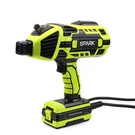
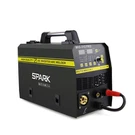
If you're interested in our MIG MAG welding machines, we have some great options. Check out our Single PCB MIG Welding Machine with Separate Torch and Single PCB MIG Welding Machine with Compact Torch. They're both reliable and easy to use.
Now, let's talk about submerged arc welding machines. In this process, a granular flux is poured over the joint to be welded. The welding wire is then fed into the flux, and an electric arc is struck between the wire and the workpiece. The flux acts as a shield, protecting the weld pool from the air. It also helps to remove impurities from the weld and provides a smooth surface finish.
The flux also plays a role in the metallurgy of the weld. It can add alloying elements to the weld, improving its strength and other properties. Submerged arc welding is typically used for heavy-duty applications, like welding thick plates and structural components.
Welding Speed and Efficiency
One of the biggest differences between MIG MAG and submerged arc welding is the welding speed and efficiency.
MIG MAG welding is generally faster than many other welding processes, but it has its limits. It's great for smaller jobs and projects where you need to move quickly. You can easily adjust the settings on the fly, which makes it a flexible option. However, the welding speed is still somewhat restricted by the size of the wire and the amount of heat input.
Submerged arc welding, on the other hand, is extremely fast and efficient. Because the arc is submerged under the flux, there's less heat loss, and the weld can be deposited at a much higher rate. This makes it ideal for large-scale projects where time is of the essence. For example, in shipbuilding and bridge construction, submerged arc welding is often the go-to method because it can quickly join large sections of metal.
Weld Quality
When it comes to weld quality, both MIG MAG and submerged arc welding can produce high-quality welds, but they have different characteristics.
MIG MAG welding offers good control over the weld bead shape and penetration. You can adjust the settings to achieve different levels of penetration, depending on the thickness of the material. The welds are generally clean and have a smooth finish. However, because the arc is exposed, there's a risk of porosity and other defects if the shielding gas is not properly set up.
Submerged arc welding produces welds with excellent quality and high strength. The flux protects the weld from oxidation and other contaminants, resulting in a dense and defect-free weld. The welds also have a uniform appearance and good mechanical properties. However, the process requires more setup time and is less flexible than MIG MAG welding.
Portability
Portability is another important factor to consider.
MIG MAG welding machines are relatively portable. They come in a variety of sizes, from small, lightweight units that you can easily carry around to larger, more powerful machines. This makes them suitable for on-site welding jobs and small workshops. Our Three PCB MIG Welding Machine is a great example of a powerful yet portable option.
Submerged arc welding machines, on the other hand, are not very portable. They require a large amount of equipment, including the welding power source, wire feeder, and flux handling system. This makes them more suitable for stationary applications in a factory or workshop environment.
Cost
Cost is always a consideration when choosing a welding machine.
MIG MAG welding machines are generally more affordable, especially for small to medium-sized businesses. The initial investment is lower, and the operating costs are also relatively low. You only need to purchase the welding wire and the shielding gas, which are relatively inexpensive.
Submerged arc welding machines are more expensive. The equipment itself is more costly, and you also need to factor in the cost of the flux. However, if you're doing large-scale projects, the increased efficiency and productivity of submerged arc welding can offset the higher initial cost.
Applications
The applications of MIG MAG and submerged arc welding machines also differ.
MIG MAG welding is widely used in industries such as automotive, aerospace, and general fabrication. It's suitable for welding thin to medium-thickness materials and can be used for both indoor and outdoor applications. You can use it to weld everything from small brackets to large structural components.
Submerged arc welding is mainly used in heavy industries like shipbuilding, pipeline construction, and bridge building. It's ideal for welding thick materials and producing long, continuous welds.
Which One Should You Choose?
So, which welding machine is right for you? Well, it depends on your specific needs.

If you're a small business or a hobbyist who needs a versatile, portable, and affordable welding machine, then a MIG MAG welding machine is probably the way to go. You can use it for a variety of projects and materials, and it's easy to learn and operate.
On the other hand, if you're involved in large-scale industrial projects that require high-speed, high-quality welding of thick materials, then a submerged arc welding machine might be more suitable.
Get in Touch
If you're interested in purchasing a MIG MAG welding machine, we're here to help. We offer a wide range of high-quality machines at competitive prices. Whether you need a small, portable unit or a large, industrial-grade machine, we have the right solution for you.

Feel free to reach out to us to discuss your requirements and get a quote. We're always happy to answer any questions you might have and help you choose the best welding machine for your needs.
References
- AWS Welding Handbook, American Welding Society
- Welding Metallurgy, John C. Lippold and David L. Kotecki