




In the world of welding, MIG (Metal Inert Gas) flux wire is a widely used consumable, offering a reliable and efficient way to join metal parts. As a leading provider of MIG Flux Wire, I often get asked about the differences between self - shielded MIG flux wire and gas - shielded MIG flux wire. Understanding these differences is crucial for welders to choose the right product for their specific welding needs. In this blog, I'll delve into the characteristics, advantages, disadvantages, and applications of both types of MIG flux wires.
Composition and Working Principle
Self - shielded MIG flux wire is a type of welding wire with a flux core. The flux inside the wire contains a variety of compounds that, when heated during the welding process, decompose and release gases. These gases form a protective shield around the weld pool, preventing atmospheric contaminants such as oxygen and nitrogen from reacting with the molten metal. This eliminates the need for an external shielding gas.
On the other hand, gas - shielded MIG flux wire also has a flux core, but it relies on an external shielding gas, typically a mixture of argon and carbon dioxide, to protect the weld pool. The external gas flows through the welding torch and creates a stable atmosphere around the arc and the molten metal, ensuring a clean and high - quality weld.
Advantages of Self - Shielded MIG Flux Wire
One of the most significant advantages of self - shielded MIG flux wire is its portability. Since it doesn't require an external gas cylinder, it is ideal for outdoor welding jobs where transporting and setting up a gas supply can be challenging. For example, in construction sites or on - site pipeline welding projects, self - shielded flux wire allows welders to work more freely without being restricted by gas hoses and cylinders.
Self - shielded wires also offer better penetration in some cases. They are capable of welding thicker materials and can produce strong welds even on dirty or rusty surfaces. This makes them suitable for welding in less - than - ideal conditions, where the metal surface may not be perfectly clean.
Another advantage is the cost - effectiveness in terms of equipment. Welders don't need to invest in a gas delivery system, which includes a gas cylinder, regulator, and hoses. This can significantly reduce the initial setup cost, especially for small welding shops or hobbyist welders.
Disadvantages of Self - Shielded MIG Flux Wire
However, self - shielded MIG flux wire also has its drawbacks. The welds produced by self - shielded wires tend to be less aesthetically pleasing compared to those made with gas - shielded wires. The flux residue left on the weld surface after welding needs to be cleaned, which adds an extra step to the welding process.
The welding fumes generated by self - shielded wires are often more significant. These fumes contain various harmful substances, so proper ventilation is essential to protect the welder's health. Additionally, the welding speed with self - shielded wires is generally slower than that of gas - shielded wires, which can affect productivity in large - scale welding projects.
Advantages of Gas - Shielded MIG Flux Wire
Gas - shielded MIG flux wire offers several benefits. Firstly, it produces high - quality, clean, and visually appealing welds. The external shielding gas provides a more stable arc and better control over the welding process, resulting in smooth and consistent welds. This is particularly important in applications where the appearance of the weld is critical, such as in the manufacturing of furniture or decorative metalwork.
Gas - shielded wires also allow for higher welding speeds. The stable arc and better protection of the weld pool enable welders to deposit more metal in less time, increasing productivity. Moreover, they can achieve better weld bead profiles and reduced spatter, which means less post - welding cleanup.
In terms of versatility, gas - shielded MIG flux wires can be used to weld a wider range of metals and alloys, including stainless steel and aluminum. This makes them a popular choice in industries such as automotive manufacturing and aerospace.
Disadvantages of Gas - Shielded MIG Flux Wire
The main disadvantage of gas - shielded MIG flux wire is its reliance on an external gas supply. This can be a limitation in outdoor or remote welding locations where accessing a gas source is difficult. The cost of the shielding gas and the additional equipment required for gas delivery also add to the overall welding cost.

Furthermore, the welding process with gas - shielded wires is more sensitive to wind and drafts. Even a slight breeze can disrupt the shielding gas flow, leading to weld defects such as porosity. Therefore, welding in open environments requires additional precautions, such as using wind barriers.
Applications
The choice between self - shielded and gas - shielded MIG flux wire depends largely on the specific application. Self - shielded MIG flux wire is commonly used in construction, structural steel fabrication, and pipeline welding. Its ability to work on dirty or rusty surfaces and without an external gas supply makes it a practical choice for these on - site applications.
Gas - shielded MIG flux wire, on the other hand, is widely used in manufacturing industries, such as automotive, appliance, and aerospace. The high - quality and aesthetically pleasing welds it produces are essential in these applications, where the weld joints need to meet strict quality and appearance standards.
Related Welding Machines
To make the most of MIG flux wires, it's important to pair them with the right welding machines. Our company offers a range of welding machines suitable for different types of MIG flux wires.
The Multifunction MIG Welding Machine is a great option for both self - shielded and gas - shielded welding. It allows you to switch between different welding modes and adjust various parameters, providing flexibility for different welding tasks.
The Three PCB MIG Welding Machine is designed for reliable and efficient welding. Its advanced circuit design ensures stable arc performance and high - quality welds.
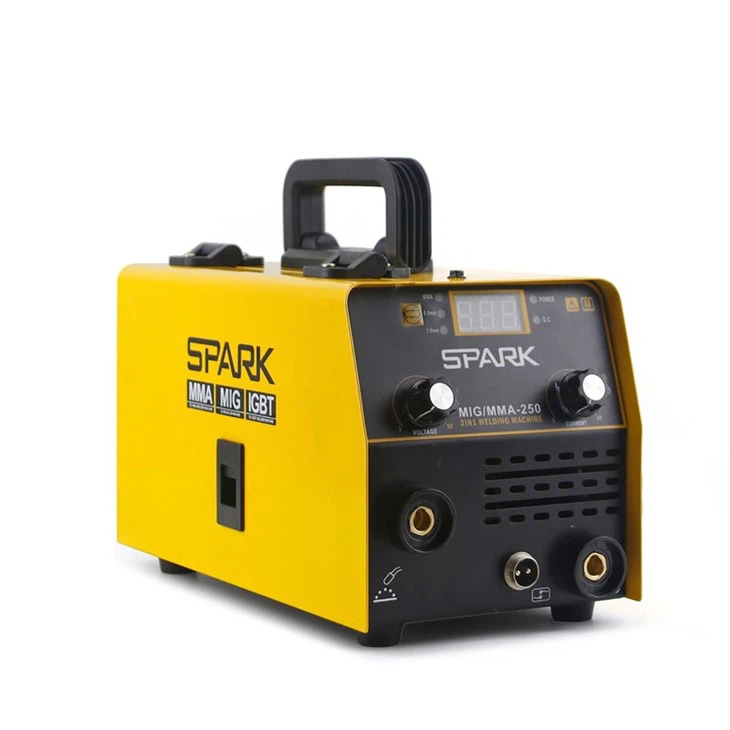
For gasless welding with self - shielded MIG flux wire, the Transformer Gasless MIG Welding Machine with Compact Torch is a popular choice. It offers good portability and ease of use, making it suitable for outdoor and on - site welding.
If you're specifically looking for a machine for gasless MIG welding with flux wire, the Gasless MIG For Flux Wire is tailored to meet your needs, providing stable welding performance.
Conclusion
In conclusion, both self - shielded and gas - shielded MIG flux wires have their own unique characteristics, advantages, and disadvantages. The choice between them depends on a variety of factors, including the welding environment, the type of metal being welded, the required weld quality, and the overall cost. As a professional MIG flux wire supplier, we understand the importance of these factors and can provide you with expert advice and high - quality products to meet your specific welding needs.
If you're interested in our MIG flux wires or would like to learn more about the right choice for your welding projects, we encourage you to contact us for procurement discussions. We look forward to partnering with you and helping you achieve outstanding welding results.
References
- AWS Welding Handbook, 9th Edition
- Welding Metallurgy by John C. Lippold and David J. Kotecki
- Miller Electric Welding Product Manuals