

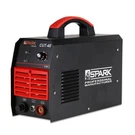


Mig welding, also known as Gas Metal Arc Welding (GMAW), is a popular welding process that uses a continuously fed solid wire electrode and an inert or semi - inert shielding gas to create an electric arc between the wire and the base metal. MIG welding machines come in two main types: pulsed and non - pulsed. As a MIG welding machine supplier, understanding the differences between these two types is crucial for us to better serve our customers.
1. Working Principle
Non - Pulsed MIG Welding Machine
A non - pulsed MIG welding machine operates at a constant current and voltage. The welding arc burns steadily, and the electrode wire is continuously fed into the arc at a constant rate. The metal from the electrode wire melts and is transferred to the joint being welded. This type of welding machine is easy to operate and is suitable for simple welding tasks where a consistent and stable arc is required. For example, when welding thick plates, the non - pulsed MIG welding can provide sufficient heat to fuse the base metal and the filler metal together.
Pulsed MIG Welding Machine
In contrast, a pulsed MIG welding machine alternates between a high - current pulse and a low - current background level. The high - current pulse is strong enough to detach a droplet of molten metal from the electrode wire and transfer it to the weld pool. The low - current background level maintains the arc but provides less heat input. This pulsing action allows for better control of the heat input and the metal transfer process.


2. Heat Input
Non - Pulsed MIG Welding Machine
Non - pulsed MIG welding typically has a higher average heat input. Since the welding arc burns continuously at a constant power level, more heat is transferred to the base metal. This can be an advantage when welding thick materials, as it ensures proper fusion. However, it may also lead to problems such as excessive distortion of the workpiece, especially when welding thin materials. The high heat can cause the metal to expand and contract unevenly, resulting in warping and deformation.
Pulsed MIG Welding Machine
Pulsed MIG welding offers better control over heat input. By alternating between high - and low - current phases, the average heat delivered to the workpiece is reduced. This makes it ideal for welding thin materials, as it minimizes the risk of burn - through and distortion. For instance, in the automotive industry, where thin sheets of metal are commonly used, pulsed MIG welding is often the preferred choice to ensure high - quality and precise welds without damaging the delicate parts.
3. Metal Transfer
Non - Pulsed MIG Welding Machine
The metal transfer in non - pulsed MIG welding mainly occurs in two modes: short - circuit transfer and spray transfer. In short - circuit transfer, the electrode wire touches the molten pool, causing a short - circuit, and then the metal is transferred. This mode is suitable for welding thin materials at low currents. Spray transfer, on the other hand, occurs at higher currents, and the molten metal is transferred in a fine spray from the electrode to the weld pool. It is used for welding thicker materials but requires a relatively high current, which can generate more heat.
Pulsed MIG Welding Machine
Pulsed MIG welding uses a controlled metal transfer mode. The high - current pulse is precisely timed to detach a single droplet of molten metal from the electrode. This results in a more stable and predictable metal transfer, with less spatter compared to non - pulsed welding. The droplets are transferred one by one, which allows for better control of the weld bead shape and size.
4. Weld Quality
Non - Pulsed MIG Welding Machine
Non - pulsed MIG welding can produce good - quality welds, especially for thick materials. However, due to the higher heat input, there may be issues such as porosity, excessive penetration, and poor bead appearance. Porosity can occur when the shielding gas fails to protect the weld pool effectively, and the high heat can cause the gas to escape from the molten metal, leaving behind small holes in the weld.
Pulsed MIG Welding Machine
Pulsed MIG welding generally produces higher - quality welds. The better heat control and metal transfer result in less porosity, more precise penetration, and a smoother weld bead. The welds are also more aesthetically pleasing, which is important in applications where the appearance of the weld matters, such as in the fabrication of furniture or decorative metalwork.
5. Cost and Complexity
Non - Pulsed MIG Welding Machine
Non - pulsed MIG welding machines are usually less expensive and simpler in design. They have fewer components and are easier to maintain. This makes them a popular choice for small - scale workshops and DIY enthusiasts. For example, our Family Use Popular Transformer MIG Welding Machine offers a cost - effective solution for home - based welding projects.
Pulsed MIG Welding Machine
Pulsed MIG welding machines are more complex and expensive. They require advanced electronic controls to generate the pulsed current accurately. The additional features and technology increase the production cost, but they also offer better performance and weld quality. Our MIG 250 Multifunctional Machine and Multifunction MIG Welding Machine are examples of high - end pulsed MIG welding machines that provide excellent welding results for professional applications.
6. Applications
Non - Pulsed MIG Welding Machine
Non - pulsed MIG welding machines are widely used in applications where high - speed welding and high - heat input are required. They are commonly used in heavy - duty industries such as shipbuilding, construction, and large - scale metal fabrication. For example, when welding thick steel plates in a shipyard, non - pulsed MIG welding can quickly join the materials together. Our MIG Welding Machine With Wheel is designed for such industrial applications, offering mobility and high - power performance.
Pulsed MIG Welding Machine
Pulsed MIG welding machines are preferred in applications where precision, quality, and low - heat input are crucial. They are used in industries such as aerospace, automotive, and electronics. In the aerospace industry, where the quality and integrity of the welds are of utmost importance, pulsed MIG welding is used to join lightweight and high - strength materials. Our Gasless MIG For Flux Wire is suitable for some pulsed MIG welding applications, especially in situations where portability and flexibility are needed.
Conclusion
In summary, the main differences between pulsed and non - pulsed MIG welding machines lie in their working principles, heat input, metal transfer, weld quality, cost, complexity, and applications. As a MIG welding machine supplier, we understand the unique needs of different customers. Whether you are a small - scale workshop looking for a cost - effective non - pulsed welding machine or a large - scale industrial enterprise in need of a high - performance pulsed welding machine, we have the right solution for you.
If you are interested in purchasing MIG welding machines or have any questions about our products, please feel free to contact us for further discussions. We are committed to providing the best products and services to meet your welding requirements.
References
- "Welding Handbook", American Welding Society
- "Gas Metal Arc Welding: Principles and Practices", various industry publications on welding technology