

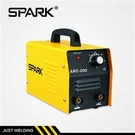



Arc force control is a crucial feature in modern Digital MMA (Manual Metal Arc) Welding Machines, offering welders greater control over the welding process. As a supplier of Digital MMA Welding Machines, I've witnessed firsthand how this technology enhances the welding experience. In this blog, we'll delve into what arc force control is, how it works, and its benefits in the welding industry.
Understanding Arc Force Control
Arc force control, also known as arc blow control or hot start control in some contexts, is a mechanism that adjusts the welding current dynamically during the welding process. When a welder strikes an arc, the initial contact between the electrode and the workpiece can cause the electrode to stick. This is due to the high resistance at the point of contact, which can lead to a sudden drop in current. Arc force control addresses this issue by providing a short - term increase in current when the arc length is short or when the electrode starts to stick.

The principle behind arc force control is based on the relationship between arc length, current, and voltage in MMA welding. In a normal welding situation, the arc voltage is proportional to the arc length. When the arc length decreases, the voltage drops, and according to Ohm's law (V = IR), the current should increase if the resistance remains constant. However, in real - world welding, the resistance changes, and the power source needs to compensate for these changes to maintain a stable arc.
How Arc Force Control Works
In a Digital MMA Welding Machine, arc force control is implemented through advanced electronic circuits. The machine continuously monitors the welding parameters such as voltage, current, and arc length. When the arc length becomes too short or the electrode starts to stick, the control system detects the change in voltage and responds by increasing the output current for a short period.
For example, when a welder is using a 3.2mm electrode and the electrode gets too close to the workpiece, the voltage across the arc drops. The Digital MMA Welding Machine's control circuit senses this drop in voltage and rapidly increases the current to break the electrode free from the workpiece. Once the electrode is free and the arc length returns to normal, the current is adjusted back to the preset value.
Benefits of Arc Force Control
1. Reduced Electrode Sticking
One of the most significant benefits of arc force control is the reduction in electrode sticking. Sticking electrodes can cause interruptions in the welding process, waste electrodes, and result in poor - quality welds. With arc force control, the likelihood of electrode sticking is minimized, allowing for a more continuous and efficient welding operation. Our Anti - Stick ARC - Force MMA Welding Machine is specifically designed to take advantage of this feature, providing welders with a hassle - free welding experience.
2. Improved Arc Stability
Arc force control helps to maintain a stable arc throughout the welding process. A stable arc is essential for producing high - quality welds with consistent penetration and bead appearance. By adjusting the current in response to changes in arc length, the machine ensures that the arc remains stable, even when the welder's technique varies slightly.
3. Better Weld Quality
The combination of reduced electrode sticking and improved arc stability leads to better weld quality. Welds produced with arc force control have fewer defects such as porosity, lack of fusion, and uneven bead profiles. This is particularly important in applications where weld integrity is critical, such as in the construction of bridges, pipelines, and heavy machinery.

4. Enhanced Welder Comfort
For welders, arc force control makes the welding process more comfortable. They don't have to constantly worry about electrodes sticking, which allows them to focus more on the quality of the weld. This can reduce fatigue and improve productivity, especially during long - term welding projects.
Arc Force Control in Different Types of Digital MMA Welding Machines
Portable Light MMA Welding Machines
Our Portable Light MMA Welding Machine is designed for on - the - go welding applications. Despite its compact size, it is equipped with arc force control technology. This feature is particularly useful for field welders who need to work in various environments and may encounter different welding conditions. The arc force control ensures that the machine can adapt to these conditions and provide a stable welding arc, whether the welder is working on a construction site or in a remote location.
Advanced Inverter MMA with Plastic Foot
The Advanced Inverter MMA with Plastic Foot is another product in our lineup that benefits from arc force control. Inverter technology allows for more precise control of the welding current, and when combined with arc force control, it offers superior performance. The plastic foot provides stability during welding, and the arc force control ensures that the welding process is smooth and efficient, regardless of the electrode type or welding position.
Factors Affecting Arc Force Control
Electrode Type
Different electrode types have different electrical characteristics, which can affect the performance of arc force control. For example, basic electrodes have a higher melting rate and require a different arc force setting compared to rutile electrodes. Welders need to adjust the arc force control according to the type of electrode they are using to achieve the best results.
Welding Position
The welding position also plays a role in arc force control. Welding in the flat position is generally easier than in the vertical or overhead positions. In vertical and overhead welding, the molten metal tends to flow downward, and the arc force control needs to be adjusted to counteract this effect and maintain a stable arc.

Workpiece Thickness
The thickness of the workpiece affects the amount of heat required for welding. Thicker workpieces require more heat input, and the arc force control may need to be adjusted accordingly. A higher arc force setting may be needed for thicker workpieces to ensure proper penetration and fusion.
Adjusting Arc Force Control
Most Digital MMA Welding Machines allow welders to adjust the arc force control according to their specific needs. The adjustment is usually made through a control panel on the machine. Welders can increase or decrease the arc force setting based on the factors mentioned above, such as electrode type, welding position, and workpiece thickness.
It's important for welders to experiment with different arc force settings to find the optimal setting for each welding job. Some machines also have pre - set arc force values for common electrode types and welding positions, which can be a useful starting point for less experienced welders.
Conclusion
Arc force control is an essential feature in Digital MMA Welding Machines. It offers numerous benefits, including reduced electrode sticking, improved arc stability, better weld quality, and enhanced welder comfort. As a supplier of Digital MMA Welding Machines, we are committed to providing our customers with high - quality products that incorporate the latest arc force control technology.
Whether you are a professional welder looking for a reliable welding machine for your daily work or a DIY enthusiast working on small projects, our range of Digital MMA Welding Machines, including the Portable Light MMA Welding Machine, Anti - Stick ARC - Force MMA Welding Machine, and Advanced Inverter MMA with Plastic Foot, can meet your needs.
If you are interested in learning more about our Digital MMA Welding Machines or would like to discuss your specific welding requirements, please feel free to contact us. We are always ready to assist you in finding the perfect welding solution for your projects.
References
- Welding Handbook, American Welding Society
- Principles of Arc Welding, The Welding Institute