

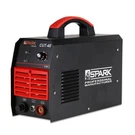


In the realm of metalworking, the cutting quality of a machine is of paramount importance. As a supplier of MMA Tig Cut Machines, I understand the significance of evaluating cutting quality accurately. This blog post aims to delve into the key indicators used to assess the cutting quality of MMA Tig Cut Machines, providing valuable insights for both professionals and enthusiasts in the industry.
1. Cut Width and Kerf
The cut width, also known as the kerf, is one of the most fundamental indicators of cutting quality. It refers to the width of the groove created by the cutting process. A narrow and consistent kerf is generally desirable as it minimizes material loss and allows for more precise cuts.
In the case of MMA Tig Cut Machines, the cut width is influenced by several factors, including the type of electrode used, the amperage setting, and the cutting speed. For instance, using a smaller diameter electrode can result in a narrower kerf, while higher amperage settings may widen the cut. Additionally, maintaining a consistent cutting speed is crucial to ensure a uniform kerf throughout the cut.
2. Edge Quality
The quality of the cut edges is another critical aspect of evaluating cutting performance. Smooth, straight, and burr-free edges are indicative of a high-quality cut. Rough or jagged edges, on the other hand, can compromise the integrity of the workpiece and may require additional finishing operations.


MMA Tig Cut Machines can produce excellent edge quality when operated correctly. The use of appropriate shielding gas and electrode selection plays a significant role in achieving smooth edges. For example, using a high-quality tungsten electrode can help reduce the formation of spatter and improve the overall edge finish. Additionally, proper technique, such as maintaining a consistent arc length and travel speed, is essential for achieving straight and clean edges.
3. Cut Surface Finish
The surface finish of the cut is also an important consideration. A smooth and uniform surface finish not only enhances the aesthetic appeal of the workpiece but also improves its functionality. Rough or uneven surfaces can lead to increased friction, wear, and corrosion, which can ultimately affect the performance and longevity of the finished product.
When using an MMA Tig Cut Machine, the surface finish can be influenced by factors such as the type of electrode, the shielding gas, and the cutting parameters. For example, using a fine-grained electrode and a suitable shielding gas can help reduce the formation of slag and improve the surface finish. Additionally, adjusting the amperage and travel speed can also have a significant impact on the surface quality.
4. Heat-Affected Zone (HAZ)
The heat-affected zone (HAZ) is the area of the workpiece that has been affected by the heat generated during the cutting process. A narrow HAZ is generally preferred as it minimizes the risk of distortion, cracking, and changes in the material's mechanical properties.
In MMA Tig cutting, the size of the HAZ is influenced by factors such as the amperage setting, the cutting speed, and the type of material being cut. Higher amperage settings and slower cutting speeds tend to result in a wider HAZ, while using a lower amperage and a faster cutting speed can help reduce the HAZ. Additionally, using a suitable shielding gas can also help protect the workpiece from excessive heat and minimize the HAZ.
5. Cutting Speed
Cutting speed is an important indicator of the efficiency and productivity of an MMA Tig Cut Machine. A faster cutting speed can significantly reduce the processing time and increase the throughput of the production line. However, it is important to note that cutting speed should not be sacrificed at the expense of cutting quality.
The optimal cutting speed depends on several factors, including the type of material being cut, the thickness of the workpiece, and the amperage setting. Generally, thinner materials can be cut at a faster speed than thicker materials. Additionally, using a higher amperage setting can allow for a faster cutting speed, but it may also increase the risk of overheating and damage to the workpiece.
6. Penetration Depth
Penetration depth refers to the depth to which the cutting arc penetrates the workpiece. A consistent and appropriate penetration depth is essential for achieving a high-quality cut. Insufficient penetration can result in incomplete cuts, while excessive penetration can cause damage to the workpiece and increase the risk of distortion.
In MMA Tig cutting, the penetration depth is influenced by factors such as the amperage setting, the electrode angle, and the cutting speed. Higher amperage settings and a steeper electrode angle generally result in a greater penetration depth. However, it is important to adjust these parameters carefully to ensure that the penetration depth is consistent and appropriate for the thickness of the workpiece.
7. Consistency and Repeatability
Consistency and repeatability are crucial indicators of the reliability and performance of an MMA Tig Cut Machine. A machine that can produce consistent cuts with minimal variation in quality is highly desirable, especially in mass production environments.
To ensure consistency and repeatability, it is important to use high-quality components and materials, as well as to maintain the machine regularly. Additionally, implementing proper quality control measures, such as regular inspections and testing, can help identify and address any issues that may affect the cutting quality.
Conclusion
Evaluating the cutting quality of an MMA Tig Cut Machine is a complex process that involves considering multiple indicators. By paying attention to factors such as cut width, edge quality, surface finish, heat-affected zone, cutting speed, penetration depth, and consistency, you can ensure that you are getting the best possible performance from your machine.
As a supplier of MMA Tig Cut Machines, we are committed to providing our customers with high-quality products that meet their specific needs. Our Smart Multi-Function Welding Machine and Cutting Machine with Lift TIG are designed to deliver exceptional cutting performance and reliability.
If you are interested in learning more about our products or would like to discuss your specific requirements, please do not hesitate to contact us. We look forward to the opportunity to work with you and help you achieve your metalworking goals.
References
- ASM Handbook, Volume 6: Welding, Brazing, and Soldering, ASM International
- Welding Handbook, Volume 1: Welding Science and Technology, American Welding Society
- Principles of Welding: Processes and Applications, Richard L. Petrzelka