

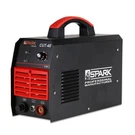


Hey there! As a supplier of ARC Welding Machines, I've seen a lot of folks scratching their heads when it comes to picking the right welding process. It's not as daunting as it might seem, though. In this blog, I'll walk you through how to select the appropriate welding process for an ARC Welding Machine, sharing some tips and insights based on my experience in the industry.


First off, let's understand what ARC welding is all about. ARC welding is a process that uses an electric arc to melt and join metals. The arc is created between an electrode and the workpiece, generating intense heat that fuses the metals together. There are several types of ARC welding processes, each with its own unique characteristics and applications.
Shielded Metal Arc Welding (SMAW)
SMAW, also known as stick welding, is one of the oldest and most widely used ARC welding processes. It's a versatile process that can be used on a variety of metals, including carbon steel, stainless steel, and cast iron. SMAW is relatively easy to learn and can be used in outdoor and dirty environments.
The basic setup for SMAW involves a welding power source, an electrode holder, and electrodes. The electrodes are coated with a flux that protects the weld pool from atmospheric contamination. As the electrode melts, the flux creates a gas shield around the weld pool, preventing oxidation and other impurities from entering the weld.
One of the advantages of SMAW is its portability. You can take a SMAW welding machine to a job site and start welding right away. It's also a cost-effective process, as the equipment and electrodes are relatively inexpensive. However, SMAW has some limitations. It has a relatively low welding speed and can produce a lot of spatter. The quality of the weld also depends on the skill of the welder.
If you're looking for a reliable and versatile ARC welding machine for SMAW, you might want to check out our BX1 - 200A AC Welding Machine. It's a compact and powerful machine that's suitable for both professional and hobbyist welders.
Gas Metal Arc Welding (GMAW)
GMAW, also known as MIG welding, is a popular ARC welding process that uses a continuous solid wire electrode and a shielding gas to protect the weld pool. It's a fast and efficient process that can be used on a variety of metals, including aluminum, stainless steel, and carbon steel.
The basic setup for GMAW involves a welding power source, a wire feeder, a welding gun, and a shielding gas supply. The wire feeder feeds the electrode wire into the welding gun, which is then used to create the arc. The shielding gas, usually a mixture of argon and carbon dioxide, protects the weld pool from atmospheric contamination.
One of the main advantages of GMAW is its high welding speed. It can produce high-quality welds in a relatively short amount of time. GMAW also produces less spatter than SMAW, resulting in a cleaner weld. However, GMAW requires more equipment and is more sensitive to environmental conditions. It's also not suitable for outdoor use in windy conditions.
Our BX1 - 200C AC Welding Machine can be used for GMAW with the appropriate accessories. It offers stable performance and is a great choice for those who want to try out GMAW.
Gas Tungsten Arc Welding (GTAW)
GTAW, also known as TIG welding, is a precise and high - quality ARC welding process. It uses a non - consumable tungsten electrode to create the arc and a shielding gas, usually argon, to protect the weld pool. GTAW can be used on a wide range of metals, including aluminum, stainless steel, and titanium.
The basic setup for GTAW involves a welding power source, a tungsten electrode, a welding torch, and a shielding gas supply. The welder manually feeds a filler metal into the weld pool if needed. GTAW produces high - quality, clean welds with excellent appearance and mechanical properties.
One of the main advantages of GTAW is its precision. It allows for very fine control of the weld, making it suitable for thin materials and critical applications. However, GTAW is a slow process and requires a high level of skill. It's also more expensive than SMAW and GMAW, as the equipment and shielding gas are more costly.
Flux - Cored Arc Welding (FCAW)
FCAW is a variation of GMAW that uses a tubular electrode filled with flux. It can be used with or without a shielding gas. When used without a shielding gas, it's called self - shielded FCAW, which is suitable for outdoor use as it doesn't rely on a gas supply. When used with a shielding gas, it's called gas - shielded FCAW, which produces higher - quality welds.
FCAW is a fast and efficient process that can be used on thick materials. It has a high deposition rate, which means it can deposit a large amount of weld metal in a short time. However, FCAW can produce more fumes than other ARC welding processes, so proper ventilation is required.
Factors to Consider When Selecting a Welding Process
Now that we've covered the main ARC welding processes, let's talk about the factors you should consider when selecting the appropriate process for your needs.
Material Type
The type of material you're welding is one of the most important factors. Different metals have different properties, and some welding processes are better suited for certain materials than others. For example, SMAW is a good choice for welding carbon steel and cast iron, while GTAW is often used for welding aluminum and stainless steel.
Thickness of the Material
The thickness of the material also plays a role in the selection of the welding process. For thin materials, GTAW or GMAW might be the best choice as they offer better control and can produce high - quality welds without burning through the material. For thick materials, FCAW or SMAW might be more suitable as they have a higher deposition rate.
Welding Position
The position in which you'll be welding, such as flat, horizontal, vertical, or overhead, can also affect the choice of welding process. Some processes are easier to use in certain positions than others. For example, SMAW is relatively easy to use in all positions, while GMAW can be more challenging in vertical and overhead positions.
Weld Quality Requirements
If you need a high - quality weld with excellent appearance and mechanical properties, GTAW might be the best choice. If you're more concerned about speed and productivity, GMAW or FCAW might be more suitable.
Cost
Cost is always a factor to consider. This includes the cost of the welding equipment, electrodes, shielding gas, and labor. SMAW is generally the most cost - effective process, while GTAW is the most expensive.
Skill Level
Your skill level as a welder is also important. Some processes, like SMAW, are relatively easy to learn, while others, like GTAW, require a high level of skill and practice.
If you're just starting out and want a simple and affordable option, our Popular Small Transformer Hobby Welding Machine is a great choice. It's easy to use and can be a great way to learn the basics of ARC welding.
Conclusion
Selecting the appropriate welding process for an ARC Welding Machine depends on a variety of factors, including the material type, thickness, welding position, weld quality requirements, cost, and your skill level. By understanding the characteristics of each welding process and considering these factors, you can make an informed decision.
If you're still not sure which welding process or machine is right for you, don't hesitate to reach out. We're here to help you find the perfect solution for your welding needs. Whether you're a professional welder or a hobbyist, we have the expertise and products to support you. Contact us to start a conversation about your welding requirements and let's work together to get the job done right.
References
- American Welding Society (AWS) Handbook
- Welding: Principles and Applications by Larry Jeffus