

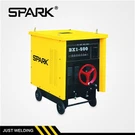
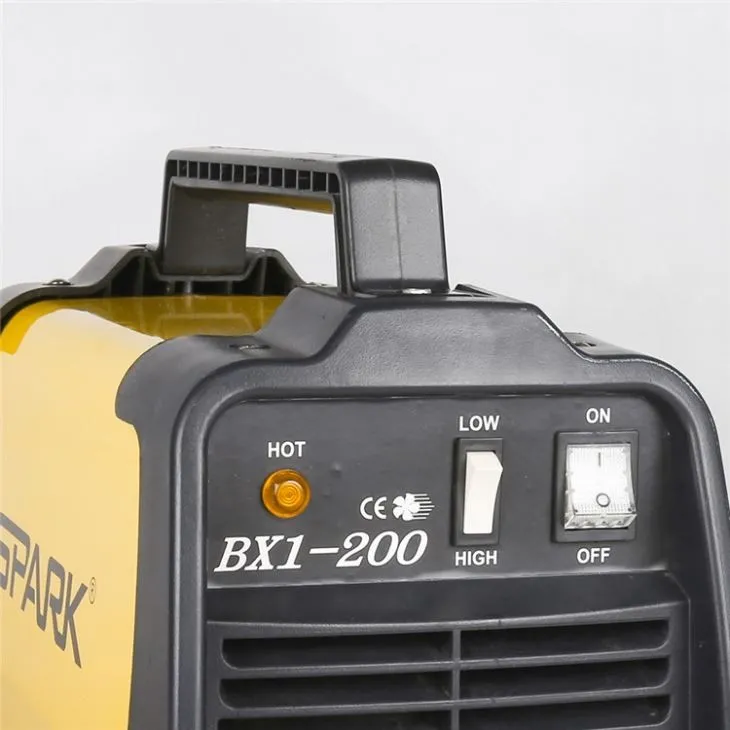
As a supplier of the BX1 - 200C AC Welding Machine, I understand that choosing the right welding wire is crucial for achieving high - quality welds. In this blog, I'll share some key factors and guidelines to help you make the best choice of welding wire for your BX1 - 200C AC Welding Machine.
Understanding the BX1 - 200C AC Welding Machine
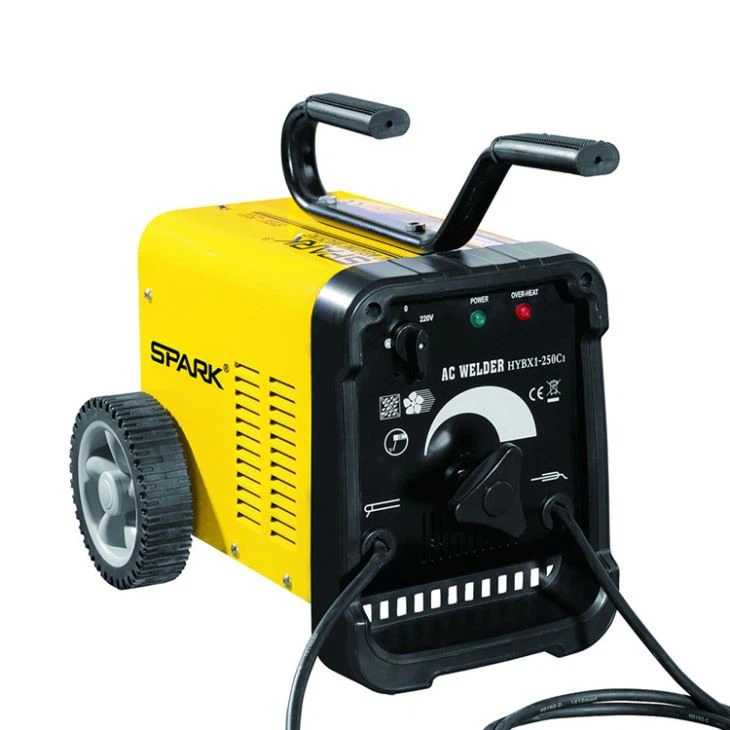
The BX1 - 200C AC Welding Machine is a reliable and widely - used piece of equipment. It operates on alternating current (AC), which provides a stable arc and is suitable for a variety of welding tasks. This machine is known for its durability and versatility, making it a popular choice among both amateur welders and professionals. If you are interested in other similar welding machines, you can check out our Plastic AC Transformer Welding Machine and Portable AC ARC Welding Machine on our website.
Factors to Consider When Choosing Welding Wire
1. Base Metal
The type of base metal you are welding is the most fundamental factor. Different base metals require specific types of welding wire for optimal results.
- Carbon Steel: This is one of the most common base metals in welding. For carbon steel, mild steel welding wires such as ER70S - 6 are a popular choice. These wires have good fluidity and can produce strong, ductile welds. They are suitable for general - purpose welding of carbon steel structures, including automotive parts, construction components, and machinery frames.
- Stainless Steel: When welding stainless steel, you need a welding wire that matches the composition of the base metal. For example, ER308L or ER316L wires are commonly used for austenitic stainless steels. These wires provide corrosion resistance similar to the base metal and ensure a high - quality, aesthetically pleasing weld.
- Aluminum: Welding aluminum requires specialized welding wires. Aluminum welding wires, such as ER4043 and ER5356, are designed to handle the unique properties of aluminum, including its high thermal conductivity and oxide layer. These wires help to create strong, clean welds on aluminum alloys used in aerospace, automotive, and marine applications.
2. Welding Position
The position in which you will be welding also affects the choice of welding wire.
- Flat Position: In the flat position, you have the most flexibility in wire selection. You can use a wider range of wire diameters and types. For example, larger - diameter wires can be used for high - deposition welding, which is ideal for filling large gaps or building up thick sections.
- Vertical and Overhead Positions: When welding in vertical or overhead positions, you need a welding wire that has good slag control and a stable arc. Smaller - diameter wires are often preferred as they are easier to control and produce less spatter. Flux - cored wires with a fast - freezing slag system are also a good option for these positions as they help to hold the molten metal in place.
3. Welding Current and Voltage
The BX1 - 200C AC Welding Machine has a specific range of welding current and voltage. You need to choose a welding wire that is compatible with this range.
- Wire Diameter: Thicker wires generally require higher welding currents. If you use a wire that is too thick for the available current of the machine, you may not be able to achieve a proper arc or penetrate the base metal. On the other hand, using a wire that is too thin may result in excessive spatter and a weak weld.
- Wire Feed Speed: The wire feed speed is also related to the welding current. A higher wire feed speed is required for higher currents. You need to adjust the wire feed speed according to the type and diameter of the welding wire to ensure a stable arc and good weld quality.
4. Weld Quality Requirements
The quality requirements of the weld, such as strength, ductility, and appearance, also play a role in wire selection.
- Strength: If the weld needs to have high strength, you may need to choose a welding wire with a higher tensile strength. For example, some high - strength steel welding wires are designed to meet specific strength requirements for structural applications.
- Ductility: In applications where the weld needs to be ductile, such as in components that will be subjected to dynamic loads, you should select a welding wire that can produce a ductile weld. This may involve choosing a wire with a lower carbon content or a specific alloy composition.
- Appearance: For aesthetically - important welds, such as in architectural or decorative applications, you need a welding wire that can produce a smooth, clean weld with minimal spatter. Some wires are specifically formulated to provide a good surface finish.
Specific Welding Wire Recommendations for BX1 - 200C AC Welding Machine
Based on the characteristics of the BX1 - 200C AC Welding Machine, here are some general welding wire recommendations:
For Carbon Steel Welding
- ER70S - 6: This is a versatile mild steel welding wire that is suitable for a wide range of welding currents. It has good wetting action and can produce high - quality welds on carbon steel. The wire is available in various diameters, typically from 0.035 inches to 0.045 inches, which makes it compatible with the current range of the BX1 - 200C machine.
- E6013: This is a popular general - purpose electrode for AC welding. It has a stable arc and is easy to use, making it a good choice for beginners. E6013 electrodes are available in different diameters and can be used for welding carbon steel in various positions.
For Stainless Steel Welding
- ER308L: This is a commonly used stainless steel welding wire for austenitic stainless steels. It has good corrosion resistance and can produce a high - quality weld. The wire is suitable for both manual and semi - automatic welding with the BX1 - 200C machine.
- E308L - 16: This is a stainless steel electrode that is designed for AC welding. It provides a smooth arc and good bead appearance, making it suitable for welding stainless steel structures.
Conclusion
Choosing the right welding wire for your BX1 - 200C AC Welding Machine is a complex but essential task. By considering factors such as the base metal, welding position, welding current and voltage, and weld quality requirements, you can select the most appropriate welding wire for your specific application. If you have any further questions or need more detailed advice on welding wire selection, or if you are interested in our BX1 - 200A AC Welding Machine and other welding equipment, please feel free to contact us for procurement and negotiation.
References
- AWS Welding Handbook, Volume 1: Welding Science and Technology, American Welding Society.
- Welding Metallurgy and Weldability of Stainless Steels, John C. Lippold and David J. Kotecki.
- Aluminum Welding: Principles and Practices, James F. Lancaster.