

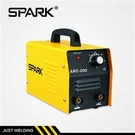



Arc welding is a fundamental process in metal fabrication and repair, and the ability to adjust the welding parameters of an ARC Welding Machine correctly is crucial for achieving high - quality welds. As a supplier of ARC Welding Machines, I've witnessed firsthand how proper parameter adjustment can transform a mediocre weld into a masterpiece. In this blog, I'll share some insights on how to adjust these parameters effectively.
Understanding the Basics of ARC Welding Parameters
Before diving into the adjustment process, it's essential to understand the key parameters involved in arc welding. These include current, voltage, and travel speed.
Current
The welding current is perhaps the most critical parameter. It determines the heat input into the weld joint. A higher current results in more heat, which can penetrate thicker materials. However, too much current can cause excessive spatter, burn - through, and a rough weld bead. On the other hand, a lower current may not provide enough heat to melt the base metal properly, leading to poor fusion and a weak weld.


For thin materials, a lower current is usually required. For example, when welding 1 - 2 mm thick mild steel, a current in the range of 30 - 60 amperes might be appropriate. As the thickness of the material increases, the current should be adjusted accordingly. For 6 - 8 mm thick steel, a current of 120 - 160 amperes could be used.
Voltage
Voltage in arc welding is related to the length of the arc. A higher voltage creates a longer arc, which can provide a wider weld bead. However, an overly long arc can lead to instability, porosity, and a lack of penetration. A lower voltage results in a shorter arc, which is more stable and provides better control over the weld pool.
The relationship between voltage and current is also important. Generally, as the current increases, the voltage should be adjusted slightly to maintain a stable arc. Most ARC Welding Machines have a recommended voltage range for different current settings. For instance, at a current of 100 amperes, the voltage might be set between 20 - 24 volts.
Travel Speed
Travel speed refers to how fast the welding electrode moves along the weld joint. A slow travel speed deposits more filler metal, resulting in a wider and thicker weld bead. But it can also cause excessive heat input and distortion. A fast travel speed, on the other hand, may not allow enough time for proper fusion, leading to a narrow and weak weld.
The optimal travel speed depends on the material thickness, current, and voltage. As a rule of thumb, for a given current and voltage setting, if the weld bead appears too wide and the edges are over - melted, the travel speed is too slow. If the weld bead is narrow and the fusion is poor, the travel speed is too fast.
Adjusting the Parameters for Different Welding Machines
We offer a variety of ARC Welding Machines, such as the BX1 - 200B AC Welding Machine, Plastic AC Transformer Welding Machine, and BX1 - 200A AC Welding Machine. Each machine may have slightly different parameter adjustment methods, but the general principles remain the same.
Step - by - Step Parameter Adjustment
- Prepare the Workpiece: Clean the workpiece thoroughly to remove any dirt, rust, or paint. This ensures better electrical contact and a cleaner weld.
- Select the Electrode: Choose the appropriate electrode based on the type of material being welded and the welding position. Different electrodes have different current requirements.
- Set the Initial Parameters: Refer to the welding machine's manual for the recommended initial current and voltage settings based on the electrode size and material thickness. For example, if using a 3.2 mm electrode to weld 4 mm thick mild steel, the manual might suggest an initial current of 90 - 110 amperes and a voltage of 22 - 24 volts.
- Test Weld: Make a test weld on a scrap piece of the same material. Observe the appearance of the weld bead, the amount of spatter, and the penetration. If the weld bead is too wide and there is excessive spatter, the current may be too high. If the bead is narrow and there is poor fusion, the current may be too low.
- Fine - Tune the Parameters: Based on the results of the test weld, adjust the current, voltage, or travel speed as needed. Make small adjustments and repeat the test weld until the desired weld quality is achieved.
Factors Affecting Parameter Adjustment
In addition to the basic parameters, several other factors can affect the adjustment of welding parameters.
Material Type
Different materials have different melting points, thermal conductivities, and electrical resistivities. For example, stainless steel has a higher melting point than mild steel, so it may require a higher current to achieve proper fusion. Aluminum has a high thermal conductivity, which means heat is dissipated quickly, and a higher current may also be needed.
Welding Position
The position in which the welding is being done (flat, horizontal, vertical, or overhead) also affects the parameter settings. Welding in the vertical or overhead position requires a lower current and a faster travel speed to prevent the weld pool from sagging.
Electrode Angle
The angle of the electrode relative to the workpiece can influence the shape and quality of the weld. A steeper electrode angle can increase penetration, while a shallower angle can result in a wider weld bead.
Troubleshooting Parameter - Related Issues
Even with careful parameter adjustment, problems may still occur during welding. Here are some common issues and their solutions:
Excessive Spatter
- Cause: High current, long arc (high voltage), or improper electrode selection.
- Solution: Reduce the current, shorten the arc (lower the voltage), or change to a different electrode with better anti - spatter properties.
Poor Penetration
- Cause: Low current, fast travel speed, or long arc.
- Solution: Increase the current, slow down the travel speed, or shorten the arc.
Porosity
- Cause: Contaminated workpiece, long arc, or improper shielding gas (if using gas - shielded arc welding).
- Solution: Clean the workpiece thoroughly, shorten the arc, or check and adjust the shielding gas flow rate.
Conclusion
Adjusting the welding parameters of an ARC Welding Machine is a skill that requires practice and understanding. By mastering the basic principles of current, voltage, and travel speed, and considering factors such as material type, welding position, and electrode angle, you can achieve high - quality welds consistently.
As a supplier of ARC Welding Machines, we are committed to providing our customers with the best products and technical support. If you have any questions about parameter adjustment or need assistance in choosing the right welding machine for your application, please feel free to contact us for a detailed discussion and procurement negotiation.
References
- AWS Welding Handbook, American Welding Society
- Welding: Principles and Applications, Larry Jeffus