




Hey there, welding enthusiasts! As a supplier of MIG Flux Wire, I'm super stoked to break down how this awesome welding consumable works. So, let's dive right in!
What's MIG Flux Wire Anyway?
First things first, MIG stands for Metal Inert Gas. But MIG Flux Wire is a bit different from the traditional MIG welding wires that rely on an external shielding gas. Flux-cored wires have a flux compound inside the tubular wire. This flux plays a crucial role in the welding process, acting as a shield and a cleaning agent all in one.
The Basics of the Welding Process
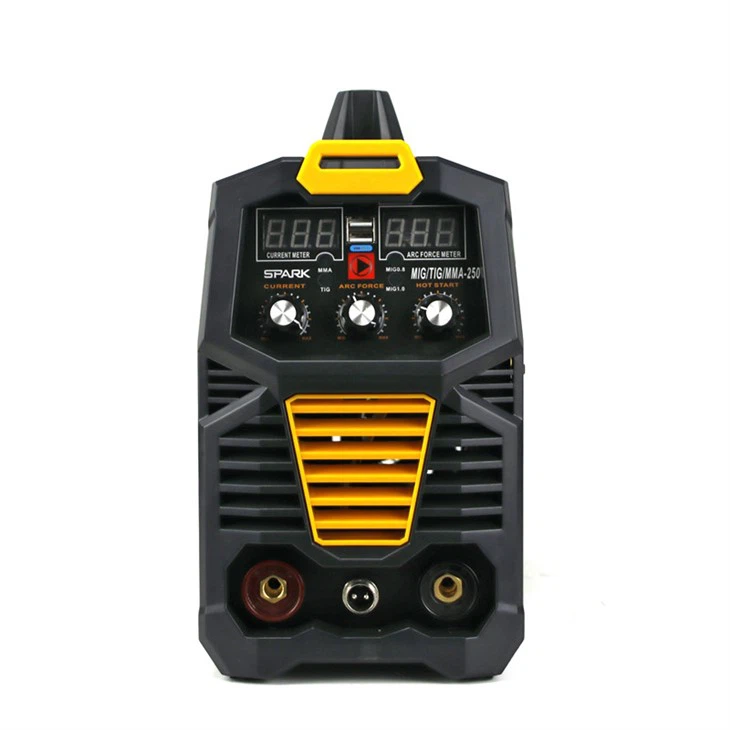
When you're using MIG Flux Wire, you'll need a compatible welding machine. You can check out our 1 kg Wire Welding Machine or the more Powerful MIG Welding Machine for some great options.
The welding machine feeds the MIG Flux Wire through a welding gun at a controlled speed. When you pull the trigger on the gun, an electric arc is created between the tip of the wire and the workpiece. This arc generates an insane amount of heat - we're talking temperatures up to 6,500°F (3,600°C)! That heat melts both the wire and the base metal, fusing them together to form a strong weld.
The Role of the Flux
Now, let's talk about the magic of the flux inside the wire. As the wire melts, the flux also gets heated up. It starts to break down and release a gas that surrounds the welding area. This gas acts as a shield, protecting the molten metal from the surrounding air. If the molten metal comes into contact with oxygen, nitrogen, or hydrogen in the air, it can cause all sorts of problems like porosity, brittleness, and reduced strength in the weld. So, the flux gas is like a bodyguard for your weld.
But that's not all the flux does. It also forms a slag on top of the weld pool. The slag is a protective layer that helps to slow down the cooling process of the weld. A slower cooling rate can improve the quality of the weld by reducing the chances of cracking and making the structure more uniform. Once the weld has cooled down, you can easily chip off the slag to reveal a clean, strong weld.
Advantages of Using MIG Flux Wire
One of the biggest advantages of MIG Flux Wire is its versatility. It can be used in a variety of welding positions - flat, horizontal, vertical, and even overhead. This makes it a great choice for all kinds of welding projects, whether you're working on a small DIY job or a large industrial application.

Another plus is that you don't always need an external shielding gas. This can be a real game-changer, especially if you're working outdoors where wind can blow away the shielding gas. With MIG Flux Wire, the flux inside the wire takes care of the shielding, so you can get a good weld even in less-than-ideal conditions.
MIG Flux Wire also offers high deposition rates. That means you can lay down more weld metal in less time compared to some other welding methods. This can increase your productivity and save you money in the long run.
Different Types of MIG Flux Wire
There are two main types of MIG Flux Wire: self-shielded and gas-shielded.
Self-Shielded MIG Flux Wire
Self-shielded flux-cored wires are great for outdoor welding and situations where you don't have access to an external shielding gas. They rely solely on the flux inside the wire to provide the shielding and slag formation. These wires are often used for welding thick materials and in applications where portability is important.
Gas-Shielded MIG Flux Wire
Gas-shielded flux-cored wires, on the other hand, are used in conjunction with an external shielding gas. The gas provides additional protection and can result in a cleaner, more aesthetically pleasing weld. These wires are commonly used in indoor welding applications where the environment is more controlled.
Choosing the Right MIG Flux Wire
Picking the right MIG Flux Wire for your project is crucial. You need to consider factors like the type of base metal you're welding, the thickness of the material, and the welding position.
For example, if you're welding mild steel, you'll want to choose a wire that's specifically designed for mild steel. If you're working with thicker materials, you might need a wire with a higher deposition rate. And if you're doing a lot of overhead welding, you'll want a wire that has good vertical and overhead welding characteristics.
Setting Up Your Welding Machine
Once you've chosen the right MIG Flux Wire, it's time to set up your welding machine. Make sure you have the correct wire feed speed and voltage settings. These settings can vary depending on the type of wire, the thickness of the material, and the welding position.
If you're using a Powerful MIG Welding Machine or an Inverter Mig Welding Machine, they usually come with adjustable settings. You can refer to the manufacturer's instructions or do some test welds on a scrap piece of metal to find the optimal settings for your project.
Tips for a Great Weld
- Clean the Base Metal: Before you start welding, make sure the base metal is clean. Remove any rust, paint, oil, or dirt. A clean surface will ensure better fusion and a stronger weld.
- Maintain the Right Travel Speed: If you travel too fast, the weld might not be deep enough. If you go too slow, you could end up with a messy, overheated weld. Find a comfortable travel speed that gives you a good bead shape.
- Angle the Welding Gun Correctly: The angle of the welding gun can affect the shape and quality of the weld. For most applications, a 10-15 degree angle is a good starting point.
Conclusion
So, there you have it - a breakdown of how MIG Flux Wire works. It's an amazing welding consumable that offers a lot of advantages and can be used in a wide range of applications. Whether you're a beginner or a seasoned pro, MIG Flux Wire can be a great addition to your welding toolkit.
If you're interested in purchasing MIG Flux Wire or have any questions about our products, feel free to reach out. We're always here to help you find the right solutions for your welding needs. Let's start a conversation and see how we can work together to make your welding projects a success!
References
- Welding Handbook, American Welding Society
- Miller Welding Manual, Miller Electric Mfg. Co.
- Lincoln Electric Welding Guide, Lincoln Electric Co.