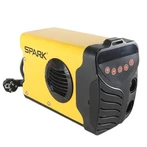
Welding machines vary in design and functionality, making them suitable for specific materials and applications. Below is a comprehensive guide to selecting the right welding equipment for different types:
1. Arc Welding Machines (Manual/MMA)
● Suitable Materials: Steel, aluminum, and other common metals.
● Application: Ideal for general-purpose welding where cost-efficiency and simplicity are prioritized. It produces sufficient heat to melt metals but may require post-weld finishing for high-precision projects.
● Key Features: Low cost, easy operation, and versatility for large-scale welding tasks.
2. Gas Shielded Arc Welding Machines (MIG/MAG)
● Suitable Materials: Stainless steel, aluminum, and thin metal sheets.
● Application: Used in industries requiring high-quality, clean welds, such as automotive and aerospace. The shielding gas (e.g., argon) prevents oxidation, ensuring strong, uniform joints.
● Key Features: High-speed welding, minimal post-processing, and compatibility with automated systems.
3. TIG (Tungsten Inert Gas) Welding Machines
● Suitable Materials: Stainless steel, aluminum, copper, and titanium.
● Application: Precision welding for thin sheets, pipes, and critical joints where aesthetics matter. Common in aerospace, medical devices, and art fabrication.
● Key Features: Produces minimal spatter, excellent control over heat input, and uses inert gases like argon for protection.
4. Plasma Arc Welding Machines
● Suitable Materials: High-strength alloys (e.g., Inconel 600), thin metals, and dissimilar materials.
● Application: Demands high precision and speed, such as in microelectronics, nuclear reactors, and aerospace components.
● Key Features: Concentrated heat minimizes distortion, deep penetration, and suitability for automated processes .
5. Laser Welding Machines
● Suitable Materials: Aluminum, copper, thin steel, and battery casings (e.g., 3003 aluminum alloy).
● Application: Fine, high-speed welding in automotive battery production, medical devices, and electronics.
● Key Features: Minimal heat-affected zones, no filler material needed, and compatibility with reflective metals (e.g., copper) using advanced cooling systems.