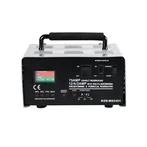
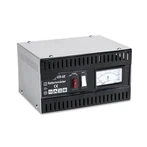
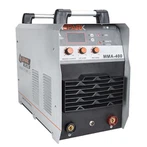
Laser welding machine Laser welding can replace many different standard methods, such as the use of resistance (spot welding or seam), submerged arc welding, radio frequency induction, high frequency resistance, ultrasound and electron beam. Although these technologies have established an independent foundation in the global manufacturing industry, the multi-function laser welding method will be efficiently and economically operated in many different applications. Its versatility will allow the welding system to be used for other machining functions, such as cutting, drilling, scribing, sealing and serialization.
In the process of laser welding, there are two cases, because the filler material is rarely used, the treatment of the welded part is necessary. In butt joint and seam welding, laser energy is applied to the junction of materials, reducing heat input and distortion, and allowing higher processing speed. However, these butt joints must be accurate, which often limits the laser butt welding to the round part, which can be opened and closed together with the tolerances before pressing.
For lap joints, the tolerance is that the seam alignment is loose. The width of the weld is an important consideration. The upper material forms the most fusion zone, so that a good laser welded material can be welded to the less suitable material by putting the former material on top.
We have broadly covered laser welding and not just limited to any specific application, engineers are familiar with the ability to manufacture and this equipment. Coupled with robot and computer control beam movement or workpiece movement, the laser welding machine system provides an unmatched versatility to perform various operations.