




MIG (Metal Inert Gas) flux wire welding, also known as FCAW (Flux-Cored Arc Welding) in some cases, is a popular welding process due to its high efficiency and good adaptability in various welding scenarios. One of the most crucial factors in MIG flux wire welding is determining the suitable welding current. As a MIG flux wire supplier, I've encountered numerous inquiries regarding this topic. In this blog, I'll share some insights on how to select the appropriate welding current for MIG flux wire.
Understanding the Basics of MIG Flux Wire Welding
Before delving into the details of welding current, it's essential to understand the fundamentals of MIG flux wire welding. MIG flux wire is a tubular wire filled with flux materials. During the welding process, the flux inside the wire melts and forms a protective gas shield and slag layer, which helps protect the weld pool from atmospheric contamination, stabilizes the arc, and improves the quality of the weld.
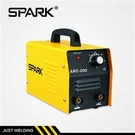
There are two main types of MIG flux wire welding: gas - shielded and gasless. Gas - shielded MIG flux wire welding uses an external shielding gas, usually a mixture of argon and carbon dioxide, to enhance the protection of the weld pool. Gasless MIG flux wire welding, on the other hand, relies solely on the flux inside the wire to provide protection. You can find a suitable Gasless MIG Welding Machine for gasless MIG flux wire welding.
Factors Affecting the Suitable Welding Current
Thickness of the Base Metal
The thickness of the base metal is one of the most significant factors influencing the welding current. Generally, thicker base metals require higher welding currents. When welding thin materials, a high current can cause burn - through, while a low current may result in insufficient fusion. For example, when welding a 1 - mm thick steel plate, a relatively low welding current, around 60 - 80 amps, might be appropriate. In contrast, for a 6 - mm thick steel plate, a welding current of 180 - 220 amps could be more suitable.
Wire Diameter
The diameter of the MIG flux wire also plays a crucial role in determining the welding current. Larger diameter wires typically require higher currents. Common wire diameters for MIG flux wire welding range from 0.8 mm to 1.6 mm. A 0.8 - mm diameter wire usually works well with a welding current in the range of 70 - 120 amps, while a 1.6 - mm diameter wire may need a current of 200 - 300 amps.
Welding Position
The welding position can significantly affect the choice of welding current. In flat and horizontal positions, higher currents can be used because gravity helps the molten metal stay in place. However, in vertical and overhead positions, lower currents are often required to prevent the molten metal from dripping. For vertical up welding, the current should be adjusted to ensure proper bead shape and fusion without excessive sagging of the weld metal.


Type of Flux Wire
Different types of MIG flux wires have different requirements for welding current. Some flux wires are designed for high - speed welding and can tolerate higher currents, while others are more suitable for precision welding and require lower currents. For instance, self - shielding flux wires for outdoor use may need a specific current range to ensure good slag removal and weld quality.
Determining the Suitable Welding Current
Manufacturer's Recommendations
The first step in determining the suitable welding current is to refer to the manufacturer's recommendations. Flux wire manufacturers usually provide a welding parameter chart that specifies the recommended current range based on wire diameter, base metal thickness, and welding position. These recommendations are based on extensive testing and research, so they are a reliable starting point.
Trial and Error
In some cases, especially when dealing with unique welding conditions or new materials, trial and error may be necessary. Start with the recommended current from the manufacturer and make a test weld. Observe the weld bead appearance, penetration, and slag removal. If the weld bead is too narrow and has poor penetration, the current may be too low. If there is excessive spatter or burn - through, the current is likely too high. Adjust the current accordingly and make another test weld until the desired results are achieved.
Welding Machine Capability
It's also important to consider the capability of the welding machine. Different welding machines have different current output ranges. For example, a Single PCB MIG Welding Machine with Compact Torch may have a limited current output, which may restrict the range of base metal thicknesses and wire diameters that can be used. On the other hand, a Multifunction MIG Welding Machine may offer a wider current range, providing more flexibility in welding operations.
Effects of Incorrect Welding Current
Insufficient Current
If the welding current is too low, several problems can occur. The weld bead will be narrow and have poor penetration, which means the weld may not be strong enough to withstand the intended loads. Incomplete fusion between the base metal and the weld metal can also lead to weak joints. Additionally, low current can cause excessive slag entrapment, as the molten metal may not be hot enough to allow the slag to float to the surface properly.
Excessive Current
When the welding current is too high, there will be excessive spatter, which not only wastes welding materials but also makes the welding area messy. High current can also cause burn - through, especially when welding thin materials. Moreover, it can lead to overheating of the base metal, which may result in distortion and reduced mechanical properties of the welded joint.
Conclusion
Selecting the suitable welding current for MIG flux wire is a complex process that requires considering multiple factors such as base metal thickness, wire diameter, welding position, and welding machine capability. By referring to the manufacturer's recommendations, conducting trial and error, and understanding the effects of incorrect current, welders can achieve high - quality welds.
As a MIG flux wire supplier, we are committed to providing high - quality products and technical support to our customers. If you have any questions about MIG flux wire welding or need help in determining the suitable welding current, please feel free to contact us for further discussion and procurement. We look forward to working with you to achieve excellent welding results.
References
- "Welding Handbook", American Welding Society
- Manufacturer's technical data sheets for MIG flux wires
- Research papers on MIG flux wire welding processes