




What is the spatter level of a MIG welding machine?
As a supplier of MIG welding machines, I've encountered numerous inquiries regarding the spatter level of these essential tools. Spatter, in the context of MIG (Metal Inert Gas) welding, refers to the tiny droplets of molten metal that are ejected from the weld pool during the welding process. Understanding the spatter level is crucial for welders as it impacts the quality of the weld, the efficiency of the process, and the overall cost of production.
Factors Affecting Spatter Level
Several factors contribute to the spatter level of a MIG welding machine. One of the primary factors is the welding parameters. The voltage, current, and wire feed speed settings play a significant role in determining the amount of spatter produced. For instance, if the voltage is set too high, the arc becomes unstable, leading to excessive spatter. On the other hand, if the wire feed speed is too fast or too slow relative to the voltage and current, it can also cause spatter.
The type of shielding gas used is another crucial factor. Different gases have different properties that affect the welding process and the spatter level. For example, pure carbon dioxide (CO2) is a commonly used shielding gas, but it tends to produce more spatter compared to a mixture of argon and CO2. The argon in the mixture helps to stabilize the arc and reduce spatter, resulting in a cleaner weld.
The quality of the welding wire also impacts the spatter level. Low - quality welding wires may contain impurities or have inconsistent diameters, which can cause irregularities in the welding process and increase spatter. High - quality wires, on the other hand, are more uniform in composition and diameter, leading to a more stable arc and less spatter.
Measuring Spatter Level
Measuring the spatter level can be done in several ways. One common method is the visual inspection. A welder can visually assess the amount of spatter on the workpiece and the surrounding area. However, this method is subjective and may not provide an accurate measurement.
A more accurate way is to use a spatter collection device. This device is placed near the weld area to collect the spattered metal. After the welding process is complete, the collected spatter is weighed, and the weight is used as an indicator of the spatter level. Another approach is to use high - speed cameras to analyze the behavior of the molten metal droplets during the welding process. This can provide detailed information about the size, velocity, and frequency of the spattered droplets.
Impact of Spatter on Welding Quality and Efficiency
Excessive spatter can have a significant impact on the quality of the weld. Spatter can adhere to the workpiece, creating rough surfaces that may require additional cleaning and finishing operations. This not only increases the production time but also adds to the cost. In some cases, spatter can also cause porosity in the weld, which weakens the joint and reduces its strength.
From an efficiency perspective, high spatter levels mean that a significant amount of the welding wire is being wasted as spatter instead of being used to form the weld. This increases the cost of the welding process as more wire is required to complete the job. Additionally, the time spent cleaning up the spatter can reduce the overall productivity of the welding operation.


Controlling Spatter Level
To control the spatter level, it is essential to optimize the welding parameters. This involves finding the right balance between the voltage, current, and wire feed speed for the specific welding application. Welders can refer to the welding machine's manual or conduct test welds to determine the optimal settings.
Using the appropriate shielding gas is also crucial. As mentioned earlier, a mixture of argon and CO2 is often a better choice than pure CO2 for reducing spatter. The ratio of argon to CO2 can be adjusted depending on the specific requirements of the welding job.
Investing in high - quality welding wire is another effective way to control spatter. High - quality wires are more consistent in quality and composition, which helps to stabilize the arc and reduce spatter.
Regular maintenance of the MIG welding machine is also important. A well - maintained machine ensures that all components are functioning properly, which can contribute to a more stable welding process and less spatter. This includes cleaning the wire feeder, checking the contact tips for wear, and ensuring that the gas flow is consistent.
Our MIG Welding Machines and Spatter Control
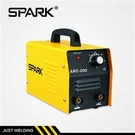
At our company, we offer a range of MIG welding machines designed to minimize spatter and provide high - quality welds. Our Digital MIG Welding Machine features advanced digital controls that allow for precise adjustment of the welding parameters. This makes it easier for welders to optimize the settings and reduce spatter.
The MIG Welding Machine with Seperate Wire Feeder provides greater flexibility in the welding process. The separate wire feeder allows for more accurate control of the wire feed speed, which is crucial for reducing spatter.
Our Family Use Popular Transformer MIG Welding Machine is designed for home and small - scale welding applications. It is easy to use and offers good spatter control, making it a popular choice for DIY enthusiasts and small - business owners.
Conclusion
In conclusion, understanding the spatter level of a MIG welding machine is essential for achieving high - quality welds and efficient welding operations. By considering the factors that affect spatter, measuring it accurately, and taking steps to control it, welders can improve the quality of their work, reduce costs, and increase productivity.
If you are looking for a MIG welding machine that offers excellent spatter control, we invite you to explore our product range. Our machines are designed with the latest technology and high - quality components to ensure optimal performance. Contact us for more information and to discuss your specific welding needs. We are ready to assist you in finding the perfect MIG welding machine for your application.
References
- AWS Welding Handbook, American Welding Society
- Welding Metallurgy and Weldability of Stainless Steels, John C. Lippold and David J. Kotecki
- The Science of Welding, John Norrish