




Hey there, fellow welding enthusiasts! As a supplier of MIG welding machines, I've seen firsthand the importance of every single component in these machines. One part that often doesn't get the spotlight it deserves is the contact tip. In this blog, I'm gonna break down the role of the contact tip in a MIG welding machine and why it's a big deal.
What's a Contact Tip Anyway?
Let's start with the basics. The contact tip is a small but mighty part of the MIG welding gun. It's usually made of copper or a copper alloy and is located at the end of the welding gun, right where the welding wire comes out. Think of it as the gateway between the welding machine and the workpiece.
Conducting Electricity
One of the primary roles of the contact tip is to conduct electricity from the welding machine to the welding wire. When you pull the trigger on the MIG welding gun, an electrical current flows through the contact tip and into the wire. This current heats up the wire, causing it to melt and form a weld pool on the workpiece. Without a properly functioning contact tip, the electrical connection can be poor, leading to inconsistent welds or even no weld at all.
Imagine trying to start a fire with a wet match. That's what it's like when the contact tip isn't doing its job of conducting electricity efficiently. You might get some sparks, but you won't get a good, solid flame. In the same way, a bad contact tip can make it really hard to get a clean, strong weld.
Feeding the Welding Wire
Another crucial role of the contact tip is to guide and feed the welding wire smoothly into the weld pool. The contact tip has a small hole in the center, and the wire passes through this hole as it's being fed. The size of the hole is carefully designed to match the diameter of the welding wire. If the hole is too big, the wire can wobble around, causing erratic welds. If the hole is too small, the wire can get stuck, leading to wire feeding problems.
It's like threading a needle. If the eye of the needle is too big, the thread won't stay in place. If it's too small, the thread won't go through at all. The contact tip has to be just the right size to ensure that the welding wire is fed consistently and accurately.
Controlling the Arc
The contact tip also plays a role in controlling the welding arc. The shape and size of the contact tip can affect the way the arc behaves. A well-designed contact tip can help to stabilize the arc, making it more consistent and easier to control. This is especially important when welding in different positions or on different types of materials.
For example, when welding vertically or overhead, a contact tip that helps to direct the arc downward can make the welding process much easier. It can also help to prevent the weld pool from dripping or sagging, resulting in a cleaner, more professional-looking weld.
Choosing the Right Contact Tip
As a MIG welding machine supplier, I often get asked about how to choose the right contact tip. There are a few things to consider.
First, you need to make sure that the contact tip is the right size for your welding wire. Most contact tips are labeled with the wire diameter they're designed to work with. Make sure to double-check this before you buy.
Second, consider the material of the contact tip. Copper is a popular choice because it's a good conductor of electricity and is relatively inexpensive. However, some applications may require a contact tip made of a different material, such as brass or a special alloy. These materials may offer better durability or performance in certain situations.

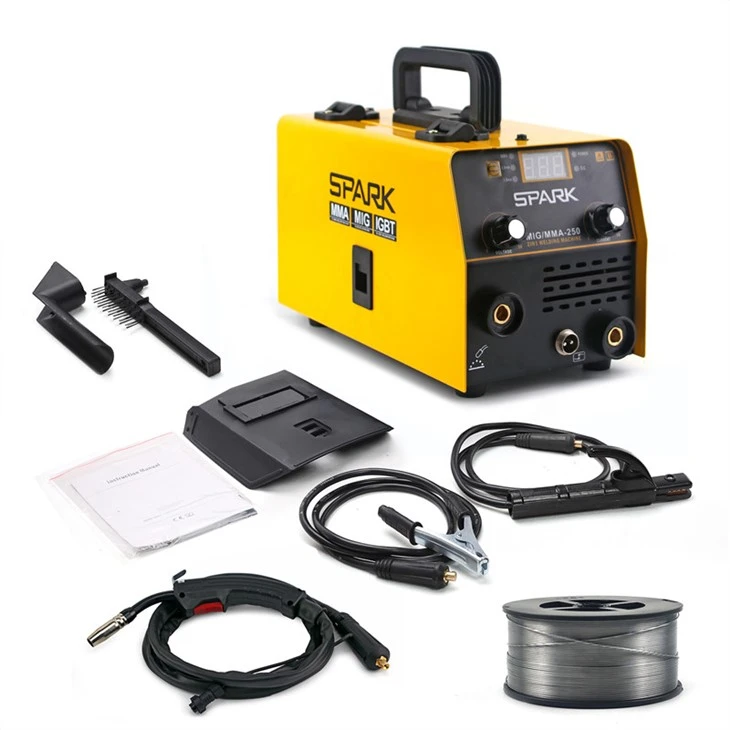
Finally, think about the type of welding you'll be doing. If you're doing a lot of high-volume welding, you may want to choose a contact tip that's designed for long-term use. On the other hand, if you're doing occasional, light-duty welding, a standard contact tip may be sufficient.
Maintaining the Contact Tip
Once you've chosen the right contact tip, it's important to take good care of it. Over time, the contact tip can wear out or become clogged with debris. This can affect its performance and lead to welding problems.
To keep your contact tip in good condition, make sure to clean it regularly. You can use a wire brush or a special contact tip cleaner to remove any dirt, spatter, or other debris. Also, check the contact tip for signs of wear, such as a worn-out hole or a damaged surface. If you notice any problems, replace the contact tip as soon as possible.
Our MIG Welding Machines and Contact Tips
At our company, we offer a wide range of Powerful MIG Welding Machine that come with high-quality contact tips. Our machines are designed to provide reliable performance and consistent welds, whether you're a professional welder or a DIY enthusiast.
We also offer a variety of MIG Flux Wire that are compatible with our contact tips. Our flux wire is designed to provide excellent weld quality and is suitable for a wide range of applications.
If you're in the market for a new MIG welding machine, check out our Transformer Gasless MIG Welding Machine with Seperate Wire Feeder. This machine is perfect for those who need a portable and easy-to-use welding solution.
Conclusion
In conclusion, the contact tip is a vital component of a MIG welding machine. It conducts electricity, feeds the welding wire, and controls the arc, all of which are essential for creating high-quality welds. By choosing the right contact tip and taking good care of it, you can ensure that your MIG welding machine performs at its best.
If you have any questions about our MIG welding machines or contact tips, or if you're interested in purchasing one of our products, don't hesitate to reach out. We're here to help you find the right welding solution for your needs. Let's get welding!
References
- AWS Welding Handbook, Volume 1: Welding Science and Technology
- Welding Metallurgy by John C. Lippold and David K. Miller
- The Welding Institute (TWI) - Technical Information Service