

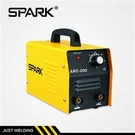



Welding is a crucial process in various industries, from construction and automotive to manufacturing and artistry. Among the numerous welding techniques available, TIG (Tungsten Inert Gas) welding and stick welding are two of the most commonly used methods. As a supplier of TIG welding machines, I am often asked about the differences between these two types of welding machines. In this blog post, I will delve into the key differences between TIG welding machines and stick welding machines, helping you understand which one is the best fit for your specific needs.
1. Welding Principle
The fundamental difference between TIG and stick welding lies in their welding principles.
TIG Welding
TIG welding, also known as GTAW (Gas Tungsten Arc Welding), uses a non - consumable tungsten electrode to create an arc. An inert gas, typically argon or a mixture of argon and helium, is used to shield the weld area from atmospheric contamination. The welder manually feeds a filler metal into the weld pool as needed. This process allows for precise control of the heat input and the weld bead, making it suitable for high - quality, precision welding jobs.
Stick Welding
Stick welding, or SMAW (Shielded Metal Arc Welding), employs a consumable electrode coated with a flux. When the electrode is struck against the workpiece, an arc is formed. The heat from the arc melts both the electrode and the base metal, and the flux coating on the electrode decomposes to form a shielding gas and a slag that protects the weld pool from oxidation and other contaminants. The flux also adds alloying elements to the weld.
2. Weld Quality
TIG Welding
TIG welding produces some of the highest - quality welds available. The precise control over the arc and the ability to add filler metal manually result in clean, smooth, and aesthetically pleasing welds. This method is ideal for applications where appearance and quality are of utmost importance, such as in the aerospace industry, jewelry making, and high - end automotive fabrication. The inert gas shielding ensures minimal contamination, leading to strong and durable welds with excellent mechanical properties.


Stick Welding
While stick welding can produce strong welds, the quality is generally not as high as that of TIG welding. The presence of slag requires additional cleaning after welding, and the weld bead may not be as smooth or uniform. However, stick welding is still suitable for many structural and heavy - duty applications where appearance is less critical, such as in construction, pipeline welding, and farm equipment repair.
3. Ease of Use
TIG Welding
TIG welding is considered more difficult to learn and master compared to stick welding. It requires the welder to have good hand - eye coordination as they need to control the torch, the filler metal, and the amperage simultaneously. The process also demands a high level of concentration to maintain a stable arc and achieve a consistent weld bead. However, once a welder becomes proficient in TIG welding, they can produce very high - quality work.
Stick Welding
Stick welding is relatively easier to learn. The process is more forgiving, and the equipment is simpler to operate. Beginners can quickly pick up the basics of stick welding and start making functional welds. The electrode itself provides some of the necessary shielding, reducing the need for complex gas - shielding equipment. This makes stick welding a popular choice for DIY enthusiasts and those new to welding.
4. Portability and Versatility
TIG Welding
TIG welding equipment is generally more complex and less portable than stick welding equipment. It requires a separate gas supply, which adds to the bulk and weight of the setup. However, TIG welding machines can be used on a wide range of metals, including stainless steel, aluminum, copper, and titanium. They are also suitable for thin - gauge materials, where precise heat control is essential to avoid burn - through.
Stick Welding
Stick welding machines are highly portable. They do not require a separate gas supply, and the electrodes are easy to carry. This makes stick welding a great option for on - site welding jobs, such as in construction sites or remote locations. Stick welding can be used on a variety of metals, including steel, cast iron, and some non - ferrous metals. However, it is not as well - suited for thin materials as TIG welding.
5. Cost
TIG Welding
TIG welding equipment is typically more expensive than stick welding equipment. The need for a gas supply, a high - frequency starter in some cases, and more advanced control systems contributes to the higher cost. Additionally, the cost of the filler metals and the shielding gas adds to the overall operating cost. However, for high - end applications where quality is paramount, the investment in TIG welding equipment can be justified.
Stick Welding
Stick welding equipment is more affordable, both in terms of the initial purchase price and the operating cost. The electrodes are relatively inexpensive, and there is no need for a separate gas supply. This makes stick welding a cost - effective option for small - scale operations and DIY projects.
6. Applications
TIG Welding
TIG welding is widely used in industries where precision and quality are crucial. Some common applications include:
- Aerospace: For welding aircraft components, such as engine parts and structural frames.
- Automotive: In the fabrication of high - performance exhaust systems, suspension components, and custom bodywork.
- Jewelry Making: To create intricate and high - quality jewelry pieces.
- Thin - Gauge Metal Fabrication: Such as in the production of electronic enclosures and stainless - steel kitchenware.
If you are interested in our TIG welding machines for these applications, you can check out our Plastic Panel Design Popular TIG Welding Machine, DC Single Phase TIG Welding Machine, and Industrial 380V Professional TIG for Welding Aluminium.
Stick Welding
Stick welding is commonly used in the following applications:
- Construction: For welding structural steel, such as beams and columns in buildings and bridges.
- Pipeline Welding: To join large - diameter pipes in oil and gas transmission systems.
- Farm Equipment Repair: To fix broken parts on tractors, plows, and other agricultural machinery.
- General Maintenance and Repair: In various industries where quick and reliable welding is required.
Conclusion
In summary, TIG welding and stick welding have distinct differences in terms of welding principle, weld quality, ease of use, portability, cost, and applications. TIG welding offers high - quality, precise welds but is more complex and expensive, while stick welding is easier to learn, more portable, and cost - effective for many heavy - duty applications.
As a supplier of TIG welding machines, we offer a range of high - quality products suitable for various welding needs. If you are looking for a TIG welding machine that can provide you with the precision and quality you need for your projects, we encourage you to contact us for a detailed discussion. Our team of experts can help you select the right machine based on your specific requirements and budget. Whether you are a professional welder or a DIY enthusiast, we are committed to providing you with the best welding solutions.
References
- O'Brien, J. (2018). Welding Handbook: Volume 1 - Welding Science and Technology. American Welding Society.
- Lancaster, J. F. (2008). The Metallurgy of Welding. Butterworth - Heinemann.