

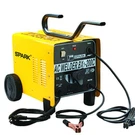
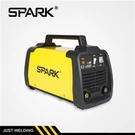
Hey there, fellow welding enthusiasts! As a supplier of MIG welding machines, I've gotten tons of questions about the differences between MIG and stick welding machines. So, I thought I'd break it down in this blog post.
How They Work
Let's start with how these two types of welding machines operate. Stick welding, also known as Shielded Metal Arc Welding (SMAW), is one of the oldest and simplest welding processes. It uses a consumable electrode coated in flux. When you strike the electrode against the metal, an arc is formed. The heat from this arc melts both the electrode and the base metal, fusing them together. The flux on the electrode creates a gas shield that protects the weld pool from atmospheric contamination. It's like having a little protective bubble around your weld.
On the other hand, MIG welding, or Metal Inert Gas welding, uses a continuous solid wire electrode that is fed through a welding gun. A shielding gas, usually a mixture of argon and carbon dioxide, is also fed through the gun to protect the weld pool. The wire electrode is melted by an electric arc, and as it melts, it joins the two pieces of metal. The process is more continuous compared to stick welding, which requires you to keep replacing the electrode as it burns down.
Ease of Use
When it comes to ease of use, MIG welding machines have a bit of an edge. With stick welding, you need to have a good technique to strike and maintain the arc. If you're new to welding, it can be quite challenging to get the hang of it. You have to deal with issues like electrode sticking and arc blow, which can make the welding process frustrating.
MIG welding, however, is generally easier to learn. The continuous wire feed means you don't have to worry about constantly replacing electrodes. The shielding gas also makes it easier to control the weld pool, resulting in cleaner and more consistent welds. Even beginners can produce decent-looking welds with a MIG welding machine after just a few hours of practice.
Weld Quality
Both MIG and stick welding can produce high-quality welds, but they have different characteristics. Stick welding is great for welding thick metals and in outdoor or dirty environments. The flux on the electrode provides excellent protection against contaminants, and the deep penetration of the arc can create strong welds. However, the welds can be a bit rough and may require some cleanup afterward.
MIG welding, on the other hand, produces smooth and clean welds. The shielding gas provides a stable arc and protects the weld pool from oxidation and other contaminants. This makes MIG welding ideal for applications where appearance is important, such as in automotive and aerospace industries. However, MIG welding may not be as effective in windy conditions or when welding thick metals without proper preheating.
Cost
Cost is always an important factor when choosing a welding machine. Stick welding machines are generally more affordable. They are simpler in design and don't require a shielding gas, which can save you money in the long run. The electrodes for stick welding are also relatively inexpensive.
MIG welding machines, on the other hand, can be more expensive upfront. You need to invest in the machine itself, as well as the shielding gas and the wire electrode. However, if you're doing a lot of welding, the cost of the gas and wire may be offset by the increased productivity and better weld quality.
Applications
Stick welding is widely used in construction, pipeline welding, and repair work. It's a versatile process that can be used on a variety of metals, including steel, stainless steel, and cast iron. The ability to work in outdoor and dirty environments makes it a popular choice for field work.
MIG welding is commonly used in manufacturing, automotive repair, and sheet metal work. Its ability to produce clean and precise welds makes it ideal for applications where appearance and quality are important. It's also a great choice for welding thin metals, as it allows for better control of the heat input.
Our MIG Welding Machines
As a supplier of MIG welding machines, we offer a range of high-quality products to meet your needs. For example, our Transformer Gasless MIG Welding Machine with Compact Torch is a great option for those who want a portable and easy-to-use machine. It doesn't require shielding gas, which makes it convenient for outdoor work.
We also have the Single PCB MIG Welding Machine with Compact Torch, which is known for its reliability and performance. It's a great choice for both beginners and experienced welders.
And if you're looking for the right wire for your MIG welding machine, check out our MIG Flux Wire. It provides excellent weld quality and is suitable for a variety of applications.
Conclusion
In conclusion, both MIG and stick welding machines have their own advantages and disadvantages. The choice between the two depends on your specific needs, skill level, and budget. If you're new to welding or need to produce clean and precise welds, a MIG welding machine may be the better choice. However, if you're working in outdoor or dirty environments and need to weld thick metals, stick welding may be more suitable.
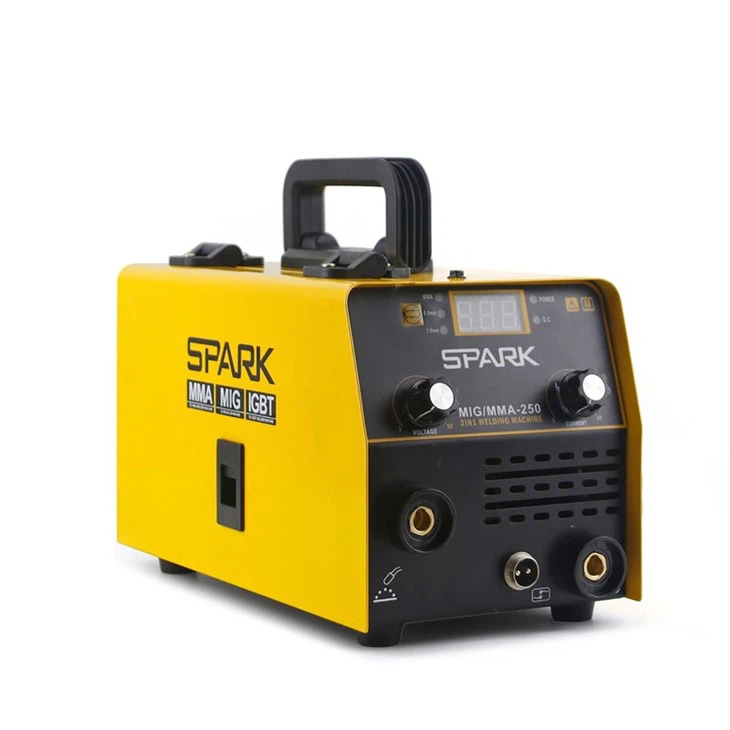

If you're interested in purchasing a MIG welding machine or have any questions about our products, feel free to reach out to us. We're here to help you find the right welding solution for your needs.
References
- Welding Handbook, American Welding Society
- Modern Welding Technology, Richard L. Petzold