




Hey there, fellow welders! As a supplier of MIG Flux Wire, I've seen firsthand the importance of a good weld. In this blog post, I'm gonna talk about what a good weld made with MIG Flux Wire should look like.
First off, let's understand what MIG Flux Wire is. It's a type of welding wire that has a flux core inside. This flux helps in creating a shield around the weld pool, protecting it from atmospheric contamination. It's a popular choice for many welders because it's easy to use and can work well in various conditions.
Appearance of a Good Weld
1. Bead Shape
A good weld bead made with MIG Flux Wire should have a consistent and smooth shape. It should be evenly deposited along the joint. The bead should have a nice, rounded profile, not too high or too low. If the bead is too high, it might indicate that you're using too much wire feed speed or too low a travel speed. On the other hand, a very low bead could mean the opposite - too low a wire feed speed or too high a travel speed.
The width of the bead should also be consistent. You don't want it to be wider in some parts and narrower in others. This consistency shows that you've maintained a steady hand and proper welding parameters throughout the process.
2. Penetration
Proper penetration is crucial for a strong weld. When you look at a cross - section of the weld (which you can do on a test piece), you should see that the weld has penetrated into the base metal. With MIG Flux Wire, the penetration should be deep enough to create a good bond but not so deep that it burns through the metal.

A good way to check for penetration is to look at the backside of the weld (if possible). You should see a slight bulge or a well - defined weld bead on the back. This indicates that the heat from the welding process has melted the base metal enough to create a solid joint.
3. Lack of Defects
A good weld should be free from major defects. One common defect is porosity. Porosity looks like small holes in the weld bead. It's usually caused by contaminants on the base metal, improper shielding gas (even though MIG Flux Wire has its own flux for shielding), or incorrect welding parameters.
Another defect to watch out for is cracks. Cracks can be either surface cracks or internal cracks. Surface cracks are visible on the outside of the weld bead, while internal cracks might require non - destructive testing methods to detect. Cracks can weaken the weld significantly and are often a result of rapid cooling, high residual stresses, or improper joint preparation.
Spatter is also something to consider. Spatter are small droplets of molten metal that are ejected from the weld pool during the welding process. While some spatter is normal, excessive spatter can be a sign of incorrect voltage, wire feed speed, or a dirty wire. A good weld made with MIG Flux Wire should have minimal spatter.
4. Color
The color of the weld can tell you a lot about the quality of the weld. A good weld should have a uniform color. If the weld has a dark, discolored appearance, it could be due to overheating or improper shielding. A light - colored, shiny weld is generally a good sign, indicating that the welding process was well - controlled.
Factors Affecting the Appearance of the Weld
1. Welding Machine
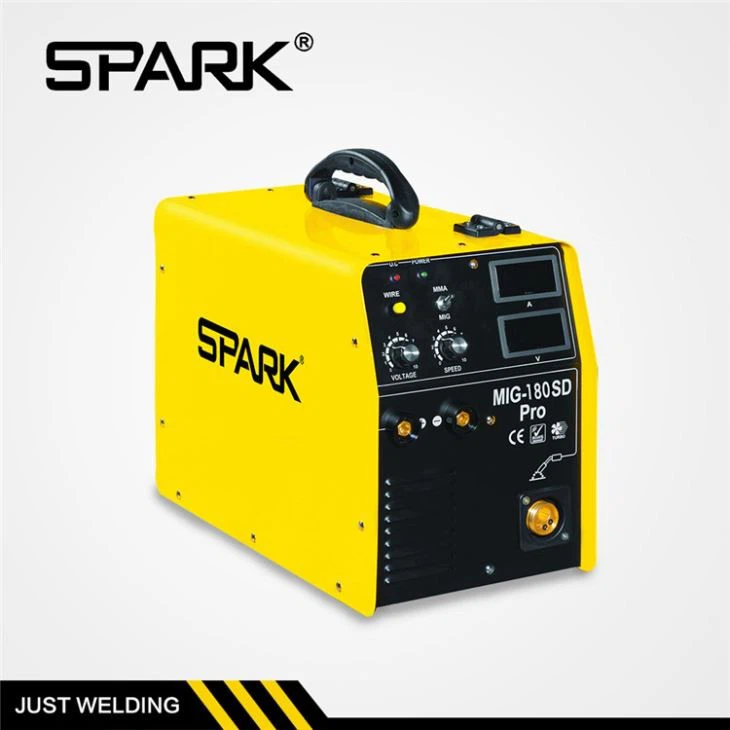
The type of welding machine you use plays a big role in the appearance of the weld. For example, a Three PCB MOS MIG Welding Machine offers precise control over the welding parameters. It can help you achieve a more consistent weld bead by allowing you to adjust the voltage and wire feed speed accurately.
Similarly, a MIG MAG Welding Machine gives you the flexibility to use different types of shielding gases (if required) and can also affect the appearance of the weld. And a MIG Welding Machine with Seperate Wire Feeder allows for better control of the wire feed, which is essential for a smooth and consistent weld bead.
2. Welding Parameters
As mentioned earlier, wire feed speed, voltage, and travel speed are critical parameters. You need to find the right balance between these parameters for a good - looking weld. For example, if you increase the wire feed speed, you'll need to increase the voltage accordingly to maintain a stable arc.
The travel speed also affects the appearance of the weld. If you travel too fast, the weld bead might be thin and lack proper penetration. If you travel too slow, you might end up with a high, wide bead and possible overheating of the base metal.
3. Base Metal and Joint Preparation
The condition of the base metal is important. If the base metal is dirty, rusty, or has oil on it, it can cause porosity and other defects in the weld. Make sure to clean the base metal thoroughly before welding.
Proper joint preparation is also crucial. The joint should be the right size and shape for the type of weld you're doing. For example, a V - joint might require different welding techniques and parameters compared to a butt joint.
Tips for Achieving a Good Weld
1. Practice
Practice makes perfect. Set up some test pieces and try different welding parameters until you find the ones that work best for you. You can also practice on different types of joints to improve your skills.
2. Read the Manufacturer's Instructions
The manufacturer of the MIG Flux Wire will usually provide guidelines on the recommended welding parameters. Make sure to follow these instructions carefully.
3. Inspect Regularly
During the welding process, stop and inspect the weld periodically. If you notice any issues, such as excessive spatter or porosity, adjust the welding parameters immediately.
Conclusion
In conclusion, a good weld made with MIG Flux Wire should have a consistent bead shape, proper penetration, be free from major defects, and have a uniform color. The appearance of the weld is affected by the welding machine, welding parameters, base metal, and joint preparation.
If you're in the market for high - quality MIG Flux Wire or need advice on achieving the perfect weld, don't hesitate to reach out. We're here to help you with all your welding needs. Whether you're a professional welder or just starting out, we've got the products and expertise to support you. Contact us for more information and let's start a great welding project together!
References
- Welding Handbook, American Welding Society
- MIG Welding: Principles and Practices, Various industry publications