




Hey there, fellow welders! As a supplier of MMA welding machines, I've gotten a ton of questions about operating these bad boys in high - altitude environments. It's a tricky situation, but don't worry, I'm here to break it down for you.
First off, let's talk about why high - altitude environments are such a pain in the butt for MMA welding. At higher altitudes, the air pressure drops, and the air is thinner. This affects the welding arc and the overall performance of your machine. The thinner air means there's less oxygen available for the welding process, which can lead to a less stable arc and lower quality welds.
One of the first things you need to adjust on your MMA welding machine in a high - altitude environment is the current settings. Generally, at higher altitudes, you'll need to increase the welding current. This is because the thinner air makes it harder to maintain a stable arc. With a lower air density, the electrons in the arc have more space to move around, which can cause the arc to flicker or go out. By increasing the current, you're giving the arc more energy to stay stable.


For example, if you're used to welding at sea - level with a current setting of 100 amps, you might need to bump it up to 110 - 115 amps at an altitude of around 5000 feet. It's not an exact science, though. You'll need to do some test welds to find the sweet spot for your specific machine and the welding conditions.
Another important factor to consider is the electrode. Different electrodes perform differently at high altitudes. Some electrodes are more sensitive to the changes in air pressure and oxygen levels. You might want to choose electrodes that are specifically designed for high - altitude welding. These electrodes are formulated to maintain a stable arc even in thin air.
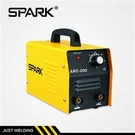
Now, let's talk about the type of MMA welding machines we offer. We've got a great selection of Hand-Held Welding Machine. These are super convenient for high - altitude work because they're lightweight and easy to carry around. Whether you're working on a mountain - side or on a high - rise building, these hand - held machines are a great option.
Our Hand-held Inverter Machine is also a top - notch choice. Inverter machines are known for their efficiency and ability to provide a stable arc. They can adapt to different welding conditions more easily than traditional machines. At high altitudes, this adaptability is crucial. The inverter technology allows the machine to adjust the output current quickly, which helps in maintaining a stable arc even when the air conditions change.
If you're looking for something more heavy - duty, we've got the Heavy Duty MMA Welding Machine. These machines are built to handle tough jobs, and they're perfect for high - altitude industrial applications. They can deliver a consistent and powerful welding current, which is essential for large - scale welding projects at high altitudes.
When you're adjusting your MMA welding machine in a high - altitude environment, you also need to pay attention to the cooling system. The thinner air at high altitudes can affect the cooling efficiency of the machine. Make sure the vents on your machine are clean and unobstructed. You might also want to take more breaks during the welding process to let the machine cool down. Overheating can cause serious damage to your machine and affect the quality of your welds.
It's also a good idea to keep an eye on the humidity levels. High - altitude areas can have lower humidity, which can cause the electrodes to dry out more quickly. This can lead to poor arc stability and weak welds. You can store your electrodes in a moisture - resistant container to prevent them from drying out.
In addition to adjusting the machine settings, you need to adjust your welding technique. Welding at high altitudes requires a bit more patience and precision. You might need to hold the electrode at a slightly different angle to maintain a stable arc. A smaller arc length can also help in keeping the arc stable. Try to keep the arc length between 1/8 to 1/4 inch.
Another tip is to use a shorter welding time for each pass. This helps in reducing the heat input and preventing the metal from overheating. You can make multiple short passes instead of one long pass to achieve the desired weld thickness.
So, there you have it, a comprehensive guide on how to adjust the operation of an MMA welding machine in a high - altitude environment. As a supplier, we're always here to help you with any questions or issues you might have. Whether you're a professional welder or just starting out, we've got the right machine for you.
If you're interested in purchasing one of our MMA welding machines or need more information, don't hesitate to reach out. We're ready to have a chat and help you find the perfect machine for your high - altitude welding needs. Let's get those high - altitude welds looking great!
References:
- Welding Handbook, American Welding Society
- High - Altitude Welding Best Practices, Welding Journal