

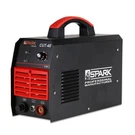


If you’re running a fabrication shop or just getting into metal cutting with an MMA TIG cut machine, I get it—choosing the right shielding gas can feel overwhelming at first. When I talk to customers who reach out to me about our equipment, the first question after, “Does this machine handle both cutting and welding?” is usually, “What gas do I actually need for it?” That makes sense because shielding gas doesn’t just “shield”—it affects cut quality, how clean your work is, and even how long your machine parts last.
First, let’s break down what shielding gas does in an MMA TIG cut machine. Unlike a regular plasma cutter, an MMA TIG cut machine uses a tungsten electrode, and that gas protects the electrode, the weld pool (if you’re switching modes), and the cut edge from atmospheric contamination. Oxygen, nitrogen, and hydrogen from the air can mess up your cuts—making them jagged, pitted, or even damaging the tungsten. So picking the right gas isn’t just a “preference” thing; it’s a science, and it’s tied directly to the metal you’re working on and the job you’re trying to finish.
Let’s start with the basics: what metals are you cutting? That’s the biggest question. I’ve seen customers grab any gas they have lying around only to end up re-cutting parts because the edges were rough. For carbon steel, which is super common in general fabrication, most of the time a mix of argon and carbon dioxide works great. Wait, let me clarify—for cutting specifically, not just welding. Carbon steel has a high carbon content, and a small amount of CO2 in the shielding gas actually helps with the cut’s “knockout” (the molten metal that gets blown away). If you use pure argon on carbon steel, the cut can turn out a little too soft, and you might get more spatter. I tell folks this all the time: for carbon steel, a 75% argon / 25% CO2 mix is a solid go-to. It’s cheap, easy to source, and works with most standard MMA TIG cut machines.


But if you’re working with stainless steel, that’s a different story. Stainless doesn’t have the same carbon content as carbon steel, and it’s way more prone to discoloration. Pure argon here is actually better than mixes. Why? Because CO2 can cause excessive oxidation on stainless edges, which means you’ll have to grind the edges after cutting—wasting time. Argon is inert, so it doesn’t react with the stainless. Some guys use a small amount of nitrogen in the mix, but pure argon is safer for beginners. I’ve had a customer who tried a argon-CO2 mix on 304 stainless and ended up with edges so bad he had to hire another team to rework them. Don’t be that guy. Stick with argon for stainless.
Then there’s aluminum. Aluminum is tricky because it oxidizes instantly when it’s hot. A lot of newbies think they can use argon, and while that’s true for welding, cutting aluminum with argon needs a little boost. Wait, no—actually, for cutting aluminum with an MMA TIG cut machine, pure argon works, but some pros add a tiny bit of helium. Helium makes the gas hotter, which helps melt the aluminum faster, leading to a cleaner cut. The downside? Helium is more expensive. If you’re doing small jobs at home, pure argon is fine. If you’re a shop doing 100+ pieces a day, a argon-helium mix might save you time in the long run.
Now, let’s talk about your machine itself. Not all MMA TIG cut machines are the same, and that affects which gas you can use. For example, if you have a machine that has a lift TIG function (so you don’t have to strike the arc with a scratch), it might have different gas flow requirements than a basic model. If you’re in the market for a machine that can handle multiple processes—cutting, TIG welding, MMA welding—you might want to check out a Cutting Machine with Lift TIG. These machines are designed to work with different gas types, so you can switch between metals without swapping out your setup every time. I’ve found that these lift TIG machines also have better gas control, which makes it easier to dial in the right flow for different cuts.
Wait, another thing: gas flow rate. That’s not a gas type, but it’s tied to choosing the right gas. If you’re using too low a flow, the air gets in and contaminates the cut. Too high, and you get turbulence, which also pulls in air. For most MMA TIG cut machines, 15 to 20 cubic feet per hour (CFH) is a good range. But if you’re cutting thicker metal (like 1/2 inch or more), you might bump it up to 25 CFH. I always tell folks to test a scrap piece first. If you see discoloration on the edge, your flow is too low. If there’s a lot of spatter blowing around, turn it down a little.
Let’s address some common mistakes I see customers make. One is using shielding gas meant for welding only. Welding gas is designed to protect the weld pool, but cutting gas has to handle more heat from the plasma arc. For example, pure CO2 might work for some welding, but for cutting carbon steel, it can make the edges too hard and lead to more dross (that gunk left on the cut edge). Another mistake is not checking your gas regulator. A bad regulator can give inconsistent flow, which ruins even the best gas choice. I recommend calibrating your regulator every 6 months if you’re using it regularly.
If you’re looking for a machine that’s versatile enough to handle all these gas types for different jobs, check out some of our multifunctional models. For example, our Professional Multifunctional Welding Machine supports multiple gas settings, so you can switch between argon for stainless and argon-CO2 for carbon steel without resetting your machine every time. That saves a ton of time on job sites. We also have a Smart Multi-Function Welding Machine that has preset gas flow modes for different metals, which is perfect if you’re still figuring out which gas works best for what.
Wait, what about thinner metals—like 16 gauge sheet metal? For thin carbon steel, a lower flow rate (10 to 12 CFH) with a argon-CO2 mix works. If you use too high a flow, you can blow right through the thin metal and make a messy cut. For thin aluminum, pure argon at 12 CFH is ideal. I’ve had a lot of hobbyists come to me and say they were ruining thin parts until they adjusted their flow rate. It’s not just the gas type—it’s how you deliver it.
Another point: cost. Shielding gas can add up, especially if you’re running a shop. Argon is more expensive than CO2, so if you’re doing a lot of carbon steel cuts, sticking with the 75/25 mix will save you money. Stainless steel jobs will always require argon, but you can negotiate bulk rates with your gas supplier if you go through a lot of cylinders. Some shops use bulk tanks, which are cheaper long-term, but if you’re a small operation, disposable cylinders are more convenient.
Let’s wrap this up with a quick guide I give to new customers when they ask me:
- Carbon steel: 75% argon / 25% CO2 mix
- Stainless steel: Pure argon
- Aluminum: Pure argon (add helium if you’re doing thick cuts)
- Adjust flow rate based on metal thickness (10-25 CFH)
And remember, your machine matters. If you have a basic MMA TIG cut machine, make sure it’s compatible with the gas type you choose. If you’re upgrading, look for a machine that’s built for versatility—like a Multifunctional Welding Machine that handles multiple processes and gases. For folks who want even more flexibility, our Smart Multifunctional MIG/TIG/MMA lets you switch between MIG, TIG, and MMA modes, each with optimized gas settings, so you can handle any job that comes your way.
If you’re still not sure which gas is right for your specific project, or you want to talk about which machine fits your needs, feel free to reach out to discuss your requirements. We’re here to help you get clean cuts and make the most out of your equipment.
References:
- Welding Journal. (2022). Shielding Gas Selection for TIG Cutting Processes. American Welding Society.
- Metal Fabrication Tech Guide. (2021). Gas Flow Rates for MMA TIG Cut Machines. Fabricators & Manufacturers Association International.
- AWS C1.1 Standard. (2020). Standard for Welding Processes, Part 3: TIG Cutting. American Welding Society.