

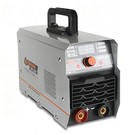


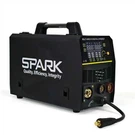

Hey there! I'm a supplier of MIG MAG welding machines, and today I wanna chat about something that's super important in the welding world: the voltage compensation function. So, do MIG MAG welding machines have a voltage compensation function? Let's dig in.
What is Voltage Compensation in Welding Machines?
First off, let's understand what voltage compensation even means. In a welding setup, the voltage can fluctuate due to various reasons. For example, the length of the welding cable, the load on the power supply, or even the condition of the electrical grid in your area. When the voltage drops or spikes, it can have a big impact on the quality of your weld.
Voltage compensation is a feature in welding machines that adjusts the output voltage to maintain a consistent welding arc, regardless of the input voltage variations. This ensures that you get a stable and high - quality weld every time, even if the power supply isn't perfect.
Do MIG MAG Welding Machines Have It?
The answer is, it depends. Not all MIG MAG welding machines come with a voltage compensation function, but many modern and high - end models do. As a supplier, I've seen a growing demand for welding machines with this feature because welders are looking for more reliable and consistent performance.
For those who are doing professional welding jobs, like in the automotive or aerospace industries, a stable welding arc is crucial. A small voltage fluctuation can lead to weld defects such as porosity, lack of fusion, or inconsistent bead appearance. That's why these industries often prefer MIG MAG welding machines with voltage compensation.
On the other hand, if you're a hobbyist or doing light - duty welding, you might not need a machine with this feature. A basic MIG Welding Machine with Seperate Wire Feeder can still get the job done, but you'll need to be more careful about the power supply conditions.
Benefits of Voltage Compensation in MIG MAG Welding Machines
Let's talk about the benefits of having a MIG MAG welding machine with voltage compensation.
1. Consistent Weld Quality
As I mentioned earlier, the main advantage is consistent weld quality. With voltage compensation, the machine can adjust to changes in the input voltage, so the arc remains stable. This means you'll get uniform bead profiles, better penetration, and fewer defects. Whether you're welding thin or thick materials, the machine will maintain the right welding parameters.
2. Increased Productivity
When you have a stable weld, you can work faster. You don't have to stop and readjust the settings every time the voltage changes. This saves time and increases your overall productivity. For commercial welding operations, this can lead to significant cost savings in the long run.
3. Compatibility with Different Power Sources
MIG MAG welding machines with voltage compensation can work with a wider range of power sources. You can use them in different locations, even where the power supply might be unreliable. This gives you more flexibility in your work, whether you're on a construction site or in a remote workshop.
Our MIG MAG Welding Machines with Voltage Compensation
At our company, we offer a variety of MIG MAG welding machines, some of which come with voltage compensation. Take a look at our Single PCB MIG Welding Machine with Compact Torch. This machine is not only compact but also has advanced voltage compensation technology. It can automatically adjust the output voltage to keep the welding arc stable, even if the input voltage fluctuates.
Another great option is our 5 Kgs Wire Welding Machine. It's designed for medium - to heavy - duty welding jobs and comes with a reliable voltage compensation system. This ensures that you can get high - quality welds every time, no matter the power conditions.


How to Choose a MIG MAG Welding Machine with Voltage Compensation
If you're in the market for a MIG MAG welding machine with voltage compensation, here are a few things to consider.
1. Voltage Range
Check the voltage range that the machine can handle. A wider voltage range means the machine can adapt to more power supply variations. Look for a machine that can operate within a range of, say, 180 - 260 volts.
2. Compensation Accuracy
The accuracy of the voltage compensation is crucial. A machine with high - precision compensation will be better at maintaining a stable welding arc. Look for models that have been tested and proven to provide accurate compensation.
3. Cost
Of course, cost is always a factor. Machines with voltage compensation tend to be more expensive than those without. However, if you're a professional welder or need consistent weld quality, the investment is worth it. Consider your budget and the long - term benefits when making your decision.
Conclusion
In conclusion, while not all MIG MAG welding machines have a voltage compensation function, it's a valuable feature that can greatly improve the quality and consistency of your welds. Whether you're a professional welder or a hobbyist, a machine with voltage compensation can make your welding jobs easier and more reliable.
If you're interested in learning more about our MIG MAG welding machines with voltage compensation or have any questions about purchasing one, feel free to reach out. We're here to help you find the right welding machine for your needs.
References
- Welding Handbook, American Welding Society
- Welding Technology textbooks from various educational institutions
- Industry reports on welding machine technology trends