

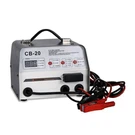




As a supplier of 6V/12V/24V battery chargers, I often receive inquiries from customers who want to know if our chargers can be used for electric bike batteries. This is a crucial question, as using an inappropriate charger can not only damage the battery but also pose safety risks. In this blog, I will delve into the technical aspects and practical considerations to provide a comprehensive answer.
Understanding Electric Bike Batteries
Electric bike batteries come in a variety of types, with the most common being lead - acid, lithium - ion, and nickel - metal hydride (NiMH). Each type has its own unique charging requirements in terms of voltage, current, and charging algorithms.
- Lead - acid Batteries: These are the oldest and most affordable type of electric bike batteries. They typically require a charging voltage slightly higher than their nominal voltage to ensure a full charge. For example, a 12V lead - acid battery usually needs a charging voltage around 13.8 - 14.4V. The charging process for lead - acid batteries often involves three stages: bulk charging, absorption charging, and float charging.
- Lithium - ion Batteries: Lithium - ion batteries are popular due to their high energy density, long lifespan, and low self - discharge rate. They are more sensitive to overcharging and over - discharging compared to lead - acid batteries. A lithium - ion battery requires a constant - current/constant - voltage (CC/CV) charging method. For instance, a 24V lithium - ion battery may need a charging voltage of around 29.4V.
- Nickel - Metal Hydride (NiMH) Batteries: NiMH batteries offer a good balance between energy density and cost. They are less prone to the memory effect compared to nickel - cadmium (NiCd) batteries. The charging process for NiMH batteries usually involves a constant - current charging until a certain voltage is reached, followed by a topping charge.
Compatibility of 6V/12V/24V Battery Chargers with Electric Bike Batteries
Our 6V/12V/24V Battery Charger is designed to provide a range of output voltages to charge different types of batteries. However, its compatibility with electric bike batteries depends on several factors.
Voltage Compatibility
The nominal voltage of the charger must match the voltage requirements of the electric bike battery. For example, if an electric bike has a 24V battery, a 24V output from the charger is necessary. But it's not just about the nominal voltage. As mentioned earlier, different battery chemistries require specific charging voltages. A charger designed for a 24V lead - acid battery may not be suitable for a 24V lithium - ion battery because of the different charging voltage requirements.
Current and Charging Algorithm
The charging current and the charging algorithm are equally important. If the charger supplies too high a current, it can overheat the battery and reduce its lifespan. On the other hand, a very low current will result in a very long charging time. Our chargers are designed to provide a regulated current output, but the specific charging algorithm for electric bike batteries may vary. Some electric bike batteries require a smart charger that can adjust the charging parameters based on the battery's state of charge and temperature.
Advantages of Using Our Chargers
While there are some compatibility considerations, our 6V/12V/24V Battery Charger offers several advantages for electric bike battery charging in certain situations.
- Versatility: With the ability to provide 6V, 12V, and 24V outputs, our charger can be used for different types of electric bikes with varying battery voltages. This is especially useful for users who own multiple electric bikes or have different battery - powered devices.
- Quality and Safety: Our chargers are built with high - quality components and safety features such as over - charge protection, short - circuit protection, and reverse - polarity protection. These features help to ensure the safety of the battery and the user during the charging process.
Other Charger Options
In addition to our standard 6V/12V/24V Battery Charger, we also offer other charger options that may be more suitable for electric bike batteries.
- Digital Universal Battery Charger: Our Digital Universal Battery Charger is a smart charger that can automatically detect the battery type and adjust the charging parameters accordingly. It is compatible with a wide range of battery chemistries, including lead - acid, lithium - ion, and NiMH. This charger is ideal for users who want a convenient and reliable charging solution for their electric bike batteries.
- Movable Heavy Charger with Wheel: For users who need to charge their electric bike batteries in different locations, our Movable Heavy Charger with Wheel is a great option. It is designed to be portable and easy to move around, making it suitable for both indoor and outdoor charging.
Conclusion
In conclusion, whether a 6V/12V/24V battery charger can be used for electric bike batteries depends on the specific battery type, voltage requirements, and charging algorithm. While our 6V/12V/24V Battery Charger offers some versatility, it may not be suitable for all electric bike batteries. However, we also provide other charger options such as the Digital Universal Battery Charger and the Movable Heavy Charger with Wheel that can meet a wider range of charging needs.
If you are considering purchasing a charger for your electric bike battery, I encourage you to contact us for more information. Our team of experts can help you choose the right charger based on your specific requirements. We are committed to providing high - quality charging solutions and excellent customer service. Let's start a conversation about your charging needs and find the best charger for your electric bike battery.


References
- Linden, D., & Reddy, T. B. (2002). Handbook of Batteries (3rd ed.). McGraw - Hill.
- IEC 62133 - 2:2017, Secondary cells and batteries containing alkaline or other non - acid electrolytes - Safety requirements for portable sealed secondary cells, and for batteries made from them, for use in portable applications - Part 2: Lithium systems.