




In the realm of welding technology, precision is a key factor that can significantly impact the quality and durability of welded joints. Among the various types of welding machines available, Digital MIG (Metal Inert Gas) Welding Machines have gained considerable attention for their potential to offer enhanced precision. As a supplier of Digital MIG Welding Machines, I am often asked whether these machines are truly more precise in welding. In this blog post, I will explore this question in detail, examining the features and capabilities of Digital MIG Welding Machines that contribute to their precision, as well as comparing them to traditional MIG welding machines.
Understanding the Basics of MIG Welding
Before delving into the precision of Digital MIG Welding Machines, it is essential to understand the fundamentals of MIG welding. MIG welding is a popular arc welding process that uses a continuous solid wire electrode fed through a welding gun. An inert or semi - inert gas is used to shield the weld pool from atmospheric contamination. This process is known for its high welding speed, ease of use, and ability to weld a wide range of materials, including mild steel, stainless steel, and aluminum.
Traditional MIG welding machines rely on analog controls to regulate parameters such as voltage, wire feed speed, and gas flow rate. These controls are often adjusted manually, which can be challenging to fine - tune accurately, especially for less experienced welders. Small variations in these parameters can lead to inconsistent weld quality, including issues such as poor penetration, excessive spatter, and uneven bead appearance.
The Advantages of Digital MIG Welding Machines in Precision
1. Precise Parameter Control
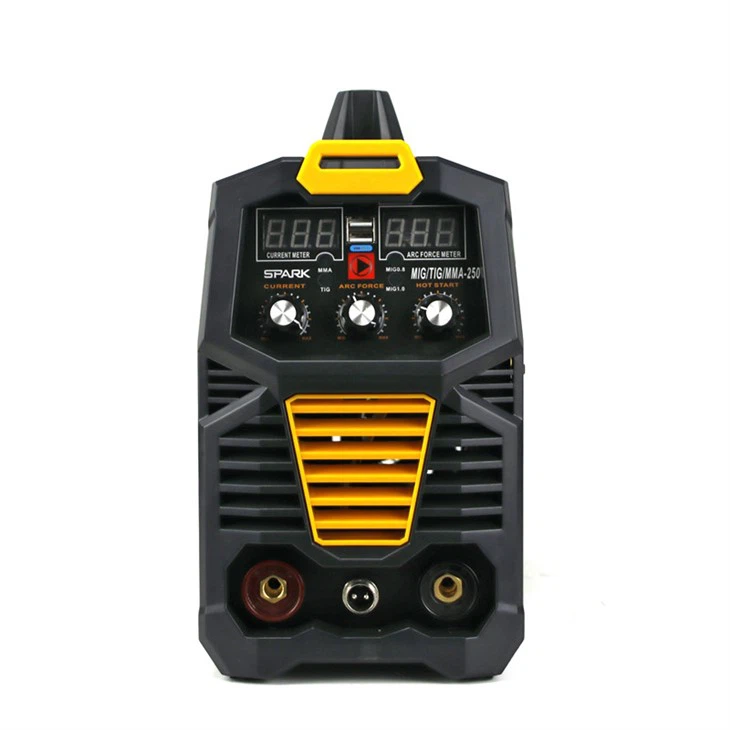
One of the primary advantages of Digital MIG Welding Machines is their ability to provide precise control over welding parameters. Unlike traditional analog machines, digital machines use microprocessors to regulate voltage, wire feed speed, and gas flow rate with high accuracy. This means that welders can set and maintain the exact parameters required for a specific welding job, resulting in more consistent and precise welds.
For example, a Digital MIG Welding Machine can be programmed to maintain a constant wire feed speed within a very narrow tolerance. This is crucial for achieving uniform weld bead width and penetration. In contrast, on an analog machine, the wire feed speed may fluctuate slightly due to variations in the power supply or mechanical components, leading to inconsistent weld quality.
2. Advanced Welding Modes
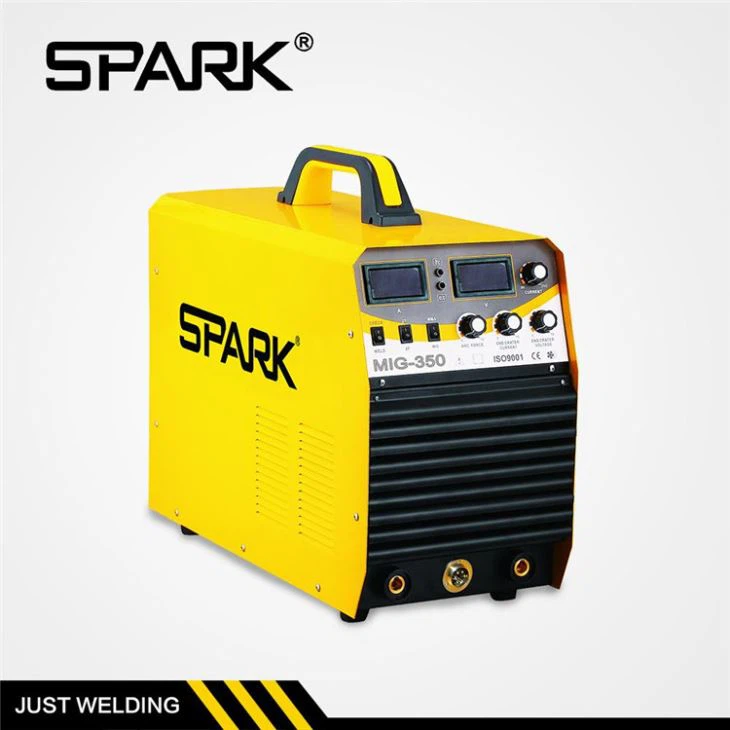
Digital MIG Welding Machines often come equipped with a variety of advanced welding modes, such as pulse MIG welding. Pulse MIG welding allows the welder to control the heat input more precisely by alternating between high - and low - current pulses. This reduces the overall heat input to the workpiece, minimizing distortion and improving the quality of the weld.
In addition, some digital machines offer special modes for welding different materials and thicknesses. For instance, they can be optimized for welding thin sheets of aluminum, where precise control of heat input is critical to avoid burn - through. These advanced modes are not typically available on traditional analog MIG welding machines, giving digital machines a significant edge in terms of precision.
3. Memory Function
Another feature that enhances the precision of Digital MIG Welding Machines is the memory function. Many digital machines allow welders to save and recall different welding parameter settings for various jobs. This is particularly useful when performing repetitive welding tasks or when switching between different materials and joint configurations.
For example, if a welder frequently welds a specific type of joint on a particular material, they can save the optimal parameter settings in the machine's memory. Then, every time they need to perform that welding job, they can simply recall the settings, ensuring consistent and precise welds without the need to manually adjust the parameters each time.
Comparing Digital MIG Welding Machines with Traditional MIG Welding Machines
To further illustrate the precision of Digital MIG Welding Machines, let's compare them to traditional MIG welding machines in some key aspects.

1. Weld Quality
As mentioned earlier, the precise parameter control and advanced welding modes of Digital MIG Welding Machines result in higher - quality welds. Traditional analog machines are more prone to producing inconsistent welds due to the difficulty of accurately setting and maintaining welding parameters. Digital machines can produce welds with better penetration, less spatter, and a more uniform bead appearance, which is essential for applications where weld quality is critical, such as in the aerospace and automotive industries.
2. Ease of Use
Digital MIG Welding Machines are generally easier to use, especially for novice welders. The digital displays and intuitive controls make it easier to set and adjust welding parameters. In contrast, traditional analog machines often require more skill and experience to operate effectively, as the manual controls can be more difficult to adjust accurately.
3. Adaptability
Digital MIG Welding Machines are more adaptable to different welding situations. With their advanced welding modes and memory function, they can quickly adjust to changes in materials, thicknesses, and joint configurations. Traditional analog machines may require more time and effort to re - configure for different welding tasks, which can lead to inefficiencies and reduced precision.
Our Product Range
As a supplier of Digital MIG Welding Machines, we offer a wide range of products to meet the diverse needs of our customers. Our product lineup includes:
- Three PCB MIG Welding Machine: This machine is known for its reliable performance and precise control. It is suitable for both small - scale and large - scale welding applications.
- Inverter Mig Welding Machine: Our inverter - based MIG welding machines are lightweight, energy - efficient, and offer excellent arc stability. They are ideal for on - site welding jobs.
- MIG Welding Machine with Seperate Wire Feeder: This type of machine provides greater flexibility in wire feeding, allowing for more precise control of the welding process, especially for complex welding tasks.
Conclusion
In conclusion, Digital MIG Welding Machines are indeed more precise in welding compared to traditional MIG welding machines. Their ability to provide precise parameter control, advanced welding modes, and memory function makes them a superior choice for achieving high - quality, consistent welds. Whether you are a professional welder in a large manufacturing facility or a hobbyist working on small projects, a Digital MIG Welding Machine can significantly improve the precision and quality of your welding work.
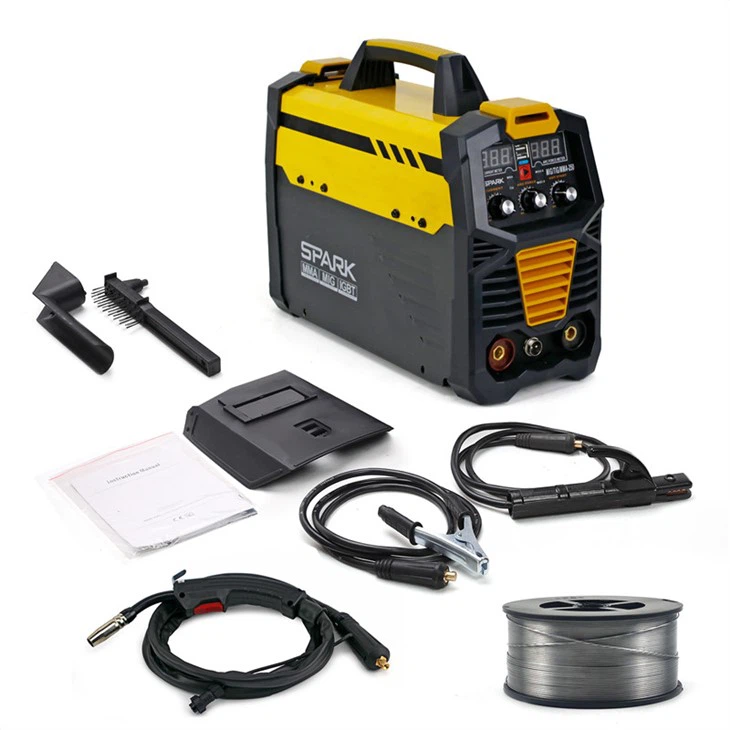
If you are interested in learning more about our Digital MIG Welding Machines or would like to discuss your specific welding requirements, we invite you to contact us for a detailed discussion. Our team of experts is ready to assist you in finding the perfect welding solution for your needs.
References
- American Welding Society. (2023). Welding Handbook, Volume 1: Welding Science and Technology.
- Welding Journal. Various issues on MIG welding technology and advancements.
- Lin, C. C., & Chen, Y. C. (2022). Precision control of MIG welding processes using digital technology. Journal of Manufacturing Science and Engineering.