



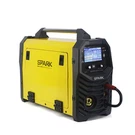



MIG flux wire, also known as metal inert gas flux-cored wire, is a popular consumable in the welding industry. It offers a range of benefits, including high deposition rates, excellent weld quality, and good tolerance to surface contaminants. One of the common questions that arise among welders, fabricators, and DIY enthusiasts is about the minimum thickness of materials that MIG flux wire can effectively weld. As a leading supplier of MIG flux wire, we are here to provide you with a comprehensive answer to this key question.
Understanding MIG Flux Wire Welding
Before delving into the minimum thickness for welding, it's essential to understand how MIG flux wire welding works. MIG flux wire welding is a semi-automatic or automatic arc welding process. The welding wire, which is tubular and filled with flux, is continuously fed through a welding gun. When an electric current is applied, an arc is formed between the wire and the workpiece, melting both the wire and the base material. The flux inside the wire generates a shielding gas to protect the weld pool from atmospheric contamination, similar to traditional MIG welding with solid wire but with additional benefits such as better penetration and less spatter.
Factors Affecting the Minimum Welding Thickness
Multiple factors influence the minimum thickness of materials that MIG flux wire can weld. These include the type of MIG flux wire, the welding parameters, the welding machine's capabilities, and the joint design.
Type of MIG Flux Wire
There are mainly two types of MIG flux wire: gas-shielded and self-shielded. Gas-shielded flux-cored wires require an external shielding gas, usually a mixture of argon and carbon dioxide, and are typically used for welding thicker materials and in industrial settings. Self - shielded flux-cored wires, on the other hand, do not require an external shielding gas as the flux inside the wire generates the necessary protection. They are often more suitable for outdoor welding and can be used on thinner materials. For instance, some self - shielded flux-cored wires can be used to weld materials as thin as 0.8 mm or even less under the right conditions.
Welding Parameters
Welding parameters such as voltage, wire feed speed, and travel speed play a crucial role in determining the minimum welding thickness. Lower voltage and wire feed speed settings are generally required for welding thinner materials to prevent burn - through. For example, when welding thin sheets of metal, a lower voltage will result in a smaller and more controlled arc, which is less likely to melt through the thin material. Travel speed also needs to be adjusted carefully; a faster travel speed can help prevent excessive heat input and burn - through.
Welding Machine Capabilities
The capabilities of the welding machine are another important factor. Different welding machines have different output ranges and amperage settings. A machine with a lower minimum amperage setting will be better able to handle thin materials. For instance, Family Use Popular Transformer MIG Welding Machine and Digital MIG Welding Machine are designed to offer a wide range of amperage settings, allowing for more precise control when welding thin materials.


Joint Design
The joint design can significantly impact the minimum welding thickness. Lap joints and fillet joints are generally more forgiving when welding thin materials compared to butt joints. In lap joints, the overlapping of the materials provides additional support and can help distribute the heat more evenly, reducing the risk of burn - through.
Minimum Thickness Guidelines
In general, with the right MIG flux wire, welding parameters, and equipment, the minimum thickness of materials that can be welded using MIG flux wire can range from 0.6 mm to 1.5 mm.
For very thin materials (around 0.6 - 0.8 mm), self - shielded flux-cored wires are often the best choice. These wires, combined with a welding machine capable of low amperage settings and precise control, can produce good quality welds without burning through the material. However, welding such thin materials requires a high level of skill and careful adjustment of the welding parameters.
When the material thickness increases to around 1 - 1.5 mm, both gas - shielded and self - shielded flux-cored wires can be used. Gas - shielded flux-cored wires may offer better weld quality and appearance, especially for applications where aesthetics are important. For example, in the fabrication of metal furniture or decorative metalwork.
Practical Tips for Welding Thin Materials
When welding thin materials with MIG flux wire, here are some practical tips:
- Prepare the materials: Clean the surfaces of the materials thoroughly to remove any dirt, grease, or rust. Even a small amount of contamination can affect the quality of the weld.
- Choose the right wire diameter: For thin materials, a smaller wire diameter (e.g., 0.8 mm or 0.9 mm) is usually recommended as it allows for better control of the heat input.
- Practice on scrap pieces: Before working on the actual project, practice welding on scrap pieces of the same thickness and material. This will help you get used to the welding parameters and improve your technique.
- Control the heat input: As mentioned earlier, use lower voltage and wire feed speed settings. Additionally, take short breaks between welds to allow the material to cool down and prevent overheating.
Applications of Welding Thin Materials with MIG Flux Wire
Welding thin materials using MIG flux wire has a wide range of applications. In the automotive industry, it is used for repairing body panels and fabricating small components. In the aerospace industry, MIG flux wire welding is used for joining thin - walled tubes and sheets. In the construction of metal furniture and household appliances, welding of thin materials is also a common practice. For example, MIG MAG Welding Machine can be effectively used in these applications to weld thin materials with MIG flux wire.
Conclusion
As a supplier of MIG flux wire, we understand the importance of answering the question about the minimum thickness of materials that can be welded. While the minimum thickness can range from 0.6 mm to 1.5 mm, it is highly dependent on various factors such as the type of wire, welding parameters, machine capabilities, and joint design. With the right knowledge, equipment, and technique, high - quality welds can be achieved on thin materials.
If you are in need of high - quality MIG flux wire for your welding projects, whether it's for thin or thick materials, we are here to help. Our extensive range of products, combined with our professional expertise, ensures that you get the best solutions for your welding needs. Contact us to discuss your requirements and explore the possibilities of using our MIG flux wire in your projects.
References
- AWS Welding Handbook, 9th Edition, American Welding Society.
- Lin, J., & Chen, W. (2018). Advanced Welding Technology. Wiley - VCH.