

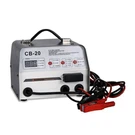




Hey there! As a supplier of 6V/12V/24V battery chargers, I often get asked about the charging current of these chargers. So, I thought I'd write a blog post to shed some light on this topic.
Let's start with the basics. The charging current of a battery charger is the amount of electrical current that flows into the battery during the charging process. It's measured in amperes (A), and it plays a crucial role in determining how fast a battery can be charged and how well it can be maintained.
6V Battery Chargers
A 6V battery charger is commonly used for small batteries, such as those found in toys, lawn mowers, and some older vehicles. The charging current of a typical 6V battery charger can vary depending on the charger's design and the battery's capacity.
For small 6V batteries with a capacity of around 4 - 10 Ah (ampere - hours), a charging current of 0.5 - 1A is often sufficient. This relatively low current helps prevent overcharging and damage to the battery. If you try to charge these small batteries with a high - current charger, you might end up boiling the electrolyte inside the battery or even causing it to explode in extreme cases.
On the other hand, for larger 6V batteries with capacities of 20 Ah or more, a charging current of 2 - 5A could be used. However, it's important to monitor the charging process closely. You can use a charger like our Digital Universal Battery Charger, which allows you to adjust the charging current according to the battery's needs.


12V Battery Chargers
12V batteries are extremely common. They're used in cars, motorcycles, boats, and many other applications. The charging current for a 12V battery charger depends on the battery's type and capacity.
For a standard car battery with a capacity of around 40 - 60 Ah, a charging current of 2 - 10A is typical. A lower current, say 2 - 5A, is suitable for slow, overnight charging. This method is gentle on the battery and helps extend its lifespan. If you're in a hurry and need to charge the battery quickly, you can use a higher current, up to 10A. But be aware that fast charging can generate more heat and may reduce the battery's overall lifespan if done too frequently.
Deep - cycle 12V batteries, which are used in boats and RVs, often have larger capacities, sometimes up to 100 Ah or more. These batteries can handle higher charging currents, usually in the range of 5 - 20A. Our Movable Heavy Charger with Wheel is a great option for charging these larger 12V batteries. It's powerful and easy to move around, making it convenient for different charging scenarios.
24V Battery Chargers
24V batteries are typically used in larger vehicles, industrial equipment, and some off - grid power systems. The charging current for 24V battery chargers is generally higher compared to 6V and 12V chargers due to the higher voltage and often larger battery capacities.
For 24V batteries with capacities of 50 - 100 Ah, a charging current of 5 - 15A is common. And for very large 24V batteries with capacities over 100 Ah, the charging current can go up to 20 - 50A. When using high - current chargers, it's essential to ensure that the battery can handle the current. Overcharging a 24V battery can be even more dangerous than overcharging a lower - voltage battery, as it can cause significant damage to the battery and the connected electrical system. Our Multifunctional Charger with Charging State is designed to handle 24V batteries safely. It has built - in protection features to prevent overcharging and overheating.
Factors Affecting Charging Current
There are several factors that can affect the optimal charging current for a battery:
- Battery Type: Different battery types, such as lead - acid, lithium - ion, and nickel - cadmium, have different charging requirements. For example, lithium - ion batteries generally require a more precise charging current and voltage control compared to lead - acid batteries.
- Battery State of Charge: A battery that is almost fully discharged can usually accept a higher charging current initially. As the battery approaches full charge, the charging current needs to be reduced to avoid overcharging.
- Ambient Temperature: Charging a battery in extreme temperatures can affect its performance and safety. In cold temperatures, the battery's internal resistance increases, which may require a lower charging current. In hot temperatures, the battery can overheat more easily, so the charging current may also need to be adjusted.
Choosing the Right Charger
When choosing a 6V/12V/24V battery charger, it's important to consider the battery's capacity, type, and your charging needs. A charger with adjustable charging current is a great option as it allows you to customize the charging process for different batteries.
If you're not sure which charger is right for you, don't hesitate to reach out. We have a team of experts who can help you select the best charger for your specific application. Whether you need a charger for a small 6V toy battery or a large 24V industrial battery, we've got you covered.
We're committed to providing high - quality battery chargers that are safe, efficient, and reliable. Our chargers are designed with the latest technology to ensure optimal charging performance and battery protection.
If you're interested in purchasing our 6V/12V/24V battery chargers, we'd love to have a chat with you. We can discuss your requirements in detail and help you find the perfect charger for your needs. Just drop us a message, and we'll get back to you as soon as possible.
References
- Battery University: A comprehensive resource for battery - related information, including charging currents and battery types.
- Automotive repair manuals: Provide in - depth information on charging car batteries and the recommended charging currents.
- Industrial equipment manuals: Offer guidance on charging 24V batteries used in industrial applications.