

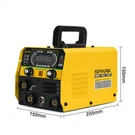
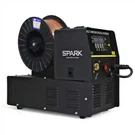
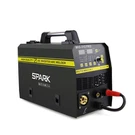
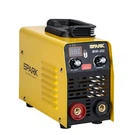
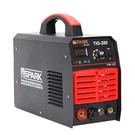
Hey there, fellow welding enthusiasts! I'm a supplier of the Three PCB MIG Welding Machine, and today I'm gonna share with you how to adjust the welding parameters on this awesome piece of equipment. Whether you're a newbie just starting out in the world of welding or a seasoned pro looking to fine - tune your skills, this guide will be super helpful.
First off, let's understand what MIG welding is all about. MIG, which stands for Metal Inert Gas welding, is a popular welding process where a continuous solid wire electrode is fed through a welding gun and into the weld pool, along with a shielding gas that protects the weld from contaminants in the air. The Three PCB MIG Welding Machine we offer is a top - notch device with advanced features that make it suitable for a wide range of welding tasks.
Understanding the Key Welding Parameters
There are a few key parameters that you need to adjust on a MIG welding machine, and they all work together to determine the quality of your weld. These include wire feed speed, voltage, and gas flow rate (if you're using a gas - shielded process).
Wire Feed Speed
The wire feed speed is how fast the welding wire is fed into the weld pool. It's a crucial parameter because it affects the amount of filler metal being added to the weld. If the wire feed speed is too slow, you might end up with an under - filled weld, which can lead to weak joints. On the other hand, if it's too fast, you could get excessive spatter and a messy weld.
To adjust the wire feed speed on our Three PCB MIG Welding Machine, you'll usually find a control knob or a digital display. Start by referring to the welding chart that comes with the machine. This chart will give you a recommended wire feed speed based on the thickness of the metal you're welding and the type of wire you're using. For example, if you're welding thin sheet metal, you'll generally need a slower wire feed speed compared to welding thick plates.

Once you've set an initial speed according to the chart, do a test weld on a scrap piece of the same metal. Observe the weld bead. If it looks good, with a smooth appearance and no signs of under - filling or excessive spatter, then you're on the right track. If not, make small adjustments to the wire feed speed and test weld again until you get the desired results.

Voltage
Voltage is another important parameter. It controls the heat input into the weld. Higher voltage means more heat, which can be useful for welding thicker metals or when you need to penetrate deeper. Lower voltage is better for thinner metals to avoid burning through.
On our Three PCB MIG Welding Machine, adjusting the voltage is usually as simple as turning a dial or using a digital control. Just like with the wire feed speed, start with the recommended voltage from the welding chart. Then, perform a test weld. If the weld bead is too wide and the metal seems to be melting too much, the voltage might be too high. In this case, lower the voltage and test again. If the weld bead is narrow and the penetration is poor, increase the voltage slightly.
Gas Flow Rate
If you're using a gas - shielded MIG welding process, the gas flow rate is also a critical parameter. The shielding gas, usually a mixture of argon and carbon dioxide, protects the weld from oxidation and other contaminants.
To adjust the gas flow rate, you'll need to use a flow meter that's attached to your gas cylinder. The recommended gas flow rate can vary depending on the welding conditions, but a common range is between 15 - 25 cubic feet per hour (CFH). Start with a flow rate in this range and then check the quality of the weld. If you notice porosity (tiny holes) in the weld, it could mean that the gas flow rate is too low. Increase it slightly and test weld again. If the weld seems to have a lot of turbulence or if you hear a hissing sound, the gas flow rate might be too high.
Different Welding Situations and Parameter Adjustments
Welding Thin Metals
When welding thin metals, like sheet metal that's less than 1/8 inch thick, you'll want to keep the wire feed speed and voltage relatively low. A slower wire feed speed ensures that you don't add too much filler metal, which could cause the metal to warp. A lower voltage helps prevent burning through the thin metal. For example, for 20 - gauge sheet metal, you might start with a wire feed speed of around 150 - 200 inches per minute and a voltage of 18 - 20 volts.
Welding Thick Metals
For thicker metals, such as plates that are 1/4 inch or more, you'll need to increase both the wire feed speed and the voltage. A higher wire feed speed adds more filler metal to the large weld pool, and a higher voltage provides enough heat to penetrate the thick metal. For a 1/2 - inch thick plate, you could set the wire feed speed to around 300 - 400 inches per minute and the voltage to 24 - 26 volts.
Troubleshooting Parameter Adjustments
Sometimes, even after following the guidelines, you might encounter some issues with your welds. Here are some common problems and how to fix them by adjusting the parameters:
Excessive Spatter
If you're getting a lot of spatter, it could be due to a few reasons. First, check the wire feed speed. If it's too fast, it can cause the wire to burn back and create spatter. Lower the wire feed speed slightly. Also, make sure the voltage is appropriate. Too high a voltage can also lead to spatter. Adjust the voltage down until the spatter reduces.
Poor Penetration
If your weld isn't penetrating the metal properly, increase the voltage. The higher voltage will provide more heat to melt the base metal and create a deeper weld. You can also increase the wire feed speed slightly to add more filler metal to the weld pool.
Burn - Through
When you burn through the metal, it's usually because the voltage is too high or the wire feed speed is too slow. Lower the voltage and increase the wire feed speed to prevent this from happening.

Our Range of Welding Machines
As a supplier, we don't just offer the Three PCB MIG Welding Machine. We also have other great options like the Gasless MIG Welding Machine, which is perfect for those who want to weld without the need for a shielding gas. It's very convenient for small - scale projects or when you're working in an area where it's difficult to set up a gas cylinder.
Another option is the MIG MAG Welding Machine. This machine can use different types of shielding gases, giving you more flexibility in your welding projects. It's suitable for a wide range of metals and thicknesses.
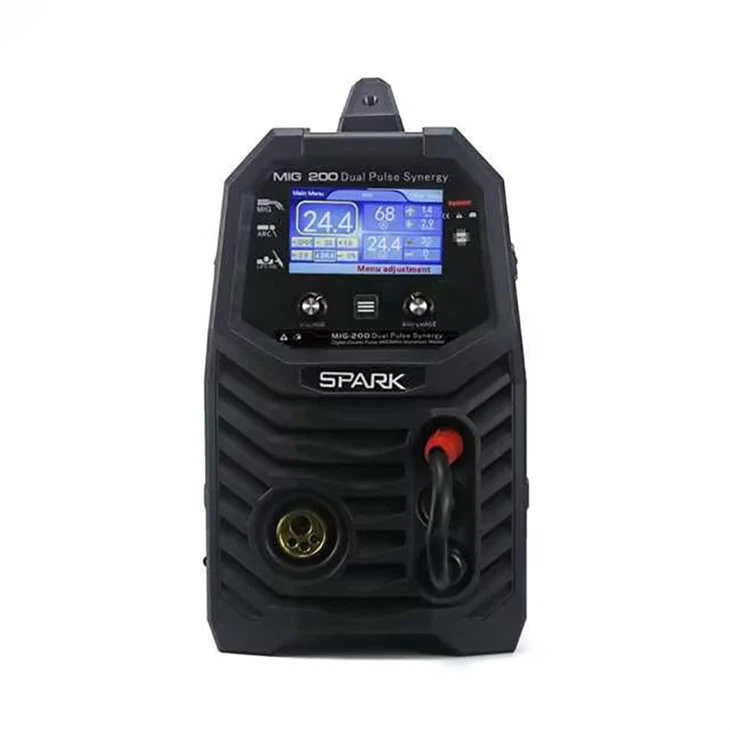
And if you're looking for something more advanced, our Dual Pulse Welding Machine is a great choice. It offers better control over the weld pool and can produce high - quality welds with less heat input, which is ideal for welding delicate or thin materials.
Let's Connect
If you're interested in any of our welding machines or have questions about adjusting the welding parameters, don't hesitate to reach out. We're here to help you get the most out of your welding projects. Whether you're a hobbyist or a professional welder, we have the right equipment and expertise to meet your needs. Contact us to start a conversation about your welding requirements, and let's find the perfect solution for you.
References
- AWS Welding Handbook, American Welding Society
- Welding: Principles and Applications, Larry Jeffus