

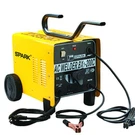
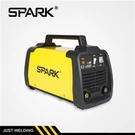
Can a MIG MAG welding machine be used for copper welding? That's a question I get asked a lot as a supplier of MIG MAG Welding Machines. Let's dig into this topic and find out if it's a good idea to use our machines for copper welding.
First off, let's understand what MIG MAG welding is. MIG (Metal Inert Gas) and MAG (Metal Active Gas) welding are popular methods in the welding world. In MIG welding, an inert gas like argon is used to shield the weld pool from contaminants. MAG welding, on the other hand, uses an active gas such as carbon dioxide or a mixture of gases. These processes are known for their high welding speed, good quality welds, and ease of use.
Now, copper is a tricky metal to weld. It has high thermal conductivity, which means it dissipates heat very quickly. This can make it difficult to maintain a stable weld pool. Also, copper has a low melting point compared to some other metals, and it can oxidize easily when exposed to high temperatures.

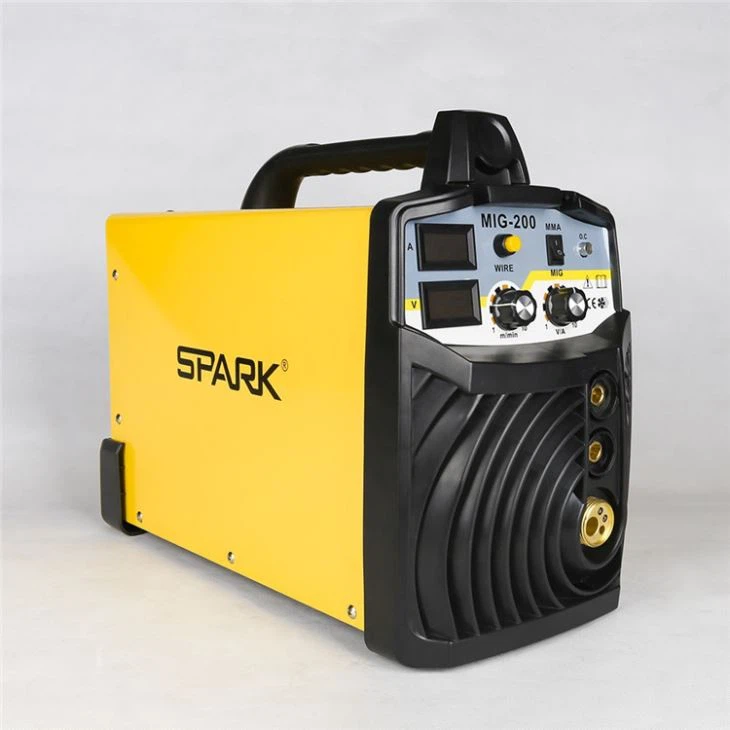
So, can our MIG MAG welding machines handle copper? The short answer is yes, but with some conditions.
One of the key factors is the type of wire you use. For copper welding, you need a wire that's suitable for copper. There are special MIG Flux Wire options available that are designed to work well with copper. These wires can help in achieving a better bond and reducing the chances of defects in the weld.
Another important thing is the gas. Since copper oxidizes easily, using the right shielding gas is crucial. A mixture of argon and helium is often recommended for copper welding. Argon provides good arc stability, while helium helps in increasing the heat input, which is important given copper's high thermal conductivity.
Our Inverter Mig Welding Machine can be a great choice for copper welding. Inverter technology allows for better control of the welding parameters. You can adjust the voltage, current, and wire feed speed more precisely. This is essential when welding copper because you need to find the right balance to ensure a proper weld.
The Three PCB MIG Welding Machine also has its advantages. It offers a more stable power supply, which is important for consistent welding results. With a stable power supply, you can avoid issues like spatter and uneven welds, which are common when welding copper.
However, there are some challenges you might face. As I mentioned earlier, copper's high thermal conductivity means you need to have a high enough heat input. If the heat is too low, the weld might not penetrate properly, and you could end up with a weak joint. On the other hand, if the heat is too high, you might melt too much of the copper, leading to distortion and other problems.
To overcome these challenges, it's a good idea to pre - heat the copper before welding. Pre - heating can help in reducing the thermal gradient and making it easier to maintain a stable weld pool. You can use a torch to pre - heat the copper to a suitable temperature, usually around 200 - 300 degrees Celsius, depending on the thickness of the copper.
Another tip is to use a slower welding speed. This allows more time for the heat to be transferred into the copper and ensures a better fusion. You also need to pay close attention to the wire feed. A consistent wire feed speed is essential for a good weld.
In terms of joint preparation, make sure the copper surfaces are clean. Remove any dirt, oil, or oxide layers before welding. You can use a wire brush or a chemical cleaner to clean the surfaces. This will help in achieving a stronger bond between the copper pieces.
If you're new to copper welding with a MIG MAG machine, it's a good idea to practice on some scrap pieces of copper first. This will give you a feel for the process and help you understand how to adjust the welding parameters.
So, in conclusion, our MIG MAG welding machines can be used for copper welding, but it requires some knowledge and the right approach. With the right wire, gas, and welding techniques, you can achieve high - quality copper welds.
If you're interested in exploring copper welding with our MIG MAG welding machines or have any questions about our products, don't hesitate to reach out. We're here to help you make the most of your welding projects. Whether you're a professional welder or a hobbyist, we can provide you with the support and advice you need. Contact us to start a discussion about your specific requirements and let's see how we can work together to get the best results.
References
- Welding Handbook, American Welding Society
- Metal Welding Guide, Industrial Welding Publications