




Hey there, welding enthusiasts! I’m a supplier of MMA welding machines, and over the years, I’ve seen firsthand how crucial it is to select the right welding parameters for a successful job. In this blog, I’ll share some tips and tricks on how to do just that.
Understanding the Basics of MMA Welding
First things first, let’s quickly go over what MMA welding is. MMA, or Manual Metal Arc welding, is a popular welding process that uses a consumable electrode coated in flux. When the electrode is struck against the workpiece, an arc is formed, melting both the electrode and the workpiece to create a weld joint.
One of the great things about MMA welding is its versatility. It can be used on a variety of metals, including mild steel, stainless steel, and cast iron. It’s also suitable for welding in different positions, making it a go - to choice for many welders.
Factors Affecting Welding Parameters
There are several factors that you need to consider when selecting the appropriate welding parameters for your MMA welding machine. Let’s break them down one by one.
Type of Metal
The type of metal you’re welding is one of the most important factors. Different metals have different melting points and properties, which means they require different welding parameters.
- Mild Steel: Mild steel is relatively easy to weld. For most mild steel applications, you can use a lower welding current. For example, if you’re using a small - diameter electrode (say, 2.5mm), a current of around 50 - 70 amps might be sufficient.
- Stainless Steel: Stainless steel has a higher melting point and is more prone to cracking. You’ll usually need to use a slightly higher welding current and a specific type of electrode designed for stainless steel. An electrode size of 3.2mm might require a current in the range of 80 - 100 amps.
Electrode Size
The size of the electrode also plays a big role in determining the welding parameters. Generally, larger electrodes require higher welding currents.


- Smaller electrodes (e.g., 2.0mm or 2.5mm) are great for thin materials or when you need to make precise welds. They usually require lower currents, starting from around 30 - 50 amps.
- Medium - sized electrodes (3.2mm - 4.0mm) are commonly used for general - purpose welding on medium - thickness materials. The current for a 3.2mm electrode might range from 70 - 100 amps, while a 4.0mm electrode could need 100 - 130 amps.
- Large electrodes (5.0mm or more) are used for thick materials. These need high currents, often 150 amps or more.
Welding Position
The position in which you’re welding can affect the selection of welding parameters. There are four main welding positions: flat, horizontal, vertical, and overhead.
- Flat Position: This is the easiest position for welding. You can use a higher welding current and a longer arc length as gravity helps the molten metal stay in place.
- Horizontal Position: You may need to reduce the welding current slightly to prevent the molten metal from dripping.
- Vertical Position: Welding vertically can be a bit tricky. You usually need to use a lower current and a shorter arc length to control the flow of the molten metal. You can weld either up or down, but welding up generally gives better results.
- Overhead Position: Welding overhead requires the lowest current and the shortest arc length. This helps to prevent the molten metal from falling onto you.
Joint Design
The type of joint you’re making also impacts the welding parameters. For example, a butt joint might require different settings compared to a fillet joint. A butt joint usually needs more penetration, so you might need a higher current. A fillet joint, on the other hand, might require a more controlled bead shape, which could mean adjusting the current and arc length accordingly.
Selecting the Right Welding Current
The welding current is one of the most critical parameters in MMA welding. It affects the penetration, bead shape, and overall quality of the weld.
Determining the Initial Current
As a general rule of thumb, you can start by referring to the electrode manufacturer’s recommendations. They usually provide a range of suitable currents for each electrode size. However, these are just starting points, and you may need to make adjustments based on the factors we discussed earlier.
For example, if you’re using a 3.2mm electrode on mild steel in a flat position, you might start with a current of around 80 amps and then make small adjustments as needed.
Adjusting the Current
Once you start welding, pay close attention to the appearance of the weld. If the weld is too shallow and the bead is wide and flat, you may need to increase the current to get more penetration. On the other hand, if the weld is burning through the material or the arc is too unstable, you should decrease the current.
Choosing the Right Arc Length
The arc length is the distance between the tip of the electrode and the workpiece. It also has a significant impact on the quality of the weld.
Ideal Arc Length
An ideal arc length is usually about the same as the diameter of the electrode. For example, if you’re using a 3.2mm electrode, the arc length should be around 3.2mm.
Effects of Incorrect Arc Length
- Too Long: A long arc can result in a wide, irregular bead with poor penetration. It can also cause excessive spatter and make the arc unstable.
- Too Short: A short arc can cause the electrode to stick to the workpiece, making the welding process difficult and resulting in a poor - quality weld.
Selecting the Right Welding Machine
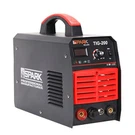
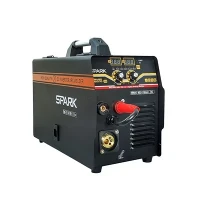
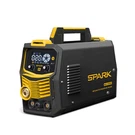
As a supplier, I know that having the right MMA welding machine is essential for getting the best results. We offer a range of high - quality machines, including the Digital Inverter Welding Machine, the Music Welding Machine, the Digital Inverter Machine, and the Professional MMA Welding Machine.
These machines are designed to provide stable arcs, precise control of welding parameters, and are suitable for a variety of welding applications. Whether you’re a professional welder or a DIY enthusiast, we have a machine that will meet your needs.
Practice Makes Perfect
Selecting the appropriate welding parameters takes practice. Don’t be afraid to experiment with different settings on scrap pieces of the same metal you’ll be using for your actual project. This will help you get a feel for how the welding machine behaves and how different parameters affect the quality of the weld.
Contact Us for Your Welding Machine Needs
If you’re in the market for a new MMA welding machine or have any questions about selecting the right welding parameters, we’re here to help. Our team of experts can provide you with personalized advice and guidance to ensure you get the best results from your welding projects. Reach out to us to start a conversation about your welding needs.
References
- AWS Welding Handbook, American Welding Society
- Welding: Principles and Applications, Larry Jeffus