




In the world of MIG MAG welding, numerous factors can influence the quality and efficiency of the welding process. One such factor that is often overlooked but can have a significant impact is the arc length. As a trusted MIG MAG Welding Machine supplier, we have witnessed firsthand how varying arc lengths can affect the welding outcome, and in this blog post, we will delve into this topic in detail.
Understanding Arc Length in MIG MAG Welding
Arc length in MIG MAG welding refers to the distance between the tip of the welding wire and the surface of the workpiece. This distance is a crucial parameter as it directly affects the transfer of heat, the stability of the arc, and ultimately, the quality of the weld.
The arc in MIG MAG welding is created by an electrical current passing through the welding wire, which then jumps across the gap to the workpiece, forming a plasma-filled path. The length of this gap can be adjusted by the welder, either manually or through the settings on the welding machine.
How Arc Length Affects Welding Current and Heat Input
One of the primary ways arc length impacts the welding process is by affecting the welding current. According to Ohm's law, the resistance in an electrical circuit is directly proportional to the length of the conductor. In the case of MIG MAG welding, the arc acts as a conductor, and a longer arc length increases the resistance in the circuit.
When the resistance increases, for a given power source, the current flowing through the arc decreases. This reduction in current leads to a decrease in the heat input to the workpiece. Insufficient heat input can result in a lack of fusion between the base metal and the filler metal, leading to poor weld quality. Welds may have incomplete penetration, be porous, or exhibit other defects that compromise their strength and integrity.
Conversely, a shorter arc length reduces the resistance in the circuit, allowing more current to flow. This increased current results in higher heat input, which can be beneficial for achieving deeper penetration and better fusion. However, excessive heat input can also cause problems, such as distortion of the workpiece, burn-through, or overheating of the welding equipment.

The Impact of Arc Length on Metal Transfer
Arc length also plays a crucial role in the transfer of metal from the welding wire to the workpiece. There are several types of metal transfer modes in MIG MAG welding, including short-circuit transfer, globular transfer, and spray transfer.
In short-circuit transfer, the arc length is very short, typically less than 3mm. This causes the welding wire to periodically touch the workpiece, creating a short circuit. The electrical energy then melts the tip of the wire, causing it to detach and transfer to the workpiece. This transfer mode is characterized by a low heat input and is suitable for welding thin materials.
In globular transfer, the arc length is longer, typically between 5 - 10mm. The molten metal at the tip of the wire forms large droplets, which detach and fall onto the workpiece under the influence of gravity. This transfer mode is less stable than short-circuit transfer and can result in a less cohesive weld bead.
Spray transfer occurs when the arc length is relatively long, usually greater than 10mm, and the welding current is high. In this mode, the molten metal is ejected from the wire in a fine spray of droplets, resulting in a smooth and stable weld bead. Spray transfer is suitable for welding thicker materials and provides high deposition rates.
Arc Length and Weld Bead Geometry
The arc length also has a direct impact on the geometry of the weld bead. A shorter arc length generally produces a narrower and deeper weld bead. This is because the concentrated heat input from the shorter arc melts a smaller area of the base metal, resulting in a more focused weld.
On the other hand, a longer arc length creates a wider and shallower weld bead. The increased distance between the wire and the workpiece causes the heat to be spread over a larger area, resulting in a broader weld bead. The choice of arc length to achieve the desired weld bead geometry depends on the specific requirements of the welding application, such as the thickness of the materials being welded and the required strength of the joint.
Choosing the Right Arc Length for Your Welding Machine
As a MIG MAG Welding Machine supplier, we understand that choosing the right arc length is essential for achieving optimal welding results. Here are some general guidelines to help you select the appropriate arc length for your welding machine:
- Material Thickness: For thinner materials, a shorter arc length is generally recommended to avoid burn-through. For thicker materials, a longer arc length can be used to achieve deeper penetration.
- Welding Position: Different welding positions may require different arc lengths. For example, in overhead welding, a shorter arc length can help prevent the molten metal from dripping.
- Welding Machine Settings: Most modern MIG MAG welding machines allow you to adjust the arc length through the machine settings. It's important to refer to the manufacturer's instructions to ensure you are using the correct settings for your specific welding application.
Our Range of MIG MAG Welding Machines
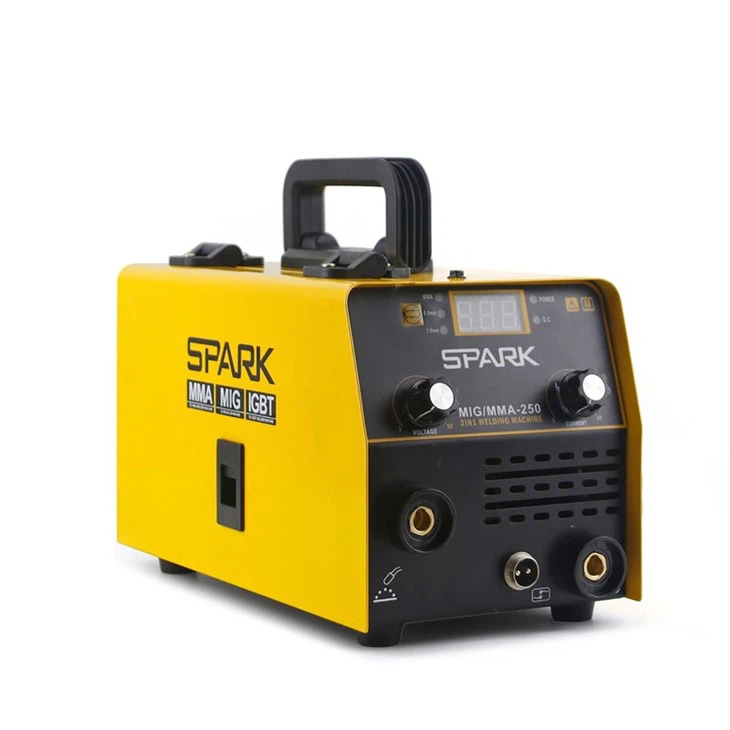
At our company, we offer a wide range of MIG MAG welding machines to suit different welding needs. Our Three PCB 15kg Wire MIG Welding Machine is a high-performance machine that is suitable for both professional welders and DIY enthusiasts. It features a robust three-PCB design and can handle 15kg wire spools, providing long-lasting and reliable performance.
For those looking for a more compact option, our Single PCB MIG Welding Machine with Compact Torch is an excellent choice. This machine is lightweight and easy to carry, making it ideal for on-site welding jobs.
We also offer MIG Flux Wire that is suitable for use with our MIG MAG welding machines. Our flux wire provides excellent weld quality and is available in various sizes to meet your specific requirements.
Conclusion
In conclusion, the arc length is a critical factor in the MIG MAG welding process. It affects the welding current, heat input, metal transfer, and weld bead geometry, all of which can have a significant impact on the quality and efficiency of the weld. As a MIG MAG Welding Machine supplier, we are committed to providing our customers with high-quality welding machines and the knowledge and support they need to achieve optimal welding results.
If you are interested in learning more about our MIG MAG welding machines or have any questions about the welding process, please feel free to contact us. Our team of experts is always ready to assist you with your welding needs and help you find the right solution for your project. Whether you are a professional welder or just starting out, we have the products and expertise to support you every step of the way.
References
- Welding Handbook, American Welding Society
- Principles of Arc Welding, John Wiley & Sons
- The Science and Technology of Welding, CRC Press